Related Articles

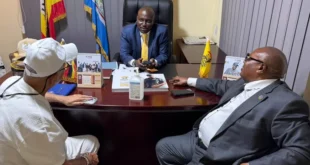
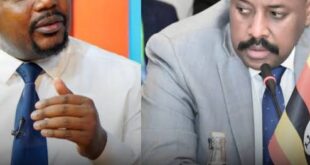
The Uganda Peoples’ Defence Forces (UPDF) have issued a sharp warning to Robert Kyagulanyi Ssentamu, better known as Bobi Wine, and his supporters ahead of the 2026 general elections. The military’s statement on Friday comes in response to comments made by the National Unity Platform (NUP) presidential candidate, who has been urging his supporters to take action on election day. Bobi Wine’s call for his supporters to surround polling stations and march towards the capital, Kampala, has raised significant concerns within Uganda’s security apparatus. According to the UPDF, these remarks are considered dangerous and could lead to unnecessary violence, especially among the youth.
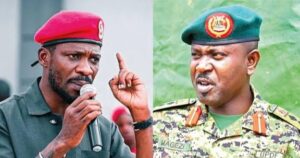
The military further emphasized that such rhetoric could easily escalate into physical confrontations between security forces and civilians. Bobi Wine’s suggestion that the police and army would be overwhelmed by large numbers of protesters was condemned as misleading and reckless.
The UPDF stated that this could lead to a dangerous situation where young Ugandans, misled by false promises, would find themselves caught up in violence. The military warned that anyone promoting such actions would face severe consequences.
The UPDF statement, signed by Col. Chris Magezi, Acting Director of Defence Public Information, was clear: those who incite violence or encourage anarchy would not escape the consequences of their actions. In the worst-case scenario, it is the young people of Uganda, the ones most vulnerable to such dangerous rhetoric, who would bear the brunt of the violence. The military made it clear that the security of the nation and the safety of the people would not be compromised by any attempts to undermine the system.
A strong emphasis was placed on the importance of respecting Uganda’s security institutions, which have a long history of maintaining peace and stability. The UPDF reminded the public that the country’s security forces have played a critical role in ensuring that the nation does not descend into the chaos and instability seen in other parts of Africa. This was a direct reference to Uganda’s troubled history and the contributions made by the military in securing peace.
The UPDF was particularly critical of the way Bobi Wine was questioning the capabilities of Uganda’s armed forces. The statement hit back strongly by pointing to the success of the UPDF in past military operations, particularly against regional insurgencies. The military pointed to successful operations in combating groups such as al-Shabaab in Somalia and the Allied Democratic Forces (ADF) in Uganda and the Democratic Republic of Congo (DRC).
In a veiled response to Bobi Wine’s challenge to the military, the UPDF said that anyone questioning the military’s strength should consult with groups like al-Shabaab or the now-defunct Lord’s Resistance Army (LRA), both of which had been defeated by Uganda’s armed forces. By invoking these groups, the military sent a message that any threat to the state would be met with the same resolve and force that had been used in past counterinsurgency operations.
The military’s response highlights the tension that has been growing between opposition groups and the government in the lead-up to the 2026 election. Bobi Wine has become a symbol of opposition to the long-running administration of President Yoweri Museveni.

His political rallies and calls for reform have attracted significant attention, especially among Uganda’s youth, who are looking for change. However, the government has consistently accused him of undermining national security and stoking divisiveness.
For years, Uganda has experienced unrest and political turmoil, often centered around election periods. The country’s political landscape is highly polarized, with deep divisions between those supporting the government and those advocating for change. While many see Bobi Wine as a beacon of hope for a new Uganda, others view his approach as reckless and irresponsible. The military’s latest statement reflects the government’s determination to maintain control during the elections and beyond.
Bobi Wine’s supporters, however, argue that they are merely standing up for their rights and the future of the nation. They contend that the current government is oppressive and has failed to address the challenges faced by the ordinary people of Uganda. For them, the call to surround polling stations and peacefully demonstrate is seen as a legitimate response to what they believe is a government that does not listen to the people.
Despite the threats of violence and the warnings from the military, Bobi Wine has continued to call for his supporters to take action. His campaign has been built on a platform of change, justice, and empowerment for the Ugandan people. He has consistently called out what he perceives to be the flaws and failures of the government, urging Ugandans to reclaim their country from what he calls a dictatorship.
The UPDF’s warning, however, suggests that the government is not willing to allow any threats to national security or to the electoral process. They have made it clear that their primary goal is to prevent any disruptions during the 2026 elections. The military has vowed to deal decisively with any attempts to destabilize the country, stating that security forces will take all necessary measures to maintain order.
The tense political atmosphere in Uganda is compounded by the broader regional security challenges. In neighboring countries like the Democratic Republic of Congo and Somalia, Uganda has been involved in various military interventions. These operations have bolstered the reputation of the UPDF as a capable and disciplined fighting force, and the military seems eager to demonstrate that it can handle any challenge, both at home and abroad.
With the 2026 elections fast approaching, the stakes have never been higher. The government is focused on maintaining its grip on power, while the opposition is determined to push for change. The military’s stance shows that it is prepared for the challenges ahead and will not hesitate to act if the situation calls for it.
As Uganda moves closer to the election, it remains to be seen whether the tensions between the opposition and the government will lead to further unrest or if a peaceful and fair election can be held. One thing is certain: the UPDF has made it clear that it will do whatever it takes to ensure peace and stability in Uganda, no matter the political cost.

In the coming months, both the government and opposition will have to navigate these difficult waters. The Ugandan people, too, will be watching closely, hoping for a peaceful and fair election that will set the stage for the future of their country.
The UPDF’s firm warning serves as a reminder of the military’s powerful role in Uganda’s political landscape. As the country prepares for its 2026 elections, the question remains: will peace prevail, or will tensions escalate into violence? Only time will tell, but for now, the UPDF has made its position crystal clear: they are ready for anything.
As Uganda gears up for the 2026 elections, the military’s statement highlights the increasingly tense political climate. The opposition’s calls for mass mobilization on election day have raised alarms within security circles, as the possibility of violence or disorder looms large. With both sides digging in their heels, it’s evident that the upcoming elections will not just be a battle at the ballot box, but also a contest for public trust in Uganda’s security apparatus. While Bobi Wine’s supporters view their actions as a fight for justice, the government sees such moves as a challenge to the country’s stability and peace.
The involvement of the UPDF in political matters, especially during elections, raises questions about the military’s role in Uganda’s democratic process. Historically, Uganda has been a nation where the military has had a significant influence on politics. Some critics argue that the UPDF’s warnings and its proactive stance against the opposition could be seen as an attempt to intimidate voters and suppress dissent. Whether this will affect the credibility of the election process remains to be seen, but such heavy-handed tactics have long been a point of contention among political observers both within Uganda and internationally.
International human rights organizations and observers have consistently raised concerns about the fairness of elections in Uganda. Allegations of vote-rigging, harassment of opposition candidates, and the use of state machinery to undermine the opposition have marred previous elections.
With tensions rising ahead of 2026, many are asking whether the government will allow a truly free and fair election, or whether it will once again use the military and other state tools to maintain power. The role of the international community will be crucial in monitoring the election process and ensuring that the will of the people is respected.
As the election draws closer, both sides are likely to continue exchanging barbs, each trying to sway public opinion in their favor. Bobi Wine and his supporters will likely keep calling for reforms, while the government and military will insist that stability and order must prevail. The next few months will be crucial in shaping Uganda’s political future, as the country finds itself at a crossroads between maintaining the status quo and embracing potential change. The Ugandan people, caught in the middle of this political struggle, will have the final say when they head to the polls in 2026.