Related Articles
In a dramatic turn of events, Major General (Rtd) Kahinda Otafiire, Uganda’s Minister of Internal Affairs, distanced himself from the Uganda People’s Defence Forces (UPDF), expressing his disapproval of the military’s actions during the ongoing election season. Otafiire, a veteran of Uganda’s liberation struggle and one of the founding members of the Front for National Salvation (FRONASA), made the announcement at a wedding ceremony, delivering a powerful speech that has since sparked public debate across the country.
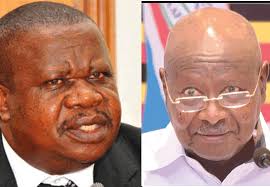
Otafiire’s condemnation of the UPDF came at a time when allegations of brutality by the military were gaining momentum. He referenced the very ideals that motivated the liberation movement in the 1970s, which sought to end dictatorial practices like extrajudicial killings and the suppression of freedom. His remarks were a stark reminder that the military’s use of force against civilians was a betrayal of the principles that shaped Uganda’s struggle for independence.
During the ceremony, Otafiire made it clear that he was no longer part of the UPDF. “I am not part of the UPDF. I am FRONASA,” he declared. For many, this was a bold statement that marked a significant shift in Otafiire’s stance towards the military forces he once helped build. FRONASA, the movement that fought against the dictatorship of Idi Amin, symbolized the fight for justice, freedom, and democracy in Uganda.
Otafiire’s words echoed with deep historical significance, as he reminded the crowd of the original cause behind taking up arms against the brutal regime of Idi Amin. The aim was to end the systemic abuse of civilians, including extrajudicial killings, violent suppression of speech, and general mistreatment of the population. Today, Otafiire sees the same patterns of behavior resurfacing within the ranks of the UPDF, and this has led him to openly reject the current military establishment.
In his passionate speech, Otafiire sharply criticized the UPDF for its involvement in violent crowd control tactics and its treatment of civilians, especially in the lead-up to the 2026 general elections. He argued that the military’s behavior of beating and harassing civilians is not only unethical but completely against the revolutionary spirit that formed the basis of Uganda’s military. “That is not part of us,” he said, referencing the kind of behavior that FRONASA stood against during the liberation struggle.
The minister’s words resonated strongly, particularly among those who saw the military’s actions as not only a betrayal of the country’s revolutionary roots but also an abuse of power by the very institutions meant to serve and protect the people. Otafiire’s call for an end to the mistreatment of civilians was clear: “Leave people alone.”
The general’s comments come amid mounting reports of the UPDF’s excessive use of force against opposition supporters, particularly those backing the National Unity Platform (NUP) and its leader, Robert Kyagulanyi, popularly known as Bobi Wine. Several incidents in recent weeks have raised alarms over the military’s role in suppressing political activity, with videos surfacing on social media showing security forces using brutal force against unarmed citizens.
In early December 2025, a disturbing video went viral, showing UPDF soldiers caning civilians during a confrontation with Bobi Wine’s supporters in Gulu City. The footage prompted a swift response from the police, which confirmed that an investigation into the matter was underway. The police described the incident as “regrettable and undesirable,” pledging accountability for any breaches of conduct by the military personnel involved.

But the Gulu incident was not an isolated event. Bobi Wine himself reported that he and his campaign team were attacked by security forces while campaigning in northern Uganda. According to the opposition leader, he and several of his aides were beaten with sticks and stones by men in police and military uniforms. The images and videos shared on social media painted a grim picture of violence, with several supporters of Bobi Wine seen nursing injuries inflicted by the security personnel.
These reports of military brutality have been echoed by civil liberties organizations, including the Uganda Law Society, which condemned the actions of the UPDF. According to these organizations, the use of beatings, tear gas, and live bullets by security forces during election-related events represents a serious violation of civil rights. The ongoing violence against opposition supporters and journalists has raised concerns over the growing militarization of Uganda’s political landscape.
The increased involvement of the UPDF in civilian affairs has also drawn significant legal and political criticism. One of the most contentious issues has been the restoration of military jurisdiction over civilians, a controversial law that has sparked debates about the erosion of civil liberties and judicial independence in Uganda. Critics argue that giving the military greater control over civilian matters undermines the country’s legal framework and jeopardizes the fundamental rights of its citizens.
Otafiire’s comments can be seen as a direct response to this growing concern. His rejection of the UPDF’s actions reflects a wider unease within Uganda about the militarization of politics, particularly as the 2026 general election approaches. Many fear that the military’s heavy-handed tactics could further destabilize the country and lead to greater repression of opposition voices.
The minister’s rejection of military brutality also highlights the need for legal accountability in the face of growing violence. While the police have promised to investigate the incidents involving the UPDF, many Ugandans are skeptical about whether justice will be served. The widespread belief that the military acts with impunity raises questions about the effectiveness of the country’s judicial system in holding powerful institutions accountable.
For Otafiire, the solution lies in a strict adherence to the rule of law. He emphasized that the government should engage with its citizens through lawful means, not through violence or intimidation. According to him, responding to political disagreements with force only diminishes the government’s own credibility and moral authority.

As the election season heats up, political polarization in Uganda is intensifying. Supporters of opposition parties like the NUP are increasingly facing harassment and violence from security forces, while government supporters maintain that the military is acting to preserve order and stability. This growing divide is testing the country’s democratic institutions and raising questions about the fairness of the electoral process.
Otafiire’s stance is a stark reminder of the deep divisions within Uganda’s political establishment. While the ruling government remains firmly in control of the military and security forces, key figures like Otafiire are beginning to speak out against the oppressive tactics used to maintain that control. His rejection of the UPDF’s actions sends a message to both the government and the opposition that the time has come for a change in the way politics is conducted in Uganda.
In his speech, Otafiire also called for national dialogue and reconciliation, stressing that Uganda’s future lies in a peaceful and democratic process, not in the violence and intimidation that has come to define the current political climate. He urged all Ugandans, regardless of their political affiliation, to come together and work towards a more inclusive and just society.
Whether or not the government will heed Otafiire’s call remains to be seen. However, his rejection of the UPDF’s tactics serves as a wake-up call to both the military and the political elite, reminding them that the fight for freedom and democracy is not won through violence, but through respect for the rule of law and the rights of all citizens.
Otafiire’s decision to publicly dissociate himself from the UPDF marks a turning point in the legacy of FRONASA, the revolutionary movement that helped shape Uganda’s political landscape. His words reflect the deep frustrations felt by many Ugandans who believe that the country’s struggle for freedom has been hijacked by those in power, who now use the military to enforce their rule.
The story of FRONASA is one of courage, sacrifice, and a desire to bring about real change. Today, many fear that the ideals of the liberation movement have been overshadowed by the brutal tactics of the very forces that once fought for justice. Otafiire’s powerful speech serves as a reminder that the fight for a free and democratic Uganda is far from over.
General Otafiire’s rejection of the UPDF’s current behavior is more than just a personal statement. It is a call for change, a plea for the restoration of the values that defined Uganda’s liberation struggle. As the country prepares for its 2026 elections, Otafiire’s message is clear: the time for violence and oppression must come to an end. Uganda’s future depends on a return to the principles of justice, democracy, and respect for human rights. Whether this message will be heard by those in power is uncertain, but the conversation it has sparked is undoubtedly an important step toward a more peaceful and democratic Uganda.