Related Articles



BY RICHARD DRASIMAKU
MARACHA: MONDAY, SEPTEMBER 22, 2025
In the rural plains of Maracha district where mairungi and tobacco once ruled the gardens, a green revolution is quietly unfolding, hinged on cocoa as a surprise game-changing cash crop.
One-by-one, households are digging themselves out of abject poverty. This is after a period of initial hesitance from farmers when the former Member of Parliament, James Acidri, introduced cocoa as the cash crop in Maracha East Constituency.
The main driver of the initial doubts in the minds of farmers was polarizing political sentiments, orchestrated by the agents of Acidri’s opponents who overlooked the economic benefits of the new crop.
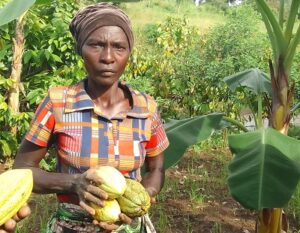
“Five years ago when Hon Acidri brought cocoa to us, people despised us saying that we were planting firewood,” said Marlon Feta, a resident of Motomero village.
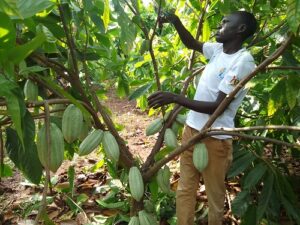
Indeed cocoa was relatively unknown in West Nile apart from some pockets of Koboko district where former internal affairs state minister, Ambassador James Baba promoted it.
Cocoa as a choice crop
However residents have reported a remarkable turnaround in people’s attitude towards cocoa as the economic value of the crop began to be realized.
A perennial crop that can last for generations and only increase its volume of yields the more years the plant adds to its maturity, cocoa is fast becoming the crop of choice for those tired of languishing in poverty.
“Now everyone wants to plant cocoa because they have seen how we are earning steady stream of money from the plants,” Feta pointed out.
He has mastered cocoa agronomy to the point of excellence in not just looking after the crop but also nursery bed management and post-harvest handling.
Recently he hosted prospective farmers from Ayivu West Constituency, Arua City who went to learn the nitty-grity of cocoa production.
Feeling left behind in the new economic reality, Acidri says there is evident rush by the people (both within his constituency and from outside) to adopt cocoa that he is overwhelmed by the demand for seedlings.
To introduce cocoa in Maracha, Acidri acquired seedlings from Bundibugyo in Western Uganda. But now he has trained farmers who are making good money from cocoa nursery bed management.
For instance Feta’s record books indicates that he sold cocoa seedlings worth sh10 million this year, pricing each seedling at sh1,000.
Cocoa is planted 3 metres by 3 metres in two-foot wide and two-foot deep holes that should be filled with manure or fertile soil.
Participating farmers say that the price of cocoa beans has been steadily rising in the past three years. We started selling at sh9000 a kilo, it went to sh15,000 a kilo and now we are selling beans at sh30,000 a kilo.
Batiason Cadribo, a 49-year-old farmer in Igamara parish, Alikua Sub County is one excite farmer who made the shift from tobacco to cocoa.
He started with 98 seedlings but has increased to 700 plants after multiplying the seedlings from pods from his own garden.
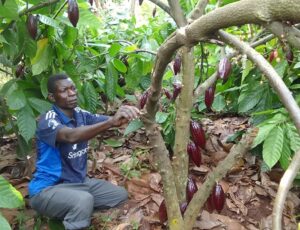
“I used to have school fees challenge, but that pressure has vanished. As I talk, last year I laid 26,000 bricks, I build a two-roomed house for my children, and I’m laying the foundation for a three-roomed shop and 14 lockups at the trading center,” Cadribo attests to the benefits accruing from cocoa plantation.
From one plant at least three to five kilos of dry seeds can be harvested. That is between sh90,000 and sh150,000 cool money per plant. Cocoa is an all season crop because as early fruits mature, others are still growing while other branches are flowering and fruiting all on the same plant.
Francis Acidri Mawa, the local council II chairman for Igamara parish counted 135 cocoa farmers who have planted combined 2500 acres of cocoa.
The cocoa plants are doing very well and Maracha farmers intercrop cocoa with bananas, cassava, pigeon peas and other tree cover such as Musizi, giving a splendid green view.
Farmers field visit
Moved by the Maracha success, Acidri has been joined by Bernard Atiku, the former Member of Parliament for Ayivu constituency in the promotion of the newfound cash earner for West Nile.
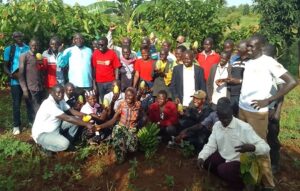
Last week, he drove over 40 farmers from Ayivu West Constituency to learn cocoa agronomy from their counterparts in Maracha.
“I am surprised by this visit. When I started cocoa farming I never thought I would be visited by farmers like this,” commented Feta whose one acre farm is also a collection centre for cocoa produce from other farmers in the area.
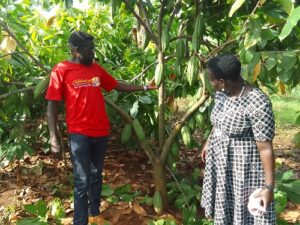
Scovia Driciru, a resident of Komite in Pajulu Sub County, in Ayivu was awe-struck to see how well cocoa was growing in the region.
She was particularly interested on application and management of manure on the fields and promised that she will not only share the knowledge with friends –women and people with disabilities- but also encourage those who are willing to embrace cocoa to go and learn from farmers in Maracha.
The two former legislators buy the cocoa beans on cash and carry bases and then resale to ESOM, a French Company based in Kampala but Russians are said to be joining the fray with millions of dollars waiting for uptick of production.
“The Frenchman has send me a message asking for cocoa for USD$20m,” Acidri said. Hahaha! The Russians want over 5000 metric tons of cocoa, now, but there is not enough production,” Atiku chipped in a casual exchange between the principals.
Cocoa in Uganda
Cocoa production as a serious cash earner is gaining steem in Uganda mostly in the Central and Western districts.
Bundibugyo, Mukono, Jinja, Buikwe, Iganga, Masindi and Mayuge among others but the crop is moving north and to North-west where it has reached Arua, Maracha and Koboko.
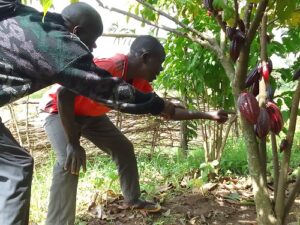
In fact Atiku said it is only the Rhino Camp belt along the edges of River Nile where Cocoa might not do well enough to catapult the people out of poverty.
This is due to the soil texture and climatic conditions of that belt which can get too hot during dry season to the point of causing the cocoa plants to dry and wither.
Cocoa’s importance as one of the leading export crops for Uganda is not under denial with the World Intergrated Trade Solutions listing Indonesia, Malaysia, Netherlands, Italy and Turkey as top export destinations.
Meanwhile the least cocoa export volume went to the Russian Federation but that status is set to change as more Russians are showing interest to buy Ugandan cocoa according to the promoters of cocoa in West Nile.
Atiku said he was happy to be Marcha to see what the farmers there have been doing way back in 2020. The initial government agriculture zoning, an initiative devised under the National Agricultural Advisory Services as part of agriculture modernization program, did not recommend cocoa as a priority crop for West Nile but new research has lent tacit support to cocoa.
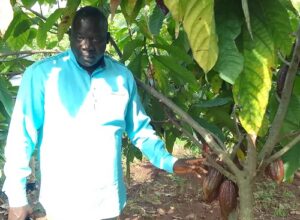
Throwing a challenge in Gen Salim Saleh direction, Atiku said there is no reason why the Operation Wealth Creation and ministry of agriculture cannot take up cocoa and promote it in West Nile. Gen Saleh is the OWC commander.
“There is no time to waste. All doubts about cocoa have been set aside, the mindsets are prepared and the people are eager,” he said.
Atiku asserted that each homestead in the region should plant a minimum of 500 cocoa plants to enable the region to gain a speedy recovery of the vegetation cover lost to tobacco.
“Our people will reap not just cash benefits but also benefits of clean environment. In fact cocoa farmers should be enrolled to benefit from carbon credit and the government should start planning for processing our cocoa from within the country,” Stressed Atiku.
“There is no better income security than cocoa and yearly the global demand for cocoa is rising,” Atiku concluded.


I’m happy that cocoa growing in West Nile has replaced tobacco.but where do you get the seedlings and where will I get an expertise to explain for me about handling cocoa growing in my place terego district