
https://datawrapper.dwcdn.net/2EDfn/1/ []
Breaking News

Whether Bobi Wine Is In The Country Or Not, I As CDF Has Banned Him From Participating In Any Elections In Uganda- Gen Muhoozi Fumes

Uganda’s political atmosphere has once again grown tense following a strong statement attributed to Chief of Defence Forces, Gen Muhoozi Kainerugaba, concerning opposition leader Robert Kyagulanyi Ssentamu, widely known as Bobi Wine. The remarks have quickly spread across social and political circles, drawing attention from both supporters and critics.
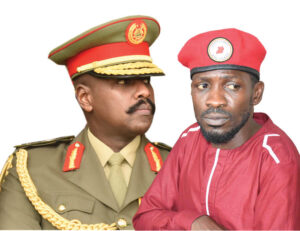
In the statement, Gen Muhoozi is quoted as saying that whether Bobi Wine is in the country or not, he would be banned from participating in any future elections in Uganda. The words, said to be spoken in the interest of national security and for the good of the country, have triggered heavy discussion among citizens.

Bobi Wine, the leader of the National Unity Platform (NUP), remains one of Uganda’s most popular opposition figures, especially among the youth. Over the years, he has built his political image around change, democracy, and challenging the long-standing leadership of President Yoweri Museveni.

The reported statement has raised serious legal and constitutional questions. Many Ugandans are now asking whether a military officer, even one holding the top army position, has the authority to ban a citizen from contesting in elections.

Uganda’s Constitution clearly outlines who is responsible for managing elections. The Electoral Commission is the legally recognized body in charge of organizing and supervising the electoral process. This has led some observers to argue that any such ban would need to follow legal procedures.

Supporters of Bobi Wine see the statement as a sign of fear from those in power. They argue that blocking political competition weakens democracy and denies citizens the right to choose leaders of their choice.

On the other hand, some government supporters believe security concerns must always come first. They say the country must be protected from instability, and leaders in charge of security may sometimes need to make tough decisions.

This development comes at a time when Uganda is slowly moving toward another election cycle. Political temperatures are already rising, with different leaders preparing their strategies and building support across the country.

Bobi Wine himself has faced several arrests, restrictions, and political challenges in the past. His political journey has often been marked by confrontations with security agencies during campaigns and public gatherings.

Analysts say statements like this can increase political tension if not properly addressed. They warn that strong words from powerful offices can shape public mood and influence how people view the fairness of the political environment.

The international community also keeps a close eye on Uganda’s elections. In the past, foreign observers have raised concerns about human rights, political freedoms, and the treatment of opposition leaders.

For many ordinary Ugandans, the key concern is peace and stability. People want an election period that is calm, free, and allows every qualified candidate to take part without fear.

Legal experts say that if any leader is to be stopped from contesting, it must be done through the courts and based on the law. They stress that political disagreements should not replace legal processes.

The debate has also shifted to social media, where Ugandans are openly sharing their views. Some are angry, others are worried, and many are simply confused about what this means for the country’s democracy.

Political leaders from different sides are expected to comment further in the coming days. Their responses could either calm the situation or increase the already growing political heat.

Observers note that Uganda has a history of heated political moments before elections. Such periods often test the strength of institutions and the commitment of leaders to democratic principles.

At the heart of the matter is the balance between security and political freedom. While national security is important, many believe it should not be used in a way that limits lawful political participation.

For Bobi Wine’s supporters, this moment may strengthen their resolve. They often see challenges against him as proof that he is a strong contender who worries the ruling establishment.

As the country waits for official clarification, one thing is clear: the statement has already had a big impact. It has reopened discussions about power, law, and the future of politics in Uganda.

In the end, how this issue is handled will shape public trust in the electoral process. Ugandans will be watching closely to see whether the path forward follows the rule of law and respects the voice of the people.

About West Nile

Check Also

Full List!! Here Are The 10 Cabinet Ministers Who Were Badly Defeated In Uganda’s 2026 Parliamentary Elections Uganda’s 2026 general elections have sent shockwaves across the country after ten serving cabinet ministers were badly defeated in parliamentary races. The results marked one of the most dramatic political moments in recent history and clearly showed a shift in voter mood. Across many regions, Ugandans used their votes to express frustration with long-serving leaders. The defeats reflected growing anger over economic hardship, unemployment, poor service delivery, and unfulfilled campaign promises. One of the most surprising losses was that of Beatrice Anywar, the Minister of Water and Environment. She lost the Kitgum Municipality seat to opposition candidate Dennis Onekalit Amere, ending her long political journey in Parliament. Anywar was once considered a strong political force, having served both in opposition and later in government. Her defeat shocked many supporters and showed how quickly political fortunes can change. In Ndorwa West County, David Bahati, the State Minister for Trade, Industry and Cooperatives, was also voted out. Bahati had lost the NRM primaries and chose to contest as an independent candidate. Despite his influence in the Kigezi region, voters rejected him at the ballot. His defeat marked the end of a long period of dominance and showed growing voter confidence in challenging powerful figures. One of the most talked-about races happened in Lira City, where two sitting cabinet ministers competed for the same seat. Betty Amongi, the Minister of Gender, Labour and Social Development, lost the Lira City Woman MP seat. She was defeated by Dr. Jane Ruth Aceng, the Minister of Health. This contest attracted national attention and highlighted internal competition within the ruling political class. Amongi’s defeat was widely seen as a strong message from voters who were unhappy with her political choices and leadership style. The loss also showed that holding a cabinet position does not guarantee victory. Another major defeat was that of Hamson Obua, the Government Chief Whip. He lost the Ajuri County seat despite his senior role in Parliament and close ties to the ruling party. Political analysts say Obua’s loss reflected growing dissatisfaction in northern Uganda, especially among young people facing unemployment and limited opportunities. Several other ministers were also swept out of Parliament. Moriku Kaducu, the State Minister for Primary Education, lost the Moyo District Woman MP race after a tough contest. John Mulimba, the State Minister for Foreign Affairs in charge of Regional Affairs, also failed to secure re-election. His loss added to the growing list of senior officials rejected by voters. In Chua County, Okello Oryem, the State Minister for Foreign Affairs responsible for International Affairs, was voted out. His defeat was another blow to the government’s top leadership. Frederick Ngobi Gume, the State Minister for Cooperatives, lost his Bulamogi North West seat in Kaliro District. Voters there chose change over continuity. Florence Nambozo Wamala, the State Minister for Karamoja Affairs, was defeated in the Sironko Woman MP race. Her loss showed that even regional ministers were not spared by voters. The final minister on the list was Peter Lokeris, the Minister for Karamoja Affairs, who lost the Chekwii East County seat. His defeat ended a long political career in Parliament. Across the country, voting patterns showed a strong desire for political renewal. Many voters openly supported new faces, especially in areas where leaders had stayed in power for many years. Opposition parties and independent candidates made strong gains, particularly in urban areas. At the same time, traditional ruling party strongholds showed clear signs of weakening. Political commentators described the election as a referendum on government performance. Many voters were unhappy with rising living costs, poor services, and lack of accountability. The loss of ten cabinet ministers has placed pressure on President Yoweri Museveni to rethink his Cabinet. While the law allows him to appoint ministers from outside Parliament, the defeats carry strong political meaning. NRM insiders admit that keeping defeated ministers in Cabinet could cause tension, especially as newly elected MPs push for leadership roles. As Uganda prepares for the 12th Parliament, one thing is clear. The House will be younger, more competitive, and less predictable than before. The 2026 elections delivered a powerful message from the people: no position is guaranteed, and even the most powerful ministers can be voted out.

Leave a Reply

Your email address will not be published. Required fields are marked *