Related Articles

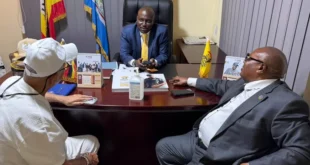

In an unexpected turn of events, Kasuku, a prominent media personality, opened up about his meeting with the President, a moment that had initially been full of high expectations but ended in a shocking letdown.
The meeting, which had been highly anticipated, was not just a casual affair—it was a chance to make a significant impression. According to Kasuku, both he and his producer had hoped for a substantial gesture from the President, something around 500 million shillings, given the investment in the event.

Kasuku, who had spared no expense for the meeting, went on to explain that they had even rented suits worth a staggering 3 million shillings in preparation for the meeting. The amount spent on these suits alone was an indication of how serious they were about the occasion. For someone of Kasuku’s stature, such preparation was expected to yield an equally impressive outcome.
However, the reality of the situation came crashing down when they were handed only 1 million shillings at the end of the meeting. The amount, which seemed almost laughable compared to the expectations, left Kasuku and his producer stunned and disappointed. It was a moment of truth that shattered the image they had created in their minds about what the meeting would bring.
“Despite all the planning and effort, we ended up with just 1 million,” Kasuku remarked, clearly expressing his frustration. “I and my producer expected like 500M from the President but only got 1M. Even the suits we hired were for 3M.” The comment was not just about money; it was a reflection of his dashed hopes and the gulf between expectations and reality.
To many, 1 million shillings may seem like a significant sum, but when you consider the financial commitment and high hopes that went into preparing for the meeting, the discrepancy was hard to ignore. Kasuku couldn’t help but feel that the outcome didn’t quite match the effort put into the event.
In the wake of his revelation, Kasuku shared a phrase that has now become iconic among his followers: “Kati tuli mu mabanja.” Translated loosely, this means “We are now in trouble.” It was his way of saying that, despite the apparent letdown, they were still in a difficult spot, dealing with the financial aftermath of their expectations not being met.
For Kasuku, the situation was more than just about the money. It was about the status, the prestige, and the promises that often surround such high-profile meetings. It was clear that he had expected much more than just a small token of appreciation from the President. His words suggested that the meeting had been more of a political gesture than anything that could make a significant difference in his life or business.
The fact that Kasuku and his producer had already committed to such high-end expenses, including the expensive suits, also highlighted the pressure that people in the public eye often face. The costs associated with maintaining a certain image are enormous, and when those costs aren’t met with the rewards expected, the disappointment is inevitable.

In an industry where image and perception are everything, such meetings are not just business transactions—they are opportunities for validation. The expectation of receiving a generous sum, in this case, was about more than just financial gain. It was a way for Kasuku to feel valued, recognized, and rewarded for his efforts. However, when the President’s gesture fell short, the entire experience left him feeling more disillusioned than appreciated.
Kasuku’s comments are also a commentary on the high stakes involved in political engagements. It is not uncommon for individuals in the entertainment or media sectors to have their expectations raised during meetings with influential figures, especially when there is a perceived promise of support. For Kasuku, this meeting was supposed to be a moment of validation, a reward for his years of hard work. But, instead, it became a lesson in managing expectations.
Although the 1 million shillings he received will certainly cover some costs, it was far from the kind of financial boost that Kasuku had envisioned. With his high expectations shattered, Kasuku might have to rethink how he approaches such meetings in the future.
One of the striking aspects of Kasuku’s story is how it exposes the challenges of working within the confines of political and public expectations. People in the entertainment and media industries are often seen as ‘insiders’ who are in the good books of those in power. But in this instance, Kasuku’s experience seemed to suggest that even those in high circles could end up feeling shortchanged.
As Kasuku’s story continues to circulate, it has sparked a larger conversation about the nature of political favors, media engagement, and how such relationships often play out in the public eye. The disparity between what is expected and what is delivered is something many individuals in similar positions can relate to.

The event has also sparked discussions about the political culture in Uganda and how media personalities navigate their relationship with power. Kasuku’s public airing of his grievances has opened up a window into the often unspoken dynamics of such high-profile engagements.
Despite the letdown, Kasuku did not hold back his opinions on the matter. His openness about the situation has earned him both sympathy and criticism, with many people divided on whether his response was justified or whether he should have kept his expectations in check. Nevertheless, his story serves as a reminder that in the world of politics and media, outcomes can sometimes be unpredictable.
Kasuku’s frustration resonates with many people who have experienced similar situations, where their high hopes and expectations were not met with the rewards they anticipated. It is a reminder that, no matter how much effort you put in or how much you plan, life does not always play out the way you expect.
For now, Kasuku’s experience serves as both a cautionary tale and a source of entertainment for those who follow his work. His followers are already discussing his comments, sharing their own stories of unmet expectations and reflecting on the broader implications of what it means to navigate the world of politics and public relations.
Kasuku, however, seems to have come to terms with the situation. While he may have been disappointed, he is now looking ahead, knowing that there are still more opportunities to come. His resilience in the face of disappointment is a testament to his character, showing that even when things don’t go as planned, there is always room for growth and moving forward.
In the end, Kasuku’s story serves as a reminder that not all meetings are what they seem, and sometimes the reality of an encounter can be a far cry from the expectation. It is a reflection of how things don’t always go according to plan, and the best you can do is learn from the experience and keep moving forward.
The meeting with the President may not have turned out as Kasuku had hoped, but his openness about the disappointment has added another layer to his public persona. Whether his fans sympathize or criticize, one thing is certain: Kasuku’s transparency has made him more relatable and human in the eyes of his followers.