Related Articles
Medard Ssegona, a prominent Ugandan politician, recently made waves with a brash statement that left many Ugandans both shocked and intrigued. Known for his directness and sharp tongue, the Member of Parliament for the Busiro East constituency asserted that even if he doesn’t get voted back into parliament, he will lose nothing. According to Ssegona, his wealth and lifestyle are secure, and his children’s education abroad is a reflection of the life he has built, which many can only dream of.
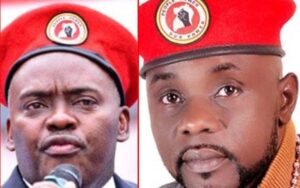
In an unexpected interview, Ssegona stated, “Even if I’m not voted back to parliament, I have nothing to lose. I’m rich enough and my children study in good schools abroad, which you can’t afford for your kids.” These words, spoken with unapologetic confidence, sent ripples across social media and sparked discussions about the intersection of wealth, power, and politics in Uganda.
His words seem to carry a heavy tone of self-assuredness, suggesting that his financial standing and personal success are far more important to him than any political position. This is especially striking in a nation where politicians often run for office with the goal of securing a more comfortable life, not only for themselves but for their families. Ssegona, however, seems to be suggesting that he is already living that dream.
Many Ugandans, especially those struggling with basic needs, were taken aback by the sheer boldness of his statement. It serves as a reminder of the glaring divide between the political elite and the common citizen. While ordinary Ugandans continue to fight for a better life, Ssegona’s assertion that he has no fear of losing his seat because of his wealth creates a clear image of how detached some politicians are from the realities of the average person.
But, is Ssegona’s claim true? Has he truly reached a point in his life where he no longer needs to rely on political office for survival? There’s no doubt that Ssegona has built a strong personal fortune over the years, with investments and properties that place him in a position of financial security. His children, studying abroad in top international schools, are a testament to this success.
Ssegona’s comment also sheds light on the growing trend of elite politicians in Uganda, who often seem more concerned with maintaining their luxurious lifestyles than addressing the needs of the very people who put them in power. For many, the image of a well-educated family abroad, far removed from the struggles faced by Ugandans back home, only further underscores the inequality within the political system.
However, it’s important to understand why Ssegona might have chosen to make such a bold declaration. In his mind, he may have been simply asserting his financial independence, making it clear that he is not bound to the whims of voters or the political establishment. For him, the loss of a political seat may not equate to the loss of power, wealth, or influence.
But is this confidence rooted in genuine peace of mind, or does it reflect a growing frustration with the political system? Many politicians find themselves in a position where they rely on their position in government to retain their status, wealth, and influence. Ssegona’s statement, therefore, might also hint at his belief that he has already transcended the need for political power in the conventional sense.

It is undeniable that wealth provides a level of freedom that most ordinary citizens will never experience. For Ssegona, this wealth seems to offer him the ability to live life on his own terms, unconstrained by the rules and expectations of Ugandan politics. It also allows him the freedom to speak openly, without the fear of retribution or loss of status.
But Ssegona’s words also reveal the deep divide that exists in Uganda’s political landscape. While many citizens continue to face economic challenges, the political class seems to live a life of privilege, where they no longer have to worry about the struggles of their constituents. Ssegona’s remark about his children studying abroad serves as a sharp reminder of how disconnected many politicians are from the everyday Ugandan.
His statement also raises questions about the role of wealth in politics. Should a politician’s financial standing dictate their actions or decisions? In Uganda, like in many other countries, wealth can often be an obstacle to genuine political change. When the interests of the elite are at odds with the needs of the majority, it’s easy to see how the political system can become disconnected from the people it is supposed to serve.
For Ssegona, it’s clear that his financial independence gives him a unique perspective. He seems to see his wealth not as a tool to advance his political career, but as something that allows him to live a comfortable life, no matter what happens at the ballot box. This kind of security is rare in Uganda, where many politicians are often financially dependent on their positions of power.
Despite his apparent disregard for the outcome of the upcoming elections, Ssegona’s comment may actually be a sign of how seriously he takes his influence. In the political world, wealth can be a source of immense power, even without a parliamentary seat. Whether or not he wins another term in office, his financial position will likely continue to give him significant influence within the Ugandan political sphere.
The public response to Ssegona’s statement has been mixed. Some view his words as a sign of arrogance, while others see them as a reflection of the reality of political life in Uganda. The idea that wealth can exempt someone from the consequences of their actions is deeply troubling for many, who see it as an illustration of how politics has become a game for the rich and powerful.
However, for Ssegona, his statement could simply be a reflection of his confidence in his personal achievements. He might feel that his wealth and the success of his children are the ultimate rewards of his hard work. In this context, his political career may seem like a side note, rather than the defining factor of his life.
At the same time, the statement also reflects the growing sentiment that Uganda’s political system is increasingly dominated by the rich. It is not uncommon for politicians to use their positions to amass wealth, and Ssegona’s words serve as a reminder that for some, politics is just another avenue to maintain or increase their wealth and status.

As the 2026 elections draw closer, Medard Ssegona’s bold claim will likely continue to stir debate. His wealth and his children’s education abroad are undeniable symbols of his success, but they also serve as a stark reminder of the divide between the elite and the rest of the population. Whether or not he is re-elected, it’s clear that Ssegona’s life will remain largely unchanged, as he continues to live in a world far removed from the struggles faced by ordinary Ugandans.
Medard Ssegona’s recent statements about his wealth and the lack of worry over his political future have caused quite a stir in Uganda. His words are a powerful reminder of the deep divide between the political elite and the everyday citizen.
For Ssegona, his riches and the education of his children abroad seem to make him immune to the consequences of not being re-elected, raising important questions about the role of wealth in politics. Whether viewed as arrogance or confidence, his words shed light on the growing inequalities within Uganda’s political system and the disconnect between those in power and the people they are supposed to represent.
Ssegona’s declaration also underscores the increasing trend of wealth concentration among Uganda’s political class, which has sparked a growing sense of disenfranchisement among the public. While the common citizen struggles with high inflation, unemployment, and the lack of basic services, many politicians like Ssegona are seemingly insulated from these challenges.
His comment about his children studying abroad, in particular, speaks to a broader issue of privilege — one that is often unattainable for the average Ugandan. This stark contrast between the lives of politicians and their constituents only fuels public skepticism and distrust toward the political elite.
Moreover, Ssegona’s statement could be interpreted as a subtle critique of the political system itself. His indifference toward the outcome of future elections might suggest a disillusionment with the political process, where he no longer feels compelled to secure a mandate from the people in order to maintain his position of influence.
It raises an uncomfortable question: when politicians are more invested in preserving their wealth than in serving their constituents, is the very essence of democracy compromised? For many, this reflects a system where power and money are so intertwined that electoral outcomes may no longer be as important as the ability to maintain both.