Related Articles

Ugandans have been left in shock after President Yoweri Museveni spoke out about the continued detention of opposition leader Kizza Besigye. In an unexpected address delivered to the people of Rukungiri, Besigye’s home district, Museveni expressed his unhappiness over the situation, adding that the delay in Besigye’s trial was due to interference by his lawyers. This statement has sparked mixed reactions across the country, as many were not expecting Museveni to speak out in such a direct manner.
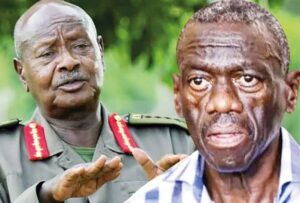
Kizza Besigye, a long-time political rival to President Museveni, has been in detention for an extended period, leading to widespread public debate about his imprisonment. Besigye, who was a key figure in the National Resistance Army (NRA) during the bush war, has maintained a significant presence in Ugandan politics and is considered by many as the leader of the opposition. His continued incarceration has caused discontent, particularly among his supporters in the Kigezi sub-region, which is seen as Besigye’s stronghold.
In a statement read on behalf of President Museveni by Deputy Speaker of Parliament Thomas Tayebwa, the president acknowledged the complex relationship he has with Besigye. He described him as a “personal friend” and a comrade in arms during the NRA bush war that brought Museveni to power in 1986.
Despite their friendship, Museveni made it clear that the law must take its course. “There is nothing wrong between me and Besigye. He is my friend, and we fought together in the bush. I’m concerned about his health and well-being, but nobody is above the law,” Museveni reportedly said.
While Museveni expressed his personal concerns for Besigye, he emphasized that the opposition leader’s case would be handled according to the law. The president’s message, however, did not seem to offer much comfort to the opposition, as many saw it as a political statement aimed at maintaining the image of law and order. “Once you commit a crime, you must face the law,” Museveni’s statement read, underlining his belief that no one, regardless of their past alliances, should escape legal consequences.
The public address by Tayebwa in Rukungiri, which was attended by several political leaders, revealed the underlying tension surrounding Besigye’s detention. Tayebwa, speaking on behalf of the president, made it clear that the issue was not one of personal animosity, but a legal matter. “I’m not happy with the continued detention of your son, Besigye. I know you are also not happy, but Besigye is in state custody and will be tried in courts of law like any other Ugandan,” Tayebwa said, quoting Museveni.
One of the most significant points raised in the address was the accusation that Besigye’s lawyers were intentionally delaying the trial. Tayebwa blamed the opposition leader’s legal team for frustrating efforts to bring Besigye’s case before the courts. He pointed out that over 10 letters had been submitted to the judiciary, asking for delays and preventing the trial from proceeding as scheduled. “We are ready, but every time we try to listen to his case, his lawyers come up with issues that make the work of judges hard,” Tayebwa said, highlighting the obstacles that had been put in place.
This assertion that Besigye’s legal team was the main source of the delays is likely to stir controversy. Supporters of the opposition leader may see this as an attempt to shift blame from the government’s handling of the situation, while critics of Besigye may agree with the president’s claim that the legal process has been unnecessarily prolonged. The case has become a focal point in the wider political debate about justice and the treatment of opposition figures under Museveni’s rule.

Besigye’s continued detention and the delays in his trial have raised several questions about the state of democracy in Uganda. Critics argue that his imprisonment is politically motivated, aimed at silencing a prominent opponent who has long been a thorn in the side of Museveni’s administration. Besigye has run for president multiple times, and his supporters believe that his candidacy poses a serious challenge to Museveni’s prolonged rule.
The fact that Museveni has publicly addressed the issue, especially in Besigye’s home region, adds another layer of complexity to the matter. The people of Rukungiri, many of whom support Besigye, are likely to interpret the president’s words in different ways. Some may see it as an attempt to show empathy, while others may view it as an effort to placate the situation without making any real change.
The ongoing political drama surrounding Besigye has also highlighted the deep divisions in Ugandan society. The country is often described as politically polarized, with Museveni’s supporters on one side and the opposition, led by figures like Besigye, on the other. These divisions have been exacerbated by the long-standing issue of political repression, with many opposition leaders facing arrest, harassment, and other forms of state violence.
In recent years, Uganda has faced growing international criticism for its human rights record, particularly in relation to its treatment of opposition figures. The detention of Besigye, along with other opposition leaders, has drawn the attention of foreign governments and human rights organizations, who have called for greater respect for democratic freedoms and the rule of law.
As Besigye remains in prison, his supporters are left wondering whether his case will ever be fairly heard in court. They argue that the continued delays are a sign that the government is afraid of letting Besigye defend himself publicly and expose the flaws in the legal process. On the other hand, those loyal to Museveni argue that Besigye’s trial must be conducted within the framework of the law, with no special treatment or favoritism.
It is also worth noting that the situation comes at a time when Uganda is preparing for the 2026 general elections. The political climate is tense, with many Ugandans wondering whether the elections will be free and fair. Besigye’s ongoing imprisonment has become a symbol of the challenges facing the opposition, and it is likely that his case will continue to be a major issue in the lead-up to the polls.
The role of the judiciary in this matter cannot be overlooked. While the government has blamed Besigye’s lawyers for the delays, there are many who believe that the judiciary itself is not free from political influence. Some argue that the judicial system is complicit in the repression of opposition leaders and that it lacks the independence needed to deliver fair justice. This raises further concerns about the ability of Ugandans to trust the legal system.
As the situation continues to unfold, many Ugandans are left to wonder what the future holds for Kizza Besigye. Will he be given a fair trial, or will the political forces aligned with Museveni continue to block his path to justice? The answers to these questions remain uncertain, but one thing is clear: the political landscape in Uganda is far from stable, and Besigye’s case will likely remain a central issue in the country’s ongoing struggle for democracy.

The people of Uganda are waiting, not just for a resolution to Besigye’s case, but for a larger reckoning about the state of their country’s political and legal systems. For now, the impasse continues, and the tension between Museveni’s government and the opposition shows no signs of easing.
The growing tension around Besigye’s detention has not only divided political leaders but has also sparked debates among ordinary Ugandans. Some believe that the government is using Besigye’s imprisonment as a tool to suppress opposition voices ahead of the 2026 elections. Others argue that his case is a distraction from more pressing national issues, and that he should face the legal consequences of any alleged wrongdoing. This ongoing controversy underscores the polarization in Ugandan society, where every political event seems to be seen through the lens of either support or opposition to Museveni’s long-standing leadership.
While the president’s statement in Rukungiri did little to calm the situation, it also highlighted the intricate relationship between personal friendships and political duty. Museveni’s acknowledgment that Besigye is a former comrade who fought alongside him in the NRA bush war raises important questions about the role of loyalty and friendship in a political landscape dominated by power struggles.
Despite this, Museveni’s emphasis on the rule of law indicates his belief that justice, not personal connections, should prevail in legal matters. However, this stance is not always shared by his critics, who see the legal system as being deeply influenced by the government’s agenda.
The pressure on the judiciary continues to grow, as many believe that Besigye’s trial is an opportunity for the courts to prove their independence. However, the delays in his case have made it harder for the public to trust that justice will be served. People are increasingly questioning whether the legal system can truly offer fair trials when high-profile political figures are involved. These questions are particularly important for those who see the trial as a test case for Uganda’s commitment to democratic ideals and human rights.
In the face of mounting public pressure, some government officials have suggested that the legal process will eventually be completed, and Besigye will face his day in court. But as time passes, the uncertainty surrounding his case only deepens.
For many, Besigye’s continued detention represents not just a personal tragedy but a larger symbol of the struggles that opposition figures face under Museveni’s rule. The outcome of his trial, whenever it happens, will likely have far-reaching consequences for the future of Uganda’s democracy and political freedoms.