Related Articles

President Yoweri Museveni has once again stirred political debate after declaring that there is no real opposition in Uganda.

His remarks came shortly after he met a group of opposition figures at State House, a meeting that has attracted widespread public attention.
Museveni made the statement confidently, saying that what exists in Uganda today is not a strong opposition with clear ideas, but individuals driven by personal interests. According to him, many opposition politicians lack a clear vision for the country.
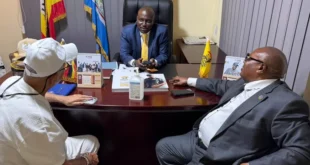
The meeting at State House was led by Nsibambi, along with several other opposition-leaning leaders.
The group reportedly went to discuss issues of national importance and political cooperation.
After the meeting, Museveni told those present that Uganda’s politics have changed over time. He argued that many opposition figures now seek dialogue with government rather than confrontation.
In Museveni’s view, this trend proves that opposition politics in Uganda is weak and divided. He said people who strongly oppose government policies would not be lining up to meet him at State House.

The President claimed that some opposition leaders privately agree with government programs but publicly criticize them for political survival. He described this behavior as dishonest to the voters.
Museveni further argued that real opposition should offer alternative ideas and practical solutions. He said simply opposing government for the sake of it does not help the country.
He added that Uganda’s ruling party, the National Resistance Movement, continues to dominate because it focuses on stability, development, and national unity.
According to Museveni, this dominance has left the opposition struggling to define its role. He claimed that many opposition politicians end up cooperating with government when reality confronts them.
The President also said that some opposition leaders only become vocal during election seasons. After elections, he noted, many of them quietly seek engagement with government.
Supporters of Museveni argue that his statement reflects the political reality in Uganda. They say the opposition has failed to unite and present a strong alternative leadership.
However, critics strongly disagree. They say Museveni’s remarks are meant to undermine legitimate opposition voices and weaken democratic debate.
Some opposition supporters argue that meeting the President does not mean surrendering political independence. They say dialogue is part of democracy, not a sign of weakness.
Political analysts note that Museveni’s statement touches on a long-standing issue in Ugandan politics. The opposition has often been divided by ideology, leadership struggles, and limited resources.
Analysts also say the ruling party’s long stay in power has made it difficult for opposition groups to grow strong structures nationwide.
The meeting at State House has therefore raised questions about the future of opposition politics. Many wonder whether more opposition figures will choose dialogue over confrontation.

For some Ugandans, Museveni’s declaration was not surprising. They believe the opposition has failed to protect citizens from rising costs of living and unemployment.
Others see the statement as a warning shot. They believe the President is signaling confidence as the country moves toward future political transitions.
Museveni maintained that Uganda needs unity more than endless political fights. He said development cannot happen in an environment of constant political tension.
He encouraged politicians to focus on practical solutions such as job creation, education, and wealth creation rather than empty political arguments.
The opposition figures who attended the meeting have defended their decision. They said engaging the President does not mean abandoning their political beliefs.
As the debate continues, Museveni’s words have once again dominated national discussion. Whether his claim that “there is no opposition in Uganda” reflects reality or political strategy remains a matter of public debate.
What is clear is that Uganda’s political landscape is evolving. Dialogue, cooperation, and confrontation are all shaping the next chapter of the country’s politics.