Related Articles

Uganda People’s Congress (UPC) president Jimmy Akena has strongly criticised Chief of Defence Forces Gen Muhoozi Kainerugaba, saying the attitude and words coming from him are an embarrassment to all Ugandans.
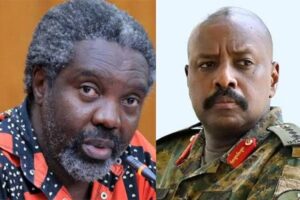
Speaking with visible anger and frustration, Akena urged the army chief to “grow up” and act with the maturity expected of someone holding such a powerful national office.
Akena said his remarks were driven by concern for the country, not personal hatred.
He explained that leaders in sensitive positions must always remember that their words can either unite or divide the nation.
According to him, recent statements attributed to Gen Muhoozi have instead created fear, tension, and confusion among citizens.
The UPC leader noted that the Office of the Chief of Defence Forces carries enormous responsibility. He argued that any message coming from that office should reflect discipline, professionalism, and respect for the people of Uganda. In his view, this standard has not been met in recent times.
Akena specifically pointed to public statements and social media posts that he described as reckless.

He said such comments have lowered the dignity of the military and exposed the country to unnecessary criticism both at home and abroad.
He questioned how a senior army officer could openly speak in ways that suggest violence against political opponents. Akena said this kind of language has no place in a democratic society where leaders are chosen by the people through elections.
According to Akena, Uganda has worked hard to build political institutions after years of instability. He warned that careless talk from powerful individuals threatens to undo that progress and return the country to an era of fear.
Akena also raised concern about respect for political competition.
He said opposition leaders, regardless of their political views, represent millions of Ugandans and deserve to be treated with dignity, not insults or threats.
The UPC president argued that leadership is not about showing power through intimidation. Instead, he said, true leadership is shown through calmness, restraint, and the ability to handle criticism without anger.
He added that Gen Muhoozi’s words do not only affect politics but also the image of the Uganda People’s Defence Forces. Akena said the army should be seen as a neutral and professional institution that serves all Ugandans equally.
Akena expressed disappointment that many leaders have chosen to remain silent. He suggested that fear has prevented open criticism, even when people strongly disagree with the conduct coming from the Office of the CDF.
He said his decision to speak out was deliberate. Akena explained that silence in the face of what he called “embarrassing behavior” would make him part of the problem rather than part of the solution.
The UPC leader also linked the issue to Gen Muhoozi’s perceived political ambitions. He said anyone who hopes to lead the country in the future must start by showing maturity and respect today.
Akena warned that words spoken by powerful figures can easily be misunderstood by security forces on the ground. He said such statements could be taken as orders, leading to unnecessary violence.

He called on Gen Muhoozi to reflect deeply on the impact of his public communication. According to Akena, being a national leader requires emotional control and careful choice of words.
Akena further noted that Uganda is being watched by the international community. He said reckless statements damage the country’s reputation and can affect diplomatic and economic relations.
He urged other political leaders and institutions to speak up. Akena said defending democracy and national dignity should not be left to a few brave voices.
The UPC president insisted that his criticism was not an attack on the military as an institution. He clarified that his concern was about individual conduct, not the role of the army in protecting the nation.
He concluded by repeating his call for Gen Muhoozi to “grow up.” Akena said maturity, discipline, and respect are not optional for those in positions of power.
As debate continues across the country, Akena’s strong words have added to growing public discussion about leadership, responsibility, and accountability in Uganda.
For many Ugandans, his message reflects a wider feeling of frustration and concern. Whether it leads to change or deeper debate, Akena’s call has firmly placed the issue of leadership conduct at the center of national conversation.