Related Articles

President Yoweri Kaguta Museveni has surprised many Ugandans with a strong statement on the use of force by security personnel during elections. On Wednesday, he warned that beating and torturing political supporters was both unnecessary and avoidable, making his remarks particularly significant given the long-standing accusations from opposition parties, especially the National Unity Platform (NUP), about security forces using excessive violence against their supporters.
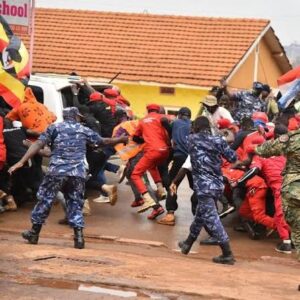
“Beating people shows a lack of patience. Torture during elections is not necessary, and I will engage the security forces on this,” Museveni stated, emphasizing the importance of maintaining peace as a top priority for the country. His comments came at a time when the opposition had raised serious concerns about the conduct of security officers during election periods.
He also reiterated his commitment to ensuring Uganda’s peace and stability, asserting that anyone attempting to disrupt the peace would be dealt with according to the law. His words seem to be a direct response to persistent accusations that police and military personnel had resorted to heavy-handed tactics, including beatings, torture, and arbitrary detentions, particularly targeting NUP supporters. These allegations, however, have been denied by the government.
For many, Museveni’s remarks marked a shift in tone. His decision to publicly acknowledge the problem of excessive force shows a willingness to address the concerns of those who feel threatened by the state’s actions during politically sensitive periods.
The National Unity Platform (NUP), led by Robert Kyagulanyi, popularly known as Bobi Wine, has been vocal about the treatment of its supporters. They have consistently accused the government of deploying the military and police to violently disrupt their rallies, intimidate activists, and harass their members. According to NUP, these tactics were designed to stifle dissent and intimidate those who opposed the government.
While Museveni’s words seemed to signal an attempt at reconciliation with opposition groups, the reality on the ground remains complicated. Critics have long argued that the government has failed to curtail the widespread abuses carried out by the security forces, and for many Ugandans, this statement alone may not be enough to restore trust in the system.
Moreover, the president rejected the argument that security agencies were overstretched during moments of public disorder. He pointed out that peace and order are maintained not by sheer numbers, but by discipline and organization. “I have heard statements suggesting there are few soldiers and many rioters. Peace and order are maintained through organization, not numbers alone,” he said, suggesting that the real issue might lie in the way security forces are managed rather than their numbers.

Turning his focus to development, Museveni spoke of the progress made in the Greater Mubende sub-region, despite challenges that remained, particularly in terms of leadership and prioritization. He noted that some areas, like Kasanda District, had a worrying lack of access to safe water, which he attributed to poor leadership choices. “Kasanda has only 34% access to safe water. That reflects leadership choices,” he explained.
On the other hand, Museveni was quick to highlight the improvements in other areas. He pointed to progress in electricity access, road networks, telecommunications, and health centers in regions like Kyankwanzi, where significant strides had been made in the past few years.
In terms of health, Museveni attributed population growth in certain regions to successful government immunization programs. He proudly mentioned Mityana, a district that now has a population of over 400,000 people, a rise he attributed to better healthcare for children. “The population increased because children are surviving,” he remarked.
Despite the achievements, the president insisted that the government must be more disciplined in using public resources. He stressed that while the state cannot be the main employer in a country with nearly 50 million people, it plays a crucial role in creating the right conditions for private sector growth. “Government jobs are about 480,000. Real jobs come from wealth — factories, commercial agriculture, services, and ICT,” Museveni said, noting that the country’s new factories had already created around 1.3 million jobs.
Museveni also defended his administration’s policy on free education, explaining that the problem of school dropouts had increased due to the return of school charges. He argued that when charges were reintroduced, it led to children dropping out of school, but he reassured Ugandans that the government was working to absorb those who had dropped out into “presidential skilling hubs.”
In his remarks about economic strategy, Museveni criticized opposition leaders for focusing too much on inward-looking policies. He argued that these policies ignored the importance of regional markets. “None of the opposition presidential candidates talk about the regional market. That thinking is dangerous,” he warned. Instead, he called for greater regional integration, citing the African proverb, “Uhuru na Umoja” — freedom and unity, highlighting the need to see Uganda as part of a larger regional community.
“Being a big fish in small ponds weakens us,” he added, underscoring his belief in regional cooperation and trade. For Museveni, this was not just a policy point but a call for the nation to think beyond its borders, embracing a broader vision of growth that included cooperation with neighboring countries.

At the heart of Museveni’s message on Wednesday was the idea that Uganda’s future prosperity depended not only on maintaining internal peace but also on becoming an active player in regional markets. He urged young people, regardless of political affiliation, to support this vision for the future, stressing that the government’s efforts would continue in areas like infrastructure, education, and healthcare to improve the lives of all Ugandans.
As Uganda heads into another election cycle, Museveni’s remarks on security and development are likely to resonate with many, especially those who have felt the effects of political violence and instability. However, for others, these words may not go far enough in addressing the deep-rooted issues of security sector reform and political freedom.
While the president’s words may signal a shift in the government’s approach to dealing with political unrest, many will be watching closely to see whether these promises lead to tangible change or remain just political rhetoric. The real test will be in the actions that follow, particularly in the run-up to the 2026 elections, where the dynamics of security, peace, and political freedom will undoubtedly take center stage.
For now, Ugandans are left grappling with a key question: can the government, under President Museveni’s leadership, truly move beyond the history of election violence and intimidation to create a more peaceful and democratic future? The answer to this question will shape the country’s path in the years to come.
As President Museveni called for a disciplined, organized approach to security and governance, it is clear that the nation’s progress will depend on how well these principles are implemented at every level of society. Whether the government can bridge the gap between words and actions will determine whether Uganda’s future remains as hopeful as the president suggests or whether it risks being marred by continued unrest and division.
While President Museveni’s call for discipline and restraint within the security forces is certainly an encouraging development, the true challenge will lie in ensuring that these directives are effectively enforced across all levels of government. Past instances of security personnel engaging in violent tactics, particularly during politically charged times, have left a deep mistrust among many Ugandans.
To rebuild this trust, it will not only be crucial for the president to take decisive action against any officer found guilty of misconduct but also for the broader security infrastructure to undergo significant reforms that prioritize accountability and human rights. Only then can the promises of peace and justice be realized in a way that resonates with every citizen.