Related Articles

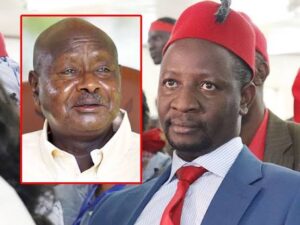
Honorable Ibrahim Ssemujju Nganda, a well-known opposition figure and journalist-turned-politician, has openly spoken about the challenges he faces in returning to Parliament.
According to him, the main issue preventing his political comeback is not lack of support or political skill, but rather the tensions between him and members of the ruling National Resistance Movement (NRM).
Ssemujju said in a recent interview that an NRM Member of Parliament confided in him, revealing that the reason he is struggling to secure the backing he needs is his outspoken nature.
“An NRM MP told me that the problem is that I abuse them a lot, otherwise they would have helped me to return to Parliament,” Ssemujju stated.
This candid admission underscores the delicate dynamics of Ugandan politics, where relationships between opposition leaders and ruling party members can significantly influence political fortunes.
Ssemujju’s outspoken approach, he suggests, has created barriers to cooperation with the very people who could facilitate his parliamentary return.
The legislator reflected on his political career, noting that his journey has often been marked by speaking truth to power. He said his bold criticism of the ruling establishment has earned him respect among constituents but has simultaneously made alliances with NRM members difficult to maintain.
Ssemujju explained that his criticism of certain policies and individual leaders in the ruling party has been consistent and public. While this approach strengthens his credibility among opposition supporters, it also means that some NRM figures are reluctant to work with him, even if collaboration could be mutually beneficial.

He revealed that several NRM officials acknowledge his competence and political influence but remain hesitant to support him due to personal and political grievances arising from his past remarks. According to Ssemujju, this creates a paradox where his political strength simultaneously limits his ability to navigate parliamentary alliances.
Ssemujju also discussed how political relationships in Uganda are often influenced by personal rapport and mutual respect. He believes that while policy positions matter, interpersonal dynamics play a crucial role in determining which politicians gain backing from influential figures within the ruling party.
Reflecting on past elections, Ssemujju admitted that his candid approach has occasionally been a double-edged sword. Constituents appreciate his honesty, he said, but some peers in power view his forthrightness as a threat, leading them to withhold support when he needs it most.
The legislator acknowledged that criticism and scrutiny are essential in a democracy. He argued that his outspoken style serves a greater purpose — to hold those in power accountable and ensure that the voices of ordinary citizens are represented in national decision-making.
He also revealed that, despite the challenges, he continues to seek constructive engagement with colleagues across party lines. Ssemujju stressed that his goal is not to alienate anyone unnecessarily, but to remain true to his principles while advocating for his constituents.
Ssemujju shared anecdotes about conversations with NRM MPs, noting that while some appreciate his knowledge of parliamentary procedures and policy expertise, they are often wary of his bluntness. He said this bluntness is often misinterpreted as hostility rather than as a form of political candor.
The legislator lamented that the political climate in Uganda sometimes discourages honest dialogue between parties. He said that while alliances are possible, his habit of openly criticizing certain NRM actions has led some to doubt his willingness to compromise or cooperate, even when collaboration would benefit his constituents.
Ssemujju highlighted the importance of political strategy and timing. He explained that navigating relationships with NRM members requires not only credibility and knowledge but also diplomacy, tact, and the ability to balance critique with constructive engagement.
He admitted that he may have sometimes prioritized speaking the truth over maintaining cordial relations, a decision that reflects his commitment to principles rather than political expediency. While this has occasionally cost him support, Ssemujju insists it has earned him the trust of his voters.
Ssemujju further emphasized that being outspoken does not mean being reckless. He believes that criticism should be informed, deliberate, and aimed at improving governance, not merely attacking individuals. Nevertheless, the reception of such criticism is often influenced by existing political rivalries and sensitivities.

He also discussed the broader political landscape, noting that the NRM controls significant levers of power in Uganda’s Parliament. As such, any opposition politician seeking to make progress must navigate complex political relationships while maintaining credibility with the electorate.
Ssemujju revealed that some of his closest allies have cautioned him to moderate his public criticisms, but he remains convinced that transparency and accountability must come first. He argues that compromise should never come at the expense of principle or honesty in governance.
He reflected on the lessons learned from past interactions with ruling party members. Ssemujju admitted that while some NRM MPs have personally supported him behind the scenes, their public hesitation or political caution limits their ability to openly endorse or assist him.
The legislator noted that politics in Uganda is as much about perception as it is about policy. While he has earned respect for his knowledge, work ethic, and dedication, perceptions about his forthright nature continue to shape how potential allies respond to his initiatives.
Ssemujju concluded by expressing hope that, over time, political culture in Uganda can evolve to value principled discourse and collaboration, even among adversaries. He emphasized that his goal remains to serve his constituents faithfully, whether or not he receives unconditional backing from NRM MPs.
Finally, Ssemujju’s reflections underscore the tension between principle and pragmatism in Ugandan politics.
They reveal the challenges faced by politicians who prioritize honesty and accountability while navigating a political system heavily influenced by party loyalty, alliances, and personal dynamics.