Related Articles

Uganda’s political and diplomatic discussion has intensified following strong remarks attributed to General Muhoozi Kainerugaba regarding possible sanctions from the United States.
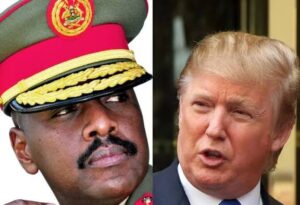
His statement suggests that if he or Uganda were to face sanctions, the country would respond with its own countermeasures.
The comment quickly attracted attention because it touches on international relations, a sensitive area that affects trade, security, and cooperation between nations. Whenever a senior figure speaks about sanctions, people both inside and outside the country listen carefully.
In his message, Gen. Muhoozi appeared to warn against what he called “spoilers” in the USA. The term “spoilers” often refers to individuals or groups believed to interfere with another country’s internal matters or political direction.
Sanctions are usually used by powerful countries as a way of applying pressure without using military force. They can target individuals, government officials, or entire sectors of a country’s economy.
When talk of sanctions comes up, it often raises concern among citizens. Many people worry about how such measures could affect the economy, jobs, and access to international markets.
Gen. Muhoozi’s response suggested that Uganda would not remain silent if such actions were taken. The idea of “sanctioning them too” presents a message of resistance and national pride, showing a refusal to be seen as weak.

Supporters of this position argue that every country has the right to defend its sovereignty. They believe no nation should be allowed to pressure another without expecting a response.
Critics, however, say strong words between countries can increase diplomatic tension. They believe dialogue and negotiation are often more effective than threats of retaliation.
Uganda and the United States have had a long relationship that includes cooperation in security, health, and development programs. Because of this, statements about sanctions can raise questions about the future of that partnership.
Political analysts note that leaders sometimes use strong language to send a message not only internationally but also to their domestic audience. Such statements can strengthen the image of a leader who stands firm against foreign pressure.
For many Ugandans, the issue of foreign influence in national affairs is emotional. Some feel that outside powers should not decide Uganda’s political direction or leadership choices.
At the same time, others point out that Uganda is part of a global community where actions taken in one country can have international consequences. They say diplomacy requires careful balance.
Social media users quickly reacted to the statement. Some praised the strong tone, saying Uganda must show confidence and independence. Others worried that escalating words could affect investment and international trust.

Sanctions, if ever applied, can affect travel, financial systems, and business relations. This is why such topics often go beyond politics and touch on everyday life.
Observers also say the statement reflects a wider global trend where countries are more openly challenging Western influence. Across different regions, leaders are increasingly speaking about sovereignty and self-determination.
However, diplomacy usually happens behind closed doors as well as in public. Strong public statements are sometimes followed by quiet discussions aimed at reducing tension.
The phrase “we shall respond” signals readiness, but it does not always mean immediate action. In many cases, such language is meant to act as a warning rather than a final decision.
For citizens, the most important concern remains stability. People hope that disagreements between nations will not lead to economic hardship or disruptions in daily life.
In the end, Gen. Muhoozi’s remarks have added a new layer to Uganda’s political conversation, bringing international relations into the spotlight. They highlight how closely connected domestic politics and global diplomacy have become.
As discussions continue, many will be watching to see whether these strong words lead to further developments or remain part of the ongoing political and diplomatic rhetoric shaping today’s Uganda.