Related Articles

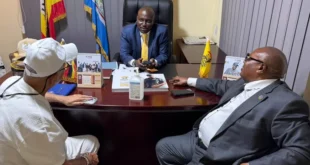

Gen. Moses Ali, Uganda’s Second Deputy Prime Minister and long-serving Member of Parliament for Adjumani West, has strongly dismissed reports questioning his health and fitness for political office. The veteran politician described the claims as false, misleading, and politically motivated propaganda aimed at weakening his chances ahead of the 2026 general elections. He made it clear that he remains physically fit, mentally sharp, and fully committed to serving his people.
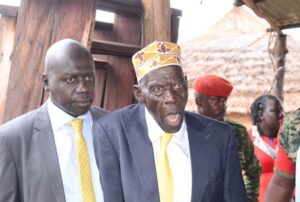
Speaking to journalists, Gen Ali said he was surprised by media reports alleging that his doctor had advised him to choose between his life and active politics. He firmly stated that no such medical advice had ever been given to him. According to the general, the claims were completely baseless and designed to misinform the public.
Gen Ali clarified that he has not traveled to Germany this year, contrary to reports suggesting he went there for medical treatment. He explained that his last visit to Germany was in October last year and that he has not consulted any doctor there in 2026. He urged journalists to always verify information directly from him instead of relying on rumors.
“I want to thank you for coming to me directly,” Gen Ali said. “I am not aware of any doctor advising me to abandon politics. I have not been to Germany this year; I only travelled there last October.” He emphasized that his health is stable and that he continues to carry out his duties without difficulty.
The general described the allegations as deliberate misinformation meant to paint him as weak and unfit for leadership. He said such tactics are common during election seasons, especially when opponents feel threatened by a strong and experienced candidate. According to him, his long service and influence make him a target of constant attacks.
Gen Ali also addressed reports of an alleged court case filed against him by writer and human rights activist Kakwenza Rukirabashaija. The petition reportedly seeks to block his nomination to contest in the 2026 elections on health grounds. However, the general said he has not received any court summons or official communication regarding such a case.
“I have not received any court order or summons, so I am not aware of the alleged case,” he said. He questioned why he was being singled out, asking whether he was the only elderly person serving in Parliament. His remarks highlighted concerns about what he described as selective and unfair targeting.
The petition, reportedly filed together with human rights defender Ssuna James Kiggala, claims that Gen Ali’s nomination violates citizens’ constitutional right to effective and accountable representation. The petitioners argue that his health allegedly limits his ability to perform parliamentary duties effectively.

According to the petition, the Electoral Commission nominated Gen Ali on October 22, 2025, as the NRM flag bearer for Adjumani West after he won the party primaries with 8,609 votes. The petitioners further accuse the Electoral Commission and the Attorney General of failing in their constitutional duties by approving his nomination.
Gen Ali, however, rejected these claims, saying they are not supported by facts. He insisted that he actively participates in parliamentary work, attends meetings, and engages with voters regularly. He said his record speaks for itself and should be judged based on performance, not rumors.
His political aide and campaign team leader, Mr Gabu Amacha, also came out strongly to defend him. Amacha dismissed both the health and legal claims as political gimmicks designed to damage Gen Ali’s image. He said the general remains a formidable candidate with massive support on the ground.
“This is pure political mischief by people who wish him ill,” Amacha said. He explained that as head of the campaign team, he continues to witness overwhelming support from voters across the constituency. He expressed confidence that Gen Ali will win the 2026 elections.
Amacha noted that this is not the first time such propaganda has been used against the general. He said similar tactics were used in previous elections, yet Gen Ali emerged victorious. According to him, the continued attacks only show how much opponents fear his strength and popularity.
He further pointed out that despite rumors about his health, Gen Ali remains active and energetic on the campaign trail. Amacha cited recent public events where the general was seen interacting freely with voters, dancing with them, and addressing rallies with confidence.

“You saw him dancing with the people,” Amacha said. “The crowds are happy, and the love for him is clear.” He added that Gen Ali’s connection with the people remains strong, and many voters still trust his leadership and experience.
Amacha also referred to Gen Ali’s performance in the NRM primary elections as clear proof of his popularity. He revealed that Gen Ali defeated three rivals by a very wide margin. Even when the votes of all three opponents are combined, they still fall far short of what Gen Ali secured.
At a public rally in Ukusijoni Sub-county, residents shared different opinions about the ongoing debate. Ms Gloria Mundua Chandia, a local resident, openly expressed her strong support for Gen Ali. She said she believes no other candidate can effectively represent the constituency.
Chandia praised Gen Ali’s closeness to the President, saying it gives the constituency an advantage. According to her, when issues arise, Gen Ali can easily raise them at the highest level. She argued that other candidates lack such direct access and influence.
However, not everyone shared the same view. Mr Peter Adebasiku, who identified himself as an opposition supporter, said it was time for a new generation of leaders. He argued that the constituency needs fresh energy and new ideas to move forward.
Adebasiku said he supports Mr Patrick Tandrupasi of the Forum for Democratic Change, praising his vision, commitment, and energy. He believes Tandrupasi is better suited to lead the community into a new era of development and accountability.
As the 2026 general elections draw closer, Gen Moses Ali is set to face three challengers, including Tandrupasi, his closest rival from the 2021 elections. With health rumors, legal claims, and political competition intensifying, the Adjumani West race is shaping up to be one of the most closely watched contests, testing whether experience and loyalty will once again outweigh calls for change.