Related Articles

Uganda’s political landscape has once again been shaken by startling claims from opposition leader Robert Kyagulanyi, also known as Bobi Wine. The National Unity Platform (NUP) leader has revealed that security circles have uncovered a plot by the current regime to have him arrested before Election Day, citing this move as part of a larger plan to justify violent crackdowns and military deployment. The allegations come as Bobi Wine continues to rally for the rights of Ugandans, denouncing the current government’s tactics as both oppressive and dangerous.
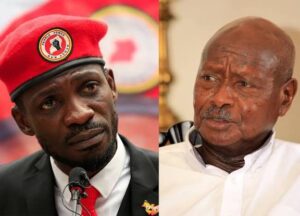
According to Bobi Wine, the regime’s strategy mirrors the events that transpired in November 2020, when protests erupted following his arrest. The state response was a heavy-handed military crackdown that led to several deaths and injuries. Bobi Wine claims that this time, the regime intends to preemptively create similar conditions by orchestrating his arrest before the polling day.
The details he provided, which were reportedly sourced from security circles, paint a disturbing picture of a government willing to go to extreme lengths to maintain control. The plan allegedly involves staging incidents that would justify severe action, particularly in areas where Bobi Wine’s influence is significant. According to his post, a police officer known only as “Bravo” is supposed to provoke a confrontation in Mbale City or the surrounding districts. This would then give the government a reason to deploy military forces to quash what could be portrayed as a violent uprising.
Bobi Wine’s post on social media also mentions another tactic that the regime might employ—sending in goons disguised in NUP party colors to create chaos and paint his party as violent. The intention, he argues, is to manipulate public perception and justify further crackdowns under the guise of restoring order. He has called on his supporters to remain peaceful, non-violent, but to remain “very assertive” in the face of these challenges.
This revelation has sparked outrage and concern among many Ugandans, especially those who are critical of the current regime. Many fear that the government might once again resort to its brutal tactics, using the threat of violence as a tool to suppress opposition.
In the past, Bobi Wine has faced multiple arrests, house arrests, and continuous harassment from the regime. These actions have only served to fuel the opposition’s resolve, with many seeing Bobi Wine as a symbol of hope for democratic change in the country. Yet, these new revelations about an impending arrest only add to the growing tension leading up to the election.
Bobi Wine’s supporters are increasingly worried about what this might mean for their safety and their ability to vote freely. They argue that any arrest of their leader would be a direct attack on democracy and the right to free expression. The fears of election violence, particularly after the bloody November 2020 protests, have only deepened with these latest claims.
In his statement, Bobi Wine remains defiant, urging his supporters to not fall into the trap set by the government. He has reiterated his commitment to non-violence, asking people to reject any provocation from those seeking to create chaos. “Our people must remain peaceful, non-violent but very assertive,” he wrote, signaling his determination to stay on course despite the threats looming over him.

The timing of these claims is crucial. As Uganda approaches election day, tensions are running high between the opposition and the ruling party. Bobi Wine, who has already established himself as one of the most prominent figures of resistance, has called for transparency and fairness in the upcoming elections. His arrest would, therefore, be seen as a severe blow to the democratic process.
Local and international observers have raised alarms over the possibility of election-related violence. Human rights organizations have consistently criticized the Ugandan government for its actions against the opposition and for the suppression of basic freedoms. The fear now is that the government might escalate these actions in the run-up to the elections, using Bobi Wine’s arrest as a pretext to declare a state of emergency and impose further restrictions on opposition activities.
This potential arrest also highlights the growing international attention on Uganda’s political situation. The West, particularly the United States and the European Union, have regularly expressed concern about the state of democracy in Uganda. If Bobi Wine is indeed arrested, it could trigger renewed pressure from international communities to hold the Ugandan government accountable for its actions.
Despite these growing challenges, Bobi Wine’s supporters remain hopeful that their voices will be heard. The leader’s resilience and the mobilization of youth across the country show that his movement is far from being silenced. However, the shadow of violence and suppression looms large, threatening to derail the hopes for peaceful change.
Meanwhile, the government has yet to respond directly to Bobi Wine’s allegations, which has left many wondering about their next move. Some speculate that the regime might take advantage of the situation, using Bobi Wine’s statement to further fuel the narrative of opposition violence.
In any case, the stakes could not be higher for Uganda. Bobi Wine’s arrest, if it happens, would undoubtedly send shockwaves throughout the country and beyond. It would mark a significant turning point in the country’s democratic struggle, possibly setting the stage for an even fiercer contest between the government and opposition forces.
While Bobi Wine calls for peace and resolve in the face of potential violence, the coming weeks will be a critical test of both the Ugandan government’s commitment to democracy and the opposition’s ability to maintain unity and strength. The question on many people’s minds is simple: will Uganda’s elections be a peaceful exercise in democracy, or will they descend into a repeat of the bloody events of November 2020?

This latest claim by Bobi Wine only adds to the already volatile political climate in Uganda. As the election date draws near, all eyes will be on the regime’s actions and the opposition’s response. Whether Bobi Wine’s claims will materialize into a real threat or remain as mere allegations remains to be seen. However, one thing is certain: the upcoming election will be one of the most watched and significant in Uganda’s modern history.
As Uganda braces itself for the upcoming elections, the political atmosphere continues to grow increasingly tense. Bobi Wine’s claims of an impending arrest have sparked widespread protests and demonstrations in various parts of the country, particularly in areas where his influence is most pronounced.
His supporters, largely young Ugandans who are frustrated by years of economic hardship and political repression, are rallying behind his call for non-violent resistance. This swelling support has created a sense of urgency, with many citizens feeling that this election will determine the future of their country.
However, the government’s response has been to tighten its grip on the opposition and further crack down on any form of dissent. The use of military and police forces to suppress protests has been a common tactic in Uganda’s political history, and many fear that this will only escalate in the coming weeks. Reports of increased surveillance, restrictions on public gatherings, and even the closure of opposition party offices in some regions suggest that the regime is preparing for a showdown with the opposition.
In addition to the fear of violence, there is growing concern about the transparency and fairness of the elections themselves. With the government controlling much of the electoral infrastructure, opposition parties like NUP have raised doubts about the possibility of holding free and fair elections.
The arrest or harassment of key opposition figures, including Bobi Wine, is seen as a potential way to rig the outcome in favor of the ruling party. This sense of distrust in the electoral process has led to calls for international election observers to be deployed to ensure the legitimacy of the vote.
Despite these challenges, Bobi Wine remains resolute in his mission. He has repeatedly stated that his struggle is not just about securing power, but about giving the Ugandan people a voice in their future. Whether or not his arrest occurs, he has vowed to continue his campaign for change, calling on the international community to stand with the people of Uganda in their fight for democracy and human rights. The coming days will reveal whether Bobi Wine’s predictions about the government’s actions are true or if the country will see a peaceful election for the first time in years.