Related Articles

As Uganda approaches the much-anticipated 2026 General Elections, political tensions continue to rise. In a bold move, the Uganda People’s Defence Forces (UPDF) has issued a stern warning to Robert Kyagulanyi Ssentamu, popularly known as Bobi Wine, and his National Unity Platform (NUP) supporters.
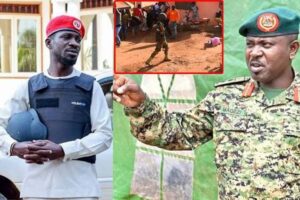
The UPDF has cautioned the opposition leader against calling for crowds to gather at polling stations on Election Day. The military’s message is clear: any attempt to incite violence will be dealt with decisively.
The warning was issued by Col. Chris Magezi, the Acting Director of Defence Public Information. In a statement posted on the UPDF’s social media channels on Saturday, December 27, Magezi expressed the army’s concern over Bobi Wine’s recent rhetoric, which allegedly encourages supporters to mob polling centers. The army raised alarm over claims that the police and military could be overwhelmed during the election period, suggesting a confrontation with security forces after the polls.
Magezi’s statement categorically dismissed these claims as reckless and misleading. The UPDF expressed dismay that such rhetoric, which seems to challenge the capabilities of the country’s security forces, could destabilize Uganda’s already tense political environment. The military warned that inciting young people to confront the armed forces could lead to dangerous consequences.
Bobi Wine has long been a vocal critic of the government and the ruling party. However, his recent calls for his supporters to assemble in large numbers at polling stations have raised concerns among security agencies. According to the UPDF, these actions could escalate into violent confrontations, and the consequences for those who instigate such violence will be severe.
In the statement, Magezi made it clear that the UPDF was ready to deal with any security threat, asserting that the army was highly capable, organized, and proficient. “There is no threat we cannot deal with,” he said, emphasizing the readiness of the armed forces to handle any situation, no matter how challenging.
The UPDF’s statement also touched on Uganda’s turbulent past, reminding the public of the importance of maintaining peace and stability. Magezi noted that, given the country’s history of political instability and violent conflicts, it was inconceivable for any leader, especially one aspiring to be president, to undermine the credibility of the country’s security institutions. The UPDF described Uganda’s security forces as the backbone of national stability and development.
This statement also referenced past armed groups and violent uprisings that Uganda has successfully dealt with, including terrorist groups such as al-Shabaab in Somalia and the Lord’s Resistance Army (LRA) in northern Uganda. The UPDF’s success in these battles was highlighted as evidence of the army’s strength and ability to neutralize threats.

Bobi Wine’s supporters, who are primarily young and passionate about political change, have been a central focus of the opposition’s campaign. The UPDF warned that any attempt to mobilize them for violent actions would have disastrous results. The army’s warning came with a sharp reminder of the fate faced by groups that have previously tried to challenge Uganda’s security forces, including the ADF rebels in the DRC.
Despite the heated political atmosphere, the UPDF urged all political actors, including Bobi Wine, to conduct their campaigns peacefully. The military emphasized that candidates should follow the guidelines set by Uganda’s Electoral Commission, ensuring that the election process remains orderly and free from violence. The statement called on all political leaders to focus on peaceful campaigning and to work within the legal framework set by the Ugandan government.
The UPDF’s message is part of a broader effort to ensure that the 2026 elections do not spiral into chaos. With growing political polarization, the military’s warning is likely to resonate with both the opposition and the government, as both sides prepare for the upcoming elections.
In the days leading up to the election, the political discourse has been marked by sharp exchanges between state institutions and opposition leaders. There have been calls for reforms to ensure a free and fair election, but tensions are mounting as the country moves closer to the polls. The UPDF’s statement serves as a reminder of the state’s commitment to maintaining law and order, regardless of the political climate.
The UPDF condemned what it described as “polarizing language” coming from the opposition camp, particularly Bobi Wine. According to the military, such rhetoric is not only unproductive but also potentially dangerous. The statement warned that this kind of messaging could spark unrest, especially among Uganda’s youth, who have been increasingly mobilized by political movements like NUP.
In the wake of the statement, there has been widespread debate about the role of the military in the upcoming elections. Some argue that the army’s warning is a necessary measure to protect national security, while others view it as an overreach that could stifle free expression. Nonetheless, the UPDF remains firm in its stance, warning that those who incite violence will face the full force of the law.

Bobi Wine’s call for his supporters to “march to Kampala” and confront security forces after the election has drawn widespread criticism. Critics argue that such actions could lead to unnecessary violence and disrupt the electoral process. The UPDF’s message underscores the importance of adhering to the rule of law and respecting the democratic process, even in the heat of political campaigns.
The military’s readiness to take action against those who threaten national peace has raised concerns about the potential for a heavy-handed response to political dissent. While the army’s statement may be seen as a deterrent to those who seek to incite violence, it also raises questions about the limits of free speech and the role of the security forces in political affairs.
As the election draws closer, security forces are expected to be on high alert, particularly in areas where opposition support is strongest. The UPDF’s warning signals the government’s resolve to prevent any form of election-related violence, and the army will likely play a key role in ensuring that the election is peaceful.
In addition to the UPDF, other security agencies, including the police, have also been ramping up their preparedness for the election. The government has promised to ensure the safety of all citizens and prevent any efforts to disrupt the democratic process.
As Uganda prepares for the 2026 General Elections, the country faces a crucial test of its democratic institutions. The military’s intervention highlights the importance of maintaining peace and stability, but it also underscores the challenges of balancing security with political freedom.
The UPDF’s warning to Bobi Wine and his supporters serves as a reminder of the delicate balance that must be struck in a democracy. While it is essential to ensure that elections are free and fair, it is equally important to ensure that political actors do not incite violence or undermine the peace that has been achieved in Uganda over the past few decades.
As the campaign season intensifies, both the government and the opposition must work to ensure that the upcoming elections are peaceful, transparent, and fair. The stakes are high, and the eyes of the world will be on Uganda as it navigates this critical period in its political history.