Related Articles



Donald Trump’s statement about ending the war between Rwanda and the Democratic Republic of Congo (DR Congo) and his mention of taking minerals from the country has stirred significant reactions around the world. Though controversial, the former U.S. president’s words touch on key issues of international diplomacy, economic interests, and power dynamics that shape the modern world. The statement raises questions about the true motivations behind peacekeeping efforts, as well as the complex relationship between politics, resources, and global influence.
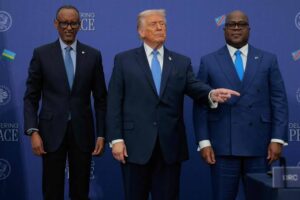
First, let’s delve into the context of the Rwanda-DR Congo conflict. The relationship between the two countries has been fraught with tension for decades, primarily due to the aftermath of the Rwandan Genocide in 1994. Following the genocide, millions of refugees fled into neighboring DR Congo, and tensions between ethnic groups spilled over into violent conflicts, involving both countries and several rebel groups. The violence escalated into a regional war, often referred to as Africa’s World War, involving multiple African nations and causing immense suffering in the region.
Throughout the years, peace efforts have come and gone, with various international organizations attempting to mediate between Rwanda, DR Congo, and other stakeholders. The involvement of foreign powers, like the United Nations and neighboring African countries, has been critical in attempts to bring peace to the region. However, the peace process has been slow, and instability remains a problem despite years of negotiations and ceasefires.
Trump’s claim to have “ended the war” between these two nations might seem bold, but it’s important to consider the history of U.S. involvement in African affairs. The U.S. has played a significant role in African diplomacy, though often through economic influence rather than direct military intervention. The idea that Trump could have had a hand in resolving such a complex issue is a claim that requires deeper scrutiny.
However, the second part of his statement, in which he says, “Please, we would like you to come and take our minerals, which we will do,” draws attention to the resource-rich nature of the region. DR Congo is known for its vast deposits of minerals, including cobalt, copper, and gold, which are crucial for modern technologies like electric vehicle batteries and mobile phones. This has led to intense competition among foreign powers eager to secure access to these resources.
In the past, Western nations, including the U.S., have faced criticism for their role in exploiting Africa’s mineral wealth, often contributing to local conflicts. The reference to taking minerals raises ethical questions about the role of global powers in extracting wealth from poorer nations. Could this be an underlying motive behind peace talks and diplomatic relations? Are peace efforts in regions like DR Congo and Rwanda driven by genuine humanitarian concern, or are they merely a means to access valuable resources?
Trump’s statement also draws attention to the role of American business interests in foreign diplomacy. During his presidency, Trump emphasized “America First” policies, which included prioritizing U.S. economic interests abroad. While his administration did not directly intervene in the Rwanda-DR Congo conflict, Trump’s rhetoric often revolved around securing favorable deals for U.S. companies, especially in the energy and mining sectors.
The idea that peace could be linked to economic extraction suggests that some conflicts may not just be about territorial disputes or ethnic tensions. In some cases, access to natural resources may drive the motivations of powerful nations, who may use peace agreements as a way to gain influence in economically lucrative regions. This brings to light the complexity of international relations, where humanitarian efforts and economic interests can sometimes overlap in ways that are not immediately obvious.
Furthermore, Trump’s comment about peace negotiations being tied to resource extraction raises concerns about the exploitation of Africa’s resources. Many African nations, including DR Congo, have faced the challenge of foreign corporations extracting minerals without benefiting the local population. This has led to accusations of neo-colonialism, where foreign powers benefit from Africa’s wealth while its people remain impoverished.
The issue of resource extraction is particularly sensitive in the context of DR Congo, where decades of conflict have been fueled by the desire to control the country’s mineral wealth. Armed groups, both local and foreign, have long fought for control over mining areas, often with devastating consequences for local communities. While peace may be seen as a solution to the violence, the question remains: who truly benefits from this peace?
It’s crucial to acknowledge the role that African governments play in these dynamics. In DR Congo, the government has struggled with internal corruption, weak governance, and an inability to protect its natural resources from external exploitation. In such environments, foreign powers, including the U.S., often find it easier to negotiate favorable deals that benefit their own interests, rather than those of the local population.

Trump’s statement also brings attention to the ways in which international diplomacy can be influenced by economic pressures. The U.S. has long been a dominant player on the global stage, and its influence over African countries can be seen in both trade relations and foreign aid. While peace efforts are often presented as altruistic, the underlying motivations can be more complex, involving trade deals and access to vital resources.
For Rwanda, the situation is somewhat different. As a smaller, more stable country, Rwanda has benefited from international support, particularly in terms of economic development and infrastructure. However, Rwanda has also been accused of playing a role in regional conflicts, especially in DR Congo, where it is alleged to support certain rebel groups. These complexities make any peace agreement between the two countries difficult to achieve, as each side has its own set of interests and alliances.
The dynamics between Rwanda and DR Congo are not just about who controls the minerals. They are also about the political influence each country has in the region, as well as the role of international powers. Countries like the U.S., China, and European nations have strategic interests in the African continent, and their influence can shape the direction of peace efforts. Trump’s comments suggest that global diplomacy is often about balancing these interests, with the control of resources being a key factor in decision-making.
What Trump’s statement also highlights is the delicate balance between diplomacy and economic exploitation. While peace is a desirable goal, the true benefits of peace often depend on who controls the resources afterward. If foreign powers gain access to DR Congo’s minerals, they stand to profit significantly, while the people of DR Congo may see little benefit from the newfound stability.
Trump’s claim also serves as a reminder of the complicated nature of international diplomacy. It’s easy to assume that peace is simply about resolving conflict between two nations, but the reality is much more nuanced. Economic power, resource control, and geopolitical influence all play a role in shaping the outcomes of such negotiations.
Donald Trump’s statement about the peace between Rwanda and DR Congo and the extraction of minerals from the region sheds light on the complex interplay between diplomacy, economics, and global power. While peace is a worthy goal, the true motivations behind such agreements are often tied to economic interests, raising questions about the ethical implications of resource extraction and the long-term benefits for local populations. As we look at international relations today, it’s important to consider how these power dynamics shape the world we live in.
In addition to the economic motives behind international peace negotiations, it’s also important to examine the potential consequences of foreign involvement in African peace processes. While wealthy nations may offer peace as part of a larger agenda to secure resources, they may also be inadvertently complicating the internal affairs of countries like DR Congo.
The line between intervention for the sake of stability and intervention for economic gain can become blurred. In some cases, peace agreements may not fully address the root causes of conflict, such as ethnic tensions, political corruption, or human rights abuses. Instead, they may simply create a façade of stability, allowing external powers to capitalize on the resources without addressing the deeper issues that continue to destabilize the region.
The statement also shines a light on the broader issue of African sovereignty. For many African nations, the idea of foreign countries coming in to broker peace or extract wealth is a sensitive topic. Many African leaders are wary of neo-colonial tendencies, where foreign powers maintain influence over the continent’s resources under the guise of “helping” or “improving” conditions.
Trump’s comment about taking minerals from DR Congo, though likely exaggerated or oversimplified, highlights the often-contentious relationship between Africa and the global powers that seek to control its wealth. This dynamic raises the question: how can African nations truly achieve independence and self-determination if their resources are constantly being taken by outside forces?
Moreover, the question of who controls the wealth within African countries is central to understanding the long-standing issues of inequality and exploitation. While Trump’s statement might reflect the reality of resource extraction, it also underscores the need for Africa to build systems that ensure its people benefit from the wealth beneath their soil.
This involves not only political and economic reforms but also a concerted effort to create more transparent and equitable governance structures. If countries like DR Congo and Rwanda are to move forward, they must find ways to balance international relations with their own internal development, ensuring that peace and prosperity are not just illusions, but tangible outcomes that benefit the entire population.