Related Articles

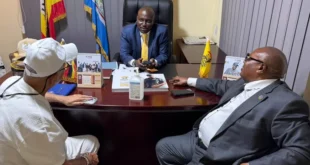
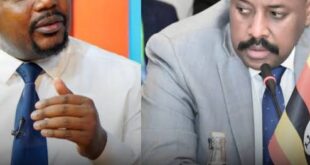
In a significant political development that has captured the attention of both supporters and critics, Mathias Mpuuga, the leader of the Democratic Front and the incumbent Member of Parliament for Nyendo Mukungwe, has publicly endorsed his former boss, Robert Kyagulanyi, also known as Bobi Wine, for the 2026 presidential elections. This endorsement marks a historic moment for Uganda’s opposition politics, signaling a potential shift in the dynamics of the upcoming race for the presidency.
The announcement comes after months of speculation regarding the relationship between Mpuuga and Kyagulanyi. In the past, the two leaders were seen to have a strained relationship, especially after Mpuuga’s rise to prominence in the Democratic Front. Their differences seemed to have widened in the years following the 2021 elections, with some insiders suggesting that a deep rift had formed between them. However, in a move that has surprised many, Mpuuga has now chosen to set aside past disagreements in favor of unity in the face of the ruling government’s dominance.

Mpuuga’s endorsement of Kyagulanyi carries significant weight, not only because of his political stature but also because of his strategic position in the opposition. As the leader of the Democratic Front, Mpuuga has long been viewed as a key player in Uganda’s political arena, and his support can bring in a large following from his constituency and beyond. This endorsement is likely to strengthen Kyagulanyi’s presidential bid, providing him with a critical boost in both political influence and national appeal.
For many observers, the unity between Mpuuga and Kyagulanyi signals a more united opposition front going into the 2026 elections. The political landscape in Uganda has been largely dominated by the ruling National Resistance Movement (NRM) for decades, and for the opposition to mount a serious challenge, it is essential that they present a united front. Mpuuga’s decision to support Kyagulanyi is seen as a step toward achieving this goal. By endorsing his former boss, Mpuuga is signaling that personal differences should be set aside for the greater good of the country.
Kyagulanyi, who has been a prominent figure in Uganda’s opposition politics since his rise to fame as a musician and politician, has consistently called for democratic reforms and an end to the long-standing rule of President Yoweri Museveni. His 2021 presidential bid was marked by widespread protests, brutal crackdowns by security forces, and a growing movement that sought to challenge the NRM’s grip on power. While Kyagulanyi was unable to defeat Museveni in 2021, his popularity has continued to rise, particularly among Uganda’s youth, who see him as a symbol of change and hope.
In his statement following Mpuuga’s endorsement, Kyagulanyi expressed gratitude for the support, acknowledging that the path to a free and democratic Uganda requires collective effort. He highlighted that this endorsement is not just a personal victory but a victory for all Ugandans who desire change. Kyagulanyi also emphasized that the country’s future lies in the hands of a united opposition that can offer an alternative to the current regime. This message of unity and hope is likely to resonate deeply with those who feel that their voices have been ignored under the current government.
Mpuuga, for his part, acknowledged the significance of his decision, stating that it was not made lightly. He explained that after careful consideration, he had come to the conclusion that Kyagulanyi is the best candidate to challenge the NRM in 2026. Mpuuga further stated that the endorsement was based on Kyagulanyi’s commitment to democratic values, his dedication to fighting corruption, and his promise to address the pressing issues facing Ugandans, such as unemployment, poverty, and poor healthcare.
The endorsement also comes at a time when the country is grappling with rising political tension. The NRM government, under President Museveni, has faced mounting criticism for its handling of the economy, human rights abuses, and suppression of dissent. Many Ugandans are looking for an alternative that can bring about real change, and the unified front presented by Mpuuga and Kyagulanyi could provide a refreshing option.
However, the path to the presidency is never easy, and Kyagulanyi will face numerous challenges ahead. The NRM has deep roots in Uganda’s political system, and President Museveni, despite his age and long tenure in power, remains a formidable figure.
Kyagulanyi and Mpuuga will need to build a broad coalition of suport, not just from the urban youth but also from rural areas and various interest groups, to mount a serious challenge to the NRM’s dominance.

In conclusion, Mathias Mpuuga’s endorsement of Robert Kyagulanyi for the 2026 presidential race is a turning point in Uganda’s political history. It represents a moment of unity in the opposition, a necessary step toward challenging the status quo and bringing about meaningful change in the country.
As the 2026 elections approach, all eyes will be on the opposition’s ability to maintain this momentum, build a broad base of support, and ultimately present a credible alternative to President Museveni’s long rule. Democratic Front leader and Nyendo Mukungwe incumbent Mathias Mpuuga ends his differences with his former boss Hon Kyagulanyi ,endorses him for presidency.