Related Articles

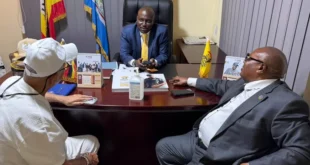

In a shocking revelation that has left many stunned, Speaker of Parliament Anita Among recently claimed that Betty Nambooze, a prominent opposition Member of Parliament from the National Unity Platform (NUP), was given close to one billion Uganda shillings by President Yoweri Museveni to cover her medical treatment abroad.

The claim, made during a presidential rally in Mukono, has ignited widespread debate, particularly in the political arena, as it exposes the complex and often contentious relationship between opposition leaders and the ruling government.
Betty Nambooze, known for her outspoken criticism of the government and her role in the opposition, has been a consistent voice of dissent against Museveni’s leadership. She has used radio and television platforms to speak out against the National Resistance Movement (NRM), the ruling party, making this revelation even more controversial.
The money, according to Anita Among, was intended to assist Nambooze with medical treatment in the United Kingdom. The Speaker explained that the funds covered the travel expenses for Nambooze, her husband Mr. Bakireke, and even a domestic worker who accompanied them. Among expressed her admiration for President Museveni, praising him for his compassionate gesture despite Nambooze’s ongoing criticism of his leadership.
“I want to thank you for having such a heart,” Anita Among said, referring to President Museveni. “Regardless of the fact that Nambooze has continued to attack and insult you publicly, that does not take away your good heart.” This statement was met with mixed reactions, with some applauding the President’s kindness, while others questioned the motives behind such a gesture.
The revelation is not just about the money, but about the political implications it carries. Nambooze, a fierce critic of the government, has consistently used her position to challenge President Museveni’s policies and actions. The revelation that she was provided such significant financial assistance raises questions about the true nature of the relationship between the opposition and the ruling party.
Some supporters of the NUP are now accusing Nambooze of hypocrisy, pointing to her criticism of the government while seemingly accepting its support when she needed it most. Others argue that her health should be the focus, and the assistance she received should be seen as a personal matter, unrelated to politics.
The fact that such a large sum of money was provided has also raised suspicions about the timing of the financial aid. With the 2026 general elections fast approaching, many are questioning whether this financial support is a strategic move by President Museveni to win the loyalty of opposition members or a simple act of generosity.

In her defense, Betty Nambooze has yet to make a public statement on the matter. However, her allies in the NUP have been quick to defend her, arguing that the President’s actions should be seen as an individual gesture rather than a political maneuver. They have also emphasized the fact that Nambooze’s health was at stake and that it was the right thing to do to help her get the necessary treatment.
This incident brings into question the nature of political loyalty and the ways in which financial aid can be used to influence political dynamics. Opposition leaders like Nambooze have long accused the government of using financial incentives to sway political figures, and this revelation may fuel such accusations even further.
Despite the backlash, President Museveni’s supporters have rallied behind him, praising his leadership and his ability to show kindness, even to those who criticize him. They argue that the President’s actions show his magnanimity and his commitment to the well-being of all Ugandans, regardless of their political affiliations.
The role of Speaker Anita Among in this matter has also come under scrutiny. Some view her public praise of the President’s actions as an endorsement of Museveni’s leadership, while others believe that she was simply acknowledging the President’s generosity without delving into the political implications.
At the same time, the public’s reaction has been divided. While some appreciate the President’s generosity, others see it as a calculated move to undermine the opposition by offering financial aid to its leaders. The fact that the funds were provided to someone who has been a vocal critic of the government has only added to the controversy.
For many, the central question is whether political differences should take precedence over personal health and well-being. Should an opposition figure like Nambooze refuse financial support from the government, even if it means jeopardizing her health? Or is it acceptable for political leaders to put aside their differences when it comes to personal matters such as medical treatment?
In Uganda, where political tensions often run high, the line between personal and political matters is often blurred. Opposition leaders frequently accuse the government of using financial aid as a tool to manipulate political figures, while the ruling party defends its actions as a means of promoting national unity and compassion.

The question now is how this revelation will impact the relationship between Betty Nambooze and her political party, the NUP. Will this expose cause a rift within the opposition, or will Nambooze’s supporters continue to stand by her, seeing the financial aid as a necessary step to ensure her recovery?
As the 2026 elections draw closer, this issue is likely to become a point of contention in the political debates that will dominate the national discourse. Whether it will have any long-term consequences for Nambooze’s political career remains to be seen, but it has certainly added fuel to the already heated political climate in Uganda.
In the end, the controversy surrounding Betty Nambooze’s receipt of funds from President Museveni raises important questions about the intersection of politics, personal health, and financial support. It highlights the complex dynamics at play in Ugandan politics, where personal and political interests often collide.
For now, Ugandans are left to ponder the implications of this revelation, and the broader questions it raises about the integrity of political figures, the role of financial aid in shaping political alliances, and the true nature of political loyalty in the run-up to the 2026 elections.
This incident will likely continue to generate heated discussions in the coming months as the country moves closer to the polls. Only time will tell whether it will have a lasting impact on the political landscape or whether it will fade into the background as just another controversy in the ever-changing world of Ugandan politics.
As the political landscape in Uganda becomes more polarized ahead of the 2026 elections, this controversy over Betty Nambooze’s medical assistance could be just the tip of the iceberg. The incident highlights the broader issue of how politicians, especially in opposition, navigate the complex relationship between personal need and political allegiance.
While some may see Nambooze’s acceptance of the funds as a betrayal of her own values, others may view it as a necessary compromise made for her health. Regardless of which side one takes, this episode is likely to spark more discussions about the ethics of political power, the role of financial aid in influencing political decisions, and whether the public can ever fully separate a leader’s personal and political actions.