Related Articles

During a radio talk show on Wednesday, President Yoweri Kaguta Museveni spoke out about the slow progress of development in certain parts of Uganda, particularly Kassanda district, which has a low water coverage rate. He singled out the district’s water access, which stands at just 34 percent, and attributed this to the election of opposition leaders who, according to him, have been impeding government projects and diverting funds meant for development.
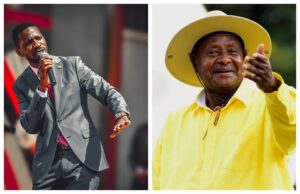
Kassanda’s situation, according to Museveni, is not isolated. He pointed out that there are areas in Uganda where water access is far below the national average. For example, Rakai district has only 25 percent of its population with access to safe water. In contrast, the situation is far better in districts like Rukiga, where over 90 percent of residents have access to safe water.
The President did not mince his words, stating that the delay in the implementation of essential projects in opposition-controlled areas could be linked to the reluctance of opposition leaders to fully support the government’s initiatives. Museveni stressed the importance of working together for national progress and highlighted that his government’s projects were being delayed or blocked due to partisan politics.
While discussing water access, Museveni lamented the disparities that exist across the country. He expressed disappointment over the fact that some regions have made great strides in providing essential services like water, while others have fallen behind. The issue of water, he said, remains a critical focus for his government, but it needs the support of all leaders—whether in the ruling or opposition parties—to move forward effectively.
Museveni went on to explain how national development was progressing slowly but steadily. He stressed that while there were challenges along the way, the country was making important strides. He called on Ugandans to be patient and trust that, over time, things would improve. The government’s commitment to improving infrastructure, including water systems, roads, and health services, would eventually benefit all regions, he said.
The President also emphasized the importance of focusing on the right areas for development. He criticized the media for its focus on entertainment and celebrity news, which, he claimed, distracted the public from more important issues like agriculture, peace, and wealth creation. According to Museveni, the media’s attention on entertainment news was detrimental to national progress because it shifted focus away from key developmental goals.
He stressed that Uganda’s wealth could be created through agriculture, and that farmers played a critical role in the country’s economic development. Museveni called for greater investment in the agricultural sector, noting that farming had the potential to lift millions out of poverty. He urged Ugandans to take agriculture seriously, as it was the backbone of the country’s economy.

Museveni’s comments on the media were pointed. He stated that while the entertainment industry had its place, it should not overshadow critical issues that affected the well-being of ordinary Ugandans. The President argued that a shift in focus towards issues like food security, job creation, and access to basic services would help drive the country’s development agenda forward.
He also called on Ugandans to support NRM officials, as he believed they were in the best position to implement government programs effectively. Museveni made it clear that partisan politics should not stand in the way of national development and that cooperation across political lines was crucial for the progress of the country. He suggested that leaders who put their political interests ahead of the nation’s needs were doing a disservice to the people they represented.
The President acknowledged that there were challenges in implementing some projects but assured Ugandans that the government was working hard to overcome these obstacles. He mentioned that while the pace of development might seem slow at times, progress was being made across various sectors, and the government remained committed to ensuring that every Ugandan had access to the services they needed.
He specifically highlighted the government’s efforts in improving rural infrastructure, such as roads and water systems, and emphasized that these projects would improve the lives of Ugandans, particularly in remote areas. Museveni pointed out that while the process of development might be slow, it was steady, and that the ultimate goal was to improve the lives of every citizen, regardless of where they lived.
The Need for Unity in National Development
While Museveni made it clear that he was frustrated by the slow pace of development in certain areas, he also acknowledged that Uganda’s development could not happen in isolation. He called for unity among all Ugandans, regardless of political affiliation, to ensure that projects meant to benefit the population could be completed without unnecessary delays.
Museveni also took the opportunity to highlight some of the achievements of his government, such as the improvement in infrastructure and the expansion of services like education and healthcare. However, he pointed out that these successes were often overshadowed by the challenges in areas like water access, and that more work needed to be done to ensure that no Ugandan was left behind in the pursuit of development.
In his closing remarks, Museveni reiterated that the NRM government was committed to improving the lives of Ugandans, especially in rural areas. He called for more support from local leaders to push government projects forward and to help bridge the gap between urban and rural development. He emphasized that Uganda’s future depended on everyone working together towards a common goal: national progress.
While the President’s words were directed at the media and opposition leaders, they were also a reminder to all Ugandans that development could only happen if everyone—regardless of their political standing—was united in their efforts. Museveni’s message was clear: Uganda’s future prosperity depended on cooperation, hard work, and a shared vision of progress.
In the end, Museveni’s remarks served as both a critique of current challenges and a call to action. He urged Ugandans to remain patient as the government worked to address the disparities in development, but also reminded them that success would require everyone’s contribution. Whether through supporting agricultural growth or encouraging political unity, Museveni made it clear that Uganda’s future was in the hands of all its citizens.

Museveni also took the opportunity to remind Ugandans of the broader regional challenges they faced, noting that the slow pace of development was not unique to Uganda alone but was a shared issue across many African countries. He pointed out that economic growth, particularly in sub-Saharan Africa, often faced delays due to factors such as political instability, external debts, and underdeveloped infrastructure.
However, he remained optimistic, emphasizing that Uganda’s strategic positioning in East Africa could be leveraged for better trade and investment opportunities. He encouraged citizens to remain hopeful and work collectively to overcome these challenges, as Africa’s potential was vast and largely untapped.
The President also touched on the importance of political stability in achieving long-term development goals. He stated that without peace and stability, it would be impossible to attract foreign investment or build sustainable infrastructure. Museveni’s government, he said, had worked tirelessly to maintain peace throughout Uganda, and this stability was a key factor in the country’s ability to pursue ambitious developmental projects. He warned against the dangers of political unrest and urged the population to prioritize peace, security, and cooperation in order to build a better future for their children.
Furthermore, Museveni acknowledged the significant role that education played in Uganda’s development journey. He highlighted the strides made in increasing access to education, particularly in rural areas, and emphasized that education was a vital tool for empowering the next generation.
The President called for further investment in vocational training and technical skills, pointing out that in today’s rapidly evolving world, having a highly skilled workforce was essential for economic growth. He urged Ugandans, especially the youth, to take advantage of educational opportunities to contribute to the country’s overall progress.
Finally, Museveni’s address underscored the crucial role of community engagement in fostering development. He emphasized that no development project could succeed without the active participation of local communities.
Museveni called on citizens to not only support government initiatives but also to actively get involved in local governance and decision-making processes. By doing so, he believed that communities would be able to advocate for their own needs and priorities, ensuring that development was not just top-down but also rooted in the desires and aspirations of the people.