Related Articles
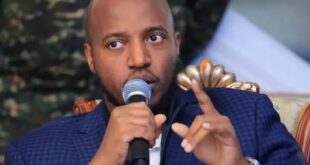
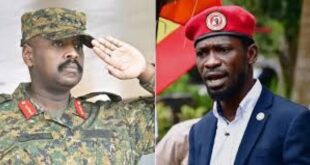

A political storm has erupted in Uganda’s public space, drawing sharp attacks and sharp words between Patriotic League of Uganda (PLU) Secretary General Daudi Kabanda and Information Minister Chris Baryomunsi.
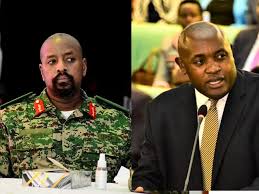
What began as a radio discussion about controversial remarks by the Chief of Defence Forces (CDF), Gen. Muhoozi Kainerugaba, escalated into a bitter clash played out on live broadcasts and social media.
The tension followed Gen. Muhoozi’s now-deleted posts on X (formerly Twitter), in which he alleged that Uganda’s security cooperation with the United States had been damaged and implied that the Uganda People’s Defence Forces might suspend collaboration with the U.S. mission in Kampala, including aspects linked to Uganda’s operations in Somalia. His posts drew sharp attention both within Uganda and internationally.
After intense scrutiny, Gen. Muhoozi issued an apology, saying he had acted on incorrect information and that military cooperation with the United States would continue “as usual.” While the immediate diplomatic tension eased, the political ripples from those posts continued to spread.
Information Minister Chris Baryomunsi weighed into the matter during a live radio segment on Capital FM Uganda. He drew a clear line between Gen. Muhoozi’s social media remarks and official government policy.
Baryomunsi argued that the CDF’s comments were informal, sometimes brief and even deleted, and should not be treated as government positions.
As government spokesperson, Baryomunsi said, he faced challenges in communicating to both domestic and international audiences when such remarks create confusion.
It was a position rooted in concern for clarity and credibility in government messaging.

However, not everyone agreed with Baryomunsi’s attempt to separate Gen. Muhoozi’s personal posts from the state. Daudi Kabanda, speaking on a separate radio program, took serious issue with the minister’s argument.
Kabanda’s counter-argument was simple: the head of the army is not an ordinary commentator, and public statements from someone in Gen. Muhoozi’s position inevitably carry weight. Kabanda suggested that officialdom cannot be easily disentangled from high-profile military voices, whether or not they claim the comments are personal.
What followed was more than disagreement over communication strategy. Kabanda escalated the dispute by taking to X and making deeply personal attacks on Baryomunsi. In a long post, Kabanda described Baryomunsi as “a known opportunist” who joined government not out of principle but for “political survival.”
Kabanda charged that Baryomunsi lacked the moral standing to criticize or “despise” Gen. Muhoozi, portraying the information minister’s commentary as driven by opportunism rather than integrity. The tone of the exchange marked a sharp departure from typical political disagreement.
Beyond the personal label, Kabanda made a series of serious allegations about Baryomunsi’s past conduct. He referenced incidents from an election period in Kanungu, accusing the minister of coercion, intimidation, and political blackmail — claims that have not been independently verified at this time.
Kabanda also asserted that Baryomunsi belonged to a faction within the ruling National Resistance Movement (NRM), suggesting that internal power struggles, especially concerning succession politics, influenced his actions and public statements. Such claims signal deeper tensions within the NRM beyond simple policy disputes.
In defending his stance, Kabanda framed Gen. Muhoozi as a figure who would not tolerate what he labeled blackmail or mediocrity. This cast the spat as not just personal but ideological — part of a broader contest over influence and future leadership within Uganda’s ruling establishment.
Baryomunsi, in turn, responded with force. In a sharply worded post on X, he dismissed Kabanda’s accusations as a “forest of empty talk.” He described his critic as “intellectually jaundiced,” a phrase that further amplified the confrontation and ensured that it remained prominent on social media.
The exchange rapidly moved beyond the usual political commentary space and into the realm of personal political warfare. It demonstrated how fragile unity within the ruling circles can become when public disagreements are aired in the open, and how radio debates can quickly transform into heated digital exchanges.
Observers noted that the dispute matters because it highlights a central question facing Uganda: when a high-ranking official like the CDF speaks publicly, should those remarks be treated as personal opinion or as reflective of government policy? The answer carries implications for diplomatic relations, especially when statements involve foreign partners like the United States.
For government communicators, the concern is practical and reputational. Remarks that appear to conflict with official positions — especially when posted in real time on social media — can reverberate internationally within minutes, complicating diplomatic ties and messaging coherence.

PLU aligned voices, however, viewed the pushback against Gen. Muhoozi’s remarks as political maneuvering. They argue that publicly downgrading or dismissing the CDF’s commentary can be seen as factional contestation within the ruling establishment rather than simple communication clarification.
Even after Gen. Muhoozi’s apology appeared to calm tensions at the diplomatic level, the domestic political fallout has not settled. Instead, it seems to have opened another front in ongoing internal debates about authority, loyalty, and messaging in Uganda’s political scene.
Radio talk shows, once a space for mere commentary, have become battlegrounds where political figures lob accusations and counter-accusations, shaping public perception and stirring tensions within the corridors of power.
As the confrontation continues on social media platforms like X, political watchers are paying close attention to how such disputes affect wider party cohesion. It raises questions about how disagreements are managed within the NRM and how public criticism of military or government figures is treated.
The Kabanda–Baryomunsi clash also reflects the growing influence of social media in Ugandan political discourse. What used to be confined to private political debate now unfolds in public view, with every statement and counterstatement analyzed and re-posted.
In the end, the dispute reveals more than individual disagreements. It shows the complexity of balancing military authority, political communication, internal party unity, and public diplomacy in a modern political environment where messages travel fast and reactions are swift.
For many Ugandans, the unfolding political confrontation is a reminder of how intertwined domestic politics and international relations have become, and how even a single social media post can spark a fierce debate about leadership, loyalty, and national interest.