Related Articles


Uganda has been thrown into deep political tension following another highly controversial statement attributed to General Muhoozi Kainerugaba, this time directly mentioning Bobi Wine, the president of the National Unity Platform (NUP). The remarks have sparked widespread shock, fear, and condemnation across the country and beyond.
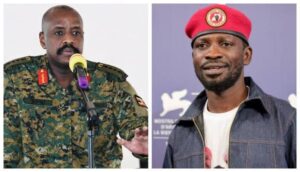
In the statement, Gen Muhoozi claimed that 22 people he described as “NUP terrorists” had been killed since the previous week. He went further to say he was “praying” that the 23rd person would be Bobi Wine. The language used immediately raised serious concern due to its violent and personal nature.
Bobi Wine is not just a political figure but one of Uganda’s most prominent opposition leaders. As head of NUP, he commands strong support, particularly among young people and urban voters. Mentioning his name in connection with death has therefore alarmed millions of Ugandans.
The statement quickly spread on social media and news platforms, triggering intense public reaction. Many citizens expressed disbelief that such words could be associated with a senior military figure in a country governed by a constitution and the rule of law.
Human rights organizations were among the first to react strongly. They described the statement as dangerous, irresponsible, and deeply troubling, warning that it could encourage violence against political opponents and ordinary supporters of the opposition.
Legal experts also raised red flags, stressing that terrorism accusations are extremely serious and must be handled through investigations and courts of law. They emphasized that no individual, regardless of position, should suggest or imply death as a solution to political disagreements.
Supporters of the National Unity Platform condemned the remarks outright. They said the statement amounts to a direct threat against Bobi Wine and reflects a pattern of intimidation targeting opposition leaders and their supporters.

Within NUP circles, fear and anger have grown rapidly. Many members worry about their safety, arguing that labeling party members as terrorists exposes them to harassment, arrests, or worse.
So far, there has been no official confirmation from security agencies to support the claim that 22 NUP-linked individuals were killed. The absence of verified information has raised serious questions about the accuracy and intent of the statement.
Political analysts say such remarks deepen polarization and push the country further away from constructive dialogue. They warn that when leaders use violent language, it normalizes hostility and makes peaceful politics difficult.
International observers and diplomatic missions are also likely to take interest in the situation. Uganda’s image as a country committed to democratic principles could be damaged by statements that appear to endorse violence against opposition figures.
Religious leaders and elders have called for calm, restraint, and wisdom. They have urged leaders to remember the value of human life and the long-term consequences of words spoken in anger or frustration.
Some government supporters have attempted to downplay the remarks, suggesting they were metaphorical or emotional. However, many Ugandans argue that words from powerful figures carry weight and should be chosen carefully.
The repeated public targeting of Bobi Wine has reignited debate about political tolerance in Uganda. Critics say opposition leaders are increasingly treated as enemies rather than competitors in a democratic process.
Civil society groups are now demanding clarification and accountability. They are calling on state institutions to reaffirm commitment to the constitution, due process, and protection of all citizens regardless of political affiliation.

As tension continues to rise, many citizens fear that such rhetoric could provoke unrest or retaliation. Uganda’s history shows that political violence often begins with words before turning into action.
Bobi Wine himself has not immediately responded to the specific statement, but his past messages have consistently called for nonviolence and peaceful struggle through democratic means.
The situation has left many Ugandans anxious about the future. Families, activists, and ordinary citizens worry about where the political climate is heading if such statements continue unchecked.
At the heart of the controversy is a broader question about leadership and responsibility. Ugandans are asking whether those in power understand the impact of their words on national unity and peace.
As the country watches closely, pressure is growing for authorities to de-escalate tensions and provide reassurance. Silence or vague responses may only increase fear and uncertainty.
In the end, many Ugandans hope reason will prevail over anger. They want a nation where political differences are resolved through dialogue and law, not threats, fear, or talk of death.