Related Articles


The shocking news that rocked the National Unity Platform (NUP) camp was quickly replaced with a wave of relief when Dr. Hamza, a prominent supporter and personal doctor of the NUP leader, Bobi Wine, was confirmed to still be alive. Yesterday’s violent clashes between NUP supporters and the police in Budadiri, Sironko District, left many people in shock after rumors spread that Dr. Hamza had been fatally shot.
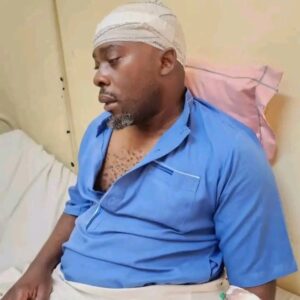
Initial reports suggested that the doctor, who was actively involved in the movement for change, had succumbed to injuries after being shot in the head during the scuffle. The tragic news spread like wildfire across social media platforms, leaving his supporters devastated and fearful for the future of the movement. Dr. Hamza was not just a medical professional but also a symbol of hope for many NUP supporters who admired his dedication to the cause.
The violent confrontation, which occurred as tensions between the NUP and police reached a boiling point, escalated quickly. Police attempted to disperse a large group of demonstrators, and as the situation intensified, it led to clashes that resulted in several people getting injured. In the chaos, Dr. Hamza was struck in the head, prompting many to believe that he had tragically lost his life.
The rumors about his death were so widespread that some media outlets even published obituaries, fueling the sense of despair. His family and friends, already mourning, were left to grapple with the confusing and heart-wrenching news. However, it didn’t take long for the truth to emerge.
After being rushed to the hospital with serious injuries, Dr. Hamza’s condition was deemed critical, but not life-threatening. Doctors worked tirelessly to stabilize him, and with quick intervention, they managed to keep him alive. As news of his survival spread, it was met with mixed emotions of disbelief, joy, and relief.
The situation in Budadiri had sparked a major outcry among political activists, human rights groups, and citizens alike. It wasn’t the first time that political unrest had led to violent clashes, but the story of Dr. Hamza’s near-death experience brought the issue to the forefront, highlighting the dangers faced by citizens during times of political conflict. His survival, against all odds, has become a symbol of hope, resilience, and the unwavering fight for justice.
As the days pass, Dr. Hamza’s condition remains critical, but he is under constant medical supervision. His doctors have stated that although his recovery will take time, he is showing signs of improvement. Supporters from across the country have rallied together, expressing their relief that he is still alive, and praying for his swift recovery.
Dr. Hamza’s survival has also sparked a wider conversation about the violent tactics employed during political protests in Uganda. While many sympathize with the struggles of political movements like NUP, others are calling for an end to violence and for a peaceful resolution to conflicts. The incident has prompted local and international calls for greater accountability and the protection of citizens’ rights during demonstrations.

At the heart of the matter is the belief that no life should be lost due to political unrest. Supporters of Dr. Hamza, including Bobi Wine, have expressed their gratitude for the efforts of the medical team and the strength of the doctor himself. His resilience in the face of such extreme danger is a testament to his commitment to the cause and the unwavering support he continues to offer to the NUP.
While the news of Dr. Hamza’s survival offers some hope, the larger issue of political violence and the safety of activists remains a serious concern. Political leaders and citizens alike are now questioning how to navigate these turbulent times without further loss of life. The doctor’s story is a powerful reminder that behind the headlines of violence, there are real people whose lives are at risk, and the battle for their safety is far from over.
In the days ahead, it is expected that Dr. Hamza will make significant progress in his recovery, though he will likely need several weeks of rest and rehabilitation. His family remains by his side, providing the love and support he needs during this difficult time. The relief felt by his supporters is immeasurable, as they now look forward to seeing him return to his work with renewed strength.
The incident has also raised questions about the role of social media in spreading false information. While it is undeniable that the internet has helped bring attention to important political issues, it has also played a role in the rapid spread of misinformation. The false reports of Dr. Hamza’s death serve as a stark reminder of how quickly rumors can escalate and how damaging they can be to the people involved.
As Dr. Hamza continues to recover, many people are reflecting on the broader implications of his story. His near-death experience highlights the dangers faced by political activists, especially in times of unrest. Yet, it also underscores the resilience of those fighting for change, and the unwavering hope that even in the darkest moments, there is always a chance for survival.

The message from this incident is clear: while political tensions continue to rise, the fight for justice and peace must be pursued with the understanding that every life matters. Dr. Hamza’s story is not just about one man’s survival, but about the enduring spirit of those who stand up for what they believe in.
In the coming days, as Dr. Hamza recovers, it is hoped that the story of his survival will inspire others to continue their peaceful fight for change. The doctor’s commitment to his cause and the people he serves will no doubt leave a lasting impact on the NUP movement and the country as a whole.
For now, Dr. Hamza’s supporters continue to keep him in their thoughts and prayers, hoping for his quick recovery. And as he fights for his life in the hospital, the message of resilience, hope, and the strength of the human spirit continues to resonate across Uganda.
As Dr. Hamza’s recovery progresses, his supporters are organizing peaceful rallies and gatherings to show their solidarity. These events not only serve as a platform to express their unwavering support for the doctor, but they also call for an end to the violence that has plagued the country. Many activists are using this moment to raise awareness about the need for peaceful dialogue between the government and opposition groups, hoping to avoid further casualties in future protests.
The fact that Dr. Hamza was initially believed to be dead has sparked a wave of discussions about the accuracy of news reporting and the responsibility of journalists, especially during volatile political moments. Many people have criticized the media for not verifying facts before publishing, which led to unnecessary distress for Dr. Hamza’s family and the public. The incident has underscored the importance of responsible journalism in a time when news can spread rapidly and have profound effects on the lives of those involved.
Looking ahead, Dr. Hamza’s case might become a turning point for political activism in Uganda. His near-death experience and survival could galvanize many people to stand up for their rights while pushing for a peaceful resolution to political conflicts. Many hope that the government will take this as an opportunity to engage in meaningful dialogue with opposition parties and citizens to ensure that such violence does not escalate further.
The ultimate question for many Ugandans now is how the country will move forward. Will this tragic event, which could have claimed the life of a key figure in the NUP movement, lead to lasting reforms? Or will it serve as yet another reminder of the risks that activists face when they take a stand for what they believe in? Only time will tell, but one thing is certain: Dr. Hamza’s story has ignited a renewed sense of hope and determination in those who continue to fight for a better future.