Related Articles



Another major setback has hit the National Unity Platform (NUP) party after the Electoral Commission (EC) disqualified its flag bearer for the Nakaseke North Constituency. The decision has sparked fresh debate about the nomination process and the fairness of the electoral system ahead of the 2025 General Parliamentary Elections.
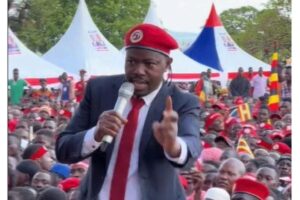
The disqualified candidate is Geoffrey Kayanja, who had been selected by NUP to contest for the Nakaseke North Member of Parliament seat. His removal from the race is being seen as a big loss for NUP leader Robert Kyagulanyi, popularly known as Bobi Wine, whose party has faced repeated hurdles during the nomination period.
According to the Electoral Commission, Kayanja failed to meet one of the basic legal requirements needed for nomination. The law demands that a parliamentary candidate must be supported by at least ten registered voters from the constituency, each properly signing the nomination papers.
In its official statement, the EC revealed that six out of the ten registered voters who were listed as Kayanja’s supporters did not append their signatures. This meant that the nomination papers did not meet the minimum legal standard required for a valid nomination.
The statement was signed by the EC Chairperson, Justice Byabakama Mugenyi Simon, and dated December 23, 2025. It explained that the issue was carefully reviewed during a formal Commission meeting held on the same day.
The EC further stated that during a hearing, Geoffrey Kayanja reportedly conceded that some of the listed supporters had indeed failed to sign the nomination papers. This admission, according to the Commission, left them with no option but to disqualify him.
As a result, the Electoral Commission reversed the earlier decision made by the Nakaseke District Returning Officer, who had initially nominated Kayanja. The reversal officially removed him from the list of candidates eligible to contest in the general elections.
The EC emphasized that its decision was based purely on the law and not on political considerations. It insisted that all candidates, regardless of party affiliation, must strictly follow nomination guidelines.

However, the disqualification of Kayanja has not been taken lightly by the National Unity Platform. Party leaders argue that this is part of a wider pattern in which opposition candidates are being blocked from participating in elections.
NUP officials have openly accused the Electoral Commission of political bias and manipulation. They claim that the rules are being applied harshly to opposition figures while candidates from the ruling side allegedly receive leniency.
Kayanja’s case is not the only one raising eyebrows. Several other opposition candidates, most of them from NUP, have also been disqualified on different grounds, further fueling suspicion and anger within the party.
One such case is that of Mathias Walukagga, the NUP candidate for Busiro East. He was disqualified after the EC ruled that his academic qualification, a Mature Age or Aptitude Test certificate from Islamic University in Uganda, had expired earlier in June 2025.
Another candidate, Sarah Kyarimpa, who was contesting for the Isingiro Woman MP seat under NUP, was also removed from the race. Her disqualification followed allegations that one of her supporters signed her nomination papers twice.

Christopher Ategeka, the NUP candidate for Buyanja County, faced a different and more controversial situation. He was reportedly disqualified after allegedly refusing a bribe meant to convince him to step down from the race.
In Isingiro North, NUP candidate Shalif Ntanda was disqualified after two of the people listed as his supporters denied endorsing him. The EC said this raised serious doubts about the authenticity of his nomination documents.
The trend extended beyond NUP, with Best Arnold Ankunda, a candidate from the People’s Front for Freedom (PFF), also facing disqualification. He was informed that one of his seconders denied supporting his nomination.
Independent candidates were not spared either. Daniel Mulirire, who was contesting in Budiope East, was disqualified for allegedly failing to attach proof that he had resigned from public service, a legal requirement for such candidates.
The Electoral Commission maintains that all these decisions are based on clear legal provisions and administrative checks. According to the EC, nomination rules exist to protect the integrity of the electoral process and must be respected by all aspirants.
On the other hand, the National Unity Platform insists that the growing list of disqualified opposition candidates is not a coincidence. Party leaders say the pattern points to deliberate efforts to weaken opposition strength ahead of the elections.
As Uganda moves closer to the 2025 polls, these disqualifications continue to shape the political landscape. Whether they are seen as lawful enforcement of rules or as political interference, they have already intensified tension, mistrust, and debate across the country.