Related Articles

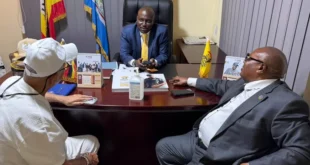
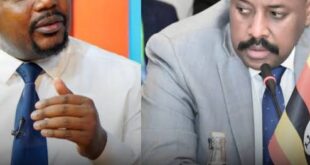
The family of Uganda’s former President, Dr. Apollo Milton Obote, has sparked national attention after issuing a strong and emotional order to Gender, Labour and Social Development Minister Betty Amongi Ongom.
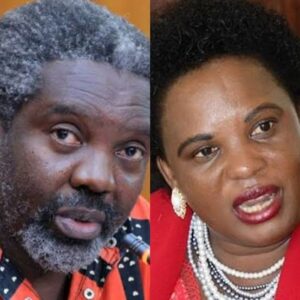
The family has demanded that Amongi immediately stop operating from President Obote’s home in Lira City, accusing her of abusing the historic residence for political activities that go against everything Obote stood for during his lifetime.
The directive was issued by Tony Akaki, the eldest son of the late president and the acknowledged heir to the Obote family. In a firm and sharply worded statement, Akaki said the family was deeply disturbed by reports indicating that Amongi had turned their father’s home into a political base for campaigning for President Yoweri Museveni and the ruling National Resistance Movement (NRM).
Akaki stated that seeing NRM political activities linked to Obote’s residence filled the family with anger and embarrassment. He described the situation as painful, especially given the long history of political struggle between President Obote and the political system that brought Museveni to power in 1986.
According to Akaki, the family views President Museveni’s leadership as a continuation of military rule, which Obote strongly opposed. He said it was unacceptable that such politics were being promoted from a home that symbolizes resistance to dictatorship and commitment to civilian governance.
The Obote family said their anger intensified after Betty Amongi allegedly made remarks in March that were insulting to former First Lady Maama Miria Obote. According to the family, Amongi accused Obote’s widow of failing to protect her husband’s political legacy.
The family was particularly offended by claims that Amongi presented herself as the true defender of the Obote name. Akaki said these remarks were not only disrespectful but also showed a dangerous attempt to rewrite history and push the Obote family aside.
In response, Akaki issued a very clear warning, stating that Betty Amongi and what he described as her NRM sympathizers must vacate President Obote’s home immediately. He emphasized that the family would no longer tolerate any political activities carried out in their father’s name without their consent.

Akaki further clarified that the decision was not personal but collective. He said he had the full support and approval of his brothers, President Obote’s sons, who all agreed that Amongi was no longer welcome in any of their father’s properties.
The family stressed that the order applies to all residences linked to President Obote, not just the house in Lira City. They said none of these homes should be used as political tools or campaign centers for a government Obote openly opposed.
In their statement, the Obote sons accused Amongi of damaging their family’s public image. They claimed her actions had associated the Obote name with allegations of corruption, mismanagement, and abuse of political influence.
They further alleged that Amongi had used access to NRM patronage and public resources to advance her own political interests while hiding behind Obote’s legacy, something the family described as deeply dishonest.
According to Akaki, these actions directly contradict the principles President Obote believed in, including discipline, national unity, and respect for public institutions. He said Obote worked hard to build the Uganda People’s Congress (UPC) on these values.
To remind the public of Obote’s political position, Akaki cited a message his father delivered in October 1998 at the AMO Club International Conference in London. In that message, Obote clearly outlined his opposition to military rule.

Obote stated at the time that since January 26, 1986, the mission of the UPC had been to remove the dictatorship declared by the National Resistance Army. The family said this message still defines Obote’s political legacy today.
They argued that supporting the NRM while claiming to protect Obote’s legacy is a serious contradiction that cannot be justified under any circumstances.
The Obote family also strongly condemned what they described as ongoing human rights abuses in Uganda. They listed illegal detentions, torture, violation of property rights, and suppression of opposition parties as major concerns.
They said these actions mirror the kind of governance Obote warned against and fought throughout his political life, making it even more painful to see his name associated with such practices.
The family emphasized that the struggle for democracy and freedom in Uganda is far from over. They said they remain committed to defending Obote’s ideals and resisting any attempt to misuse his name for political convenience.
In closing, the Obote family sent a firm and final message to Betty Amongi, stating that she has no authority to speak or act on behalf of their father’s legacy. They insisted that his home, name, and history must be respected.
This dramatic confrontation has reignited national debate about political loyalty, historical truth, and the responsibility of today’s leaders to honor the legacies of Uganda’s past presidents with honesty and integrity.