Related Articles



Kyagulanyi Ssentamu, popularly known as Bobi Wine, has made a bold statement that has stirred the political arena in Uganda. Speaking at a recent rally ahead of the January 15th, 2026 elections, the National Unity Platform (NUP) presidential candidate told supporters that age is on his side.
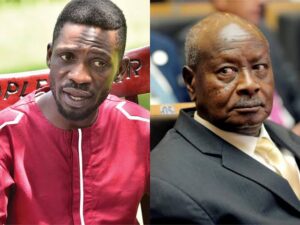
“The late Obote became President at the age of 43 years, the late Idi Amin became President at the age of 43 years, Museveni became President while he was 43 years, and I am now also 43 years,” Bobi Wine declared.
His statement was not only a reflection on history but also a direct warning to those who have doubted his presidential mission. By aligning himself with Uganda’s past leaders, Bobi Wine emphasized that he believes the timing for his own leadership has arrived.
Supporters erupted in cheers as he delivered the message, seeing it as a sign that the younger generation is ready to take charge of the nation. Many observers note that Bobi Wine’s approach ties his ambition directly to a historical pattern, giving his campaign a sense of destiny and inevitability.
Throughout his speech, Bobi Wine portrayed himself as a continuation of Uganda’s historical leadership, stressing that the age of 43 is significant in the country’s political landscape. He reminded the audience that Uganda’s history shows bold leaders taking charge at this age and that he is no exception.
Political analysts have interpreted Bobi Wine’s statement as a strategic move to resonate with voters who are eager for change. By comparing himself with past presidents, he implicitly challenges the current political establishment and signals that he is ready to bring new leadership to Uganda.
For Bobi Wine, age is more than just a number; it is a milestone that connects him with Uganda’s historical leaders. In his speech, he emphasized that this is a critical moment for the country and that he is prepared to step up to the challenges that come with the presidency.
Many Ugandans see Bobi Wine’s rise as a symbol of generational change. While the country has seen long-standing leadership, his message resonates with young voters who feel it is time for fresh perspectives and ideas in government.

The NUP leader has repeatedly positioned himself as a figure of hope and reform. His statement about turning 43 years old at the same age as Obote, Amin, and Museveni reinforces the narrative that his leadership is both timely and historically significant.
During his rally, Bobi Wine spoke passionately about the need for equality, justice, and opportunities for all Ugandans. He highlighted the struggles of ordinary citizens and vowed to address the challenges that have persisted under previous administrations.
Critics of Bobi Wine, however, have argued that comparing himself to historical figures is merely a political tactic. They claim that leadership is about policies and action rather than age or historical coincidence.
Despite criticism, Bobi Wine’s supporters remain steadfast. They argue that his youth, energy, and connection with the masses make him the right candidate to lead Uganda into a new era.
The politician also pointed to his own life story as evidence of his readiness. From a musician who gave a voice to the marginalized to a Member of Parliament advocating for citizens’ rights, Bobi Wine has consistently demonstrated courage and resilience.
His statement about being 43 years old adds a symbolic weight to his campaign, reinforcing the idea that timing and opportunity are now aligned. Supporters have taken this as a sign that destiny favors his presidency.
In addition to highlighting age, Bobi Wine emphasized unity and inclusivity. He called on Ugandans from all backgrounds to rally behind a shared vision of progress, democracy, and economic growth.

Observers note that his reference to Obote, Amin, and Museveni serves multiple purposes: it reminds older voters of Uganda’s political history while signaling to young voters that change is imminent and achievable.
The NUP candidate also criticized entrenched corruption, unemployment, and lack of youth representation in government. He promised a transparent and accountable administration that would prioritize the needs of ordinary citizens over political elites.
Bobi Wine’s speeches are often filled with references to historical events and leaders, creating a narrative that his presidency is a natural continuation of Uganda’s political journey. By stating he is now 43, he is effectively positioning himself as the next inevitable leader.
Political commentators believe this approach strengthens his appeal to both nostalgia and ambition, combining historical reverence with the promise of reform. It is a tactic that seeks to unite diverse voter groups around a shared vision.
As the January 15th elections approach, Bobi Wine’s declaration of being 43 years old and ready to lead is expected to dominate campaign discussions. His message is clear: the time for new leadership has arrived, and he is prepared to step into history.
Whether history will indeed repeat itself remains uncertain, but Bobi Wine’s confidence in his age and timing has undeniably added momentum to his presidential campaign. It is a narrative that captures attention, sparks debate, and fuels the imagination of Ugandans seeking change.
In conclusion, Bobi Wine’s rallying cry highlights the intersection of history, youth, and ambition. By declaring, “I am now 43, and it’s my turn,” he not only signals his readiness but also invites Ugandans to envision a new chapter in the country’s leadership—one that he believes will continue the legacy of strong leaders while charting a path for the future.