Related Articles

Opposition presidential candidate Honorable Mubarak Munyagwa has caused widespread debate after making shocking claims about his father’s decision to endorse President Yoweri Museveni. While addressing supporters, Munyagwa openly stated that he believes supernatural forces were used to influence his father’s political position, a move he described as deeply troubling both politically and personally.
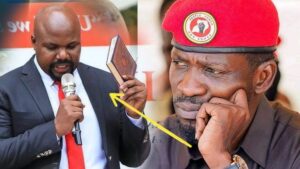
Munyagwa explained that his father’s endorsement of Museveni came as a complete surprise to him and many people who know the family. He said his father was once very aware of the struggles ordinary Ugandans face, but now appears disconnected from the reality of daily life for most citizens.
According to Munyagwa, the sudden change in his father’s political thinking cannot be explained by normal reasoning or political persuasion. He claimed that someone may have used juju or witchcraft to manipulate his father’s mind, leading him to support a leadership Munyagwa believes has failed the country.
The opposition politician described the situation as painful and emotional, noting that it is difficult to accept such a decision from a parent. He said it hurts to see a close family member publicly support a system that, in his view, has caused suffering, poverty, and hopelessness among many Ugandans.
Munyagwa stressed that Uganda is currently facing serious challenges that cannot be ignored. He pointed to rising costs of living, unemployment among the youth, poor healthcare services, corruption, and widespread poverty as clear signs that the country needs new leadership and fresh ideas.
He questioned how anyone who truly understands these hardships could still endorse the current government without acknowledging the suffering of the people. According to Munyagwa, such support shows a loss of connection with the realities facing ordinary Ugandans in villages, towns, and cities.
The opposition candidate went further to say that his father no longer sees what Ugandans are going through. He claimed that issues such as struggling businesses, jobless graduates, poor roads, and inadequate public services seem invisible to those who continue to support the ruling leadership without question.

Munyagwa argued that political decisions should be made freely and consciously, based on facts and lived experiences, not fear, pressure, or alleged supernatural influence. He warned that when people are manipulated into endorsing leaders, democracy loses its meaning.
He clarified that his statements were not meant to insult or disrespect his father. Instead, he said he was expressing concern over how politics in Uganda has become so divisive that it can even separate parents from their children.
According to Munyagwa, many Ugandan families are suffering similar divisions because of politics. He said households are torn apart by political pressure, fear of authority, and personal interests, leaving families emotionally broken.
The endorsement reportedly caused confusion among Munyagwa’s supporters, many of whom expected unity within his family. Some supporters openly questioned how a father could publicly support a leader his son is campaigning against.
Munyagwa used this moment to highlight what he called a deeper sickness in Uganda’s political culture. He said fear, blind loyalty, and manipulation have replaced honest debate and accountability in national politics.
He accused the ruling system of benefiting from keeping people unaware or unwilling to question leadership. According to him, when citizens stop thinking critically, corruption grows and leaders stop being accountable to the people.
Munyagwa also criticized what he described as politics of silence, where people support leaders simply because they fear consequences or hope for personal gain. He said such politics destroys the future of the nation.

The opposition candidate reaffirmed that he would continue speaking the truth, even when it involves uncomfortable matters within his own family. He said leadership demands courage, honesty, and sacrifice, not silence.
He urged Ugandans to examine their own lives before making political choices. He encouraged citizens to look at their living standards, the future of their children, and the quality of public services they receive.
Munyagwa warned that Uganda cannot move forward if people are influenced by fear, money, gifts, or alleged supernatural practices. He insisted that true change comes from informed and fearless citizens.
His remarks have sparked intense debate across social media platforms, with some praising his honesty while others accuse him of involving family issues in politics. The discussion continues to divide public opinion.
Political observers say Munyagwa’s claims reveal how deeply politics has entered private life in Uganda. They note that such statements show the emotional and psychological cost of prolonged political dominance.
Despite the controversy, Munyagwa maintains that his focus remains on the suffering of ordinary Ugandans. He says his campaign is about restoring dignity, fairness, and opportunity for all citizens.
He concluded by stating that no amount of influence—political, financial, or supernatural—should silence the truth. According to Munyagwa, Uganda needs leaders and citizens who are awake, courageous, and ready to demand better governance.