Richard Todwong, the Secretary General of the National Resistance Movement (NRM), has declared that he does not regret his decision to support independent candidates in the recent Gulu City elections.
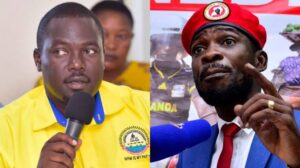
Speaking during NRM victory celebrations, Todwong defended his actions, emphasizing loyalty to competence over rigid party alignment.
The comments were made in the context of the mayoral race in Gulu City, where the NRM candidate, Alfred Okwonga, lost to Julius Acire Labeja, popularly known as Gunya, an independent candidate with strong NRM leanings.
Todwong explained that the outcome was influenced by earlier decisions he made regarding party support.
According to Todwong, Okwonga was initially unsure about the position he wanted to contest. He claimed that Okwonga, who had gone through the NRM primary elections unopposed, later wrote to Todwong requesting to change his candidature from mayor to Member of Parliament. Todwong said he did not respond to this request, leaving the path open for Gunya to step in.
“In that period, Gunya was not contesting. NRM called Gunya to come and take the nomination since Okwonga did not know what he wanted, and then he came,” Todwong explained. He emphasized that the decision was made in the best interest of the party and to ensure competent leadership.
Todwong said that if Okwonga had been clear about his intentions from the beginning, nobody would have challenged his position.

He added that now that the elections are over, Okwonga should accept the results and continue to work with the NRM.
During a press conference after the local government election results on January 24, 2026, Okwonga expressed dissatisfaction with the outcome.
He blamed party leaders, including Todwong, for failing to support him, claiming this influenced voters to back independent candidates instead.
Okwonga stated that he wrote to both the NRM Secretariat and the Electoral Commission to step down from the race after learning that some party leaders were backing independents. He said neither institution responded to his request, leaving him with no option but to continue his candidacy.
Several NRM members in Gulu City openly supported independent and opposition candidates, according to reports. They argued that they were voting based on competence and local leadership ability rather than strict party affiliation. This division weakened the official party line.
Lambert Akena Lamex, NRM Administrative Assistant and Workers’ Representative to the Gulu City Council, warned that party members are not allowed to support candidates other than the official NRM flag bearer. He added that those who defy party rules could face penalties.
Despite warnings, the penalties appeared to carry little weight in the city. Many NRM leaders openly supported independents or opposition candidates across various positions, demonstrating deep divisions within the party at the local level.
For example, Okot Tonny, NRM Chairperson for Laroo Pece Division, publicly backed Democratic Party candidates for Division Member of Parliament and Division Mayor, instead of supporting official NRM flag bearers Tonny Kitara and Aber Gifter.
In Bardege–Layibi Division, the NRM Chairperson, Jacob Ojok Otobi, openly declared he would not support Martin Ojara Mapenduzi, the NRM flag bearer for MP, instead backing DP’s Norbert Mao. Such actions show that local party loyalty often takes a backseat to personal and strategic choices.
Todwong’s decision to back Gunya was informed by their prior political relationship. Gunya had previously served as Todwong’s political assistant when Todwong was appointed Minister without Portfolio in 2012, and Todwong trusted his competence and ability to deliver results.
The mayoral race in Gulu City was competitive. Gunya emerged victorious with 12,281 votes, defeating Alfred Okwonga, who came second with 9,586 votes. Other independent candidates, including Obonyo Marc Anthony, Okello Jonathan Snoop, Okello Denis Oweka, and Obonyo Patrick Wokorach, received significantly fewer votes.
Todwong stressed that he will not apologize to any party candidate who lost due to the lack of NRM support. He believes that prioritizing competence and effective leadership is more important than strictly enforcing party loyalty.

He argued that political leadership is not only about following party directives but also about making decisions that ensure capable governance and representation for citizens. According to him, this principle guided his support for Gunya.
The NRM Secretary General’s remarks have highlighted challenges within the party at the local level. Divisions and personal preferences among party members have created scenarios where independent candidates can thrive, sometimes at the expense of official flag bearers.
The situation has sparked debate within NRM ranks, with some party loyalists expressing concern over weakening the party’s cohesion.
Others support Todwong’s approach, arguing that endorsing the most competent candidates, even if independent, strengthens governance and the party’s long-term credibility.
Todwong’s comments underline the tension between party loyalty and effective leadership. They raise questions about the role of internal democracy, candidate selection processes, and the importance of local decision-making within national parties.
In conclusion, Richard Todwong remains firm in his stance. He defends his decision to support Gunya as a principled move prioritizing competence and effective representation. For him, the election outcome in Gulu City is a reflection of careful judgment rather than a betrayal of party loyalty.
This episode in Gulu City serves as a reminder of the delicate balance party leaders must maintain between enforcing party discipline and allowing flexibility for local political realities. Todwong’s position may influence how NRM handles similar situations in future elections.
