Related Articles


In a strong response to President Yoweri Museveni’s recent statement regarding the use of military force to quell protests, National Unity Platform (NUP) presidential candidate, Robert Kyagulanyi, also known as Bobi Wine, fired back, accusing the president of preparing to unleash violence during the upcoming elections.
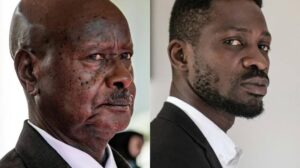
Museveni, during a speech on Wednesday, had warned that soldiers and police officers were armed with 120 bullets each and that any protestors should not underestimate their resolve. Kyagulanyi, however, did not take kindly to the implication that the government would respond with excessive force against peaceful demonstrators.
Kyagulanyi condemned Museveni’s statement, calling it a clear indication of the regime’s readiness to use violence against Ugandans who might choose to peacefully protest against any unfairness in the electoral process. Bobi Wine stressed that he had never incited violence or riots but had always advocated for peaceful demonstrations, which are constitutionally protected under Article 29 of Uganda’s Constitution. According to Kyagulanyi, Museveni’s comments were not only inflammatory but also showed how little respect the government had for the democratic rights of Ugandans.
He reminded Ugandans that the Constitution guarantees their right to peacefully assemble and express dissatisfaction with the government, especially in the context of elections. Article 29 clearly enshrines the right to protest and express one’s opinions without fear of violence or retribution from the state. In Kyagulanyi’s view, Museveni’s rhetoric was a clear indication that the regime had no intention of honoring these rights and would instead rely on state-sponsored brutality to silence dissent.
Bobi Wine further pointed out that Museveni’s statement was an attempt to intimidate Ugandans into submission, instilling fear that any act of protest would be met with deadly force. According to Kyagulanyi, this kind of threat only served to highlight the undemocratic nature of Museveni’s government, which, he claimed, had a history of using violence and intimidation to maintain power. The opposition leader vowed that he would not be intimidated by such threats and called on his supporters to continue their push for democratic reforms.
Kyagulanyi also addressed the underlying issue of electoral transparency, which he believes Museveni’s government has consistently undermined. He argued that if the government truly wanted to avoid protests and the ensuing consequences of discontent, then it needed to guarantee a free, fair, and transparent election. However, Bobi Wine stressed that Museveni’s regime had already begun to rig the election long before the vote was cast. He cited the frequent disruptions to opposition campaigns, the blocking of radio stations, the illegal arrest of campaign staff, and the abduction of activists as clear evidence of the government’s efforts to stifle the opposition and manipulate the electoral process.
The NUP leader expressed his frustration over the growing number of restrictions placed on his campaign, calling it an affront to democracy. “If Museveni truly wants a peaceful election, then he must ensure that all candidates, including myself, have equal access to campaign freely across the country,” Kyagulanyi stated. He also highlighted the practice of security forces harassing opposition supporters, pointing out how it was becoming increasingly difficult to engage in normal political activities without fear of retribution from the state.

Bobi Wine accused Museveni of running a government that sought to protect the interests of a few elite individuals while leaving the majority of Ugandans without a voice. He reminded the president that he was not above the law and that the people of Uganda had a right to hold their government accountable. In his remarks, Kyagulanyi emphasized that the solution to Uganda’s political crisis was not violence, but dialogue, peaceful protests, and respect for democratic principles. He warned that if Museveni continued with his heavy-handed tactics, the country would only be further divided, and the trust between the government and the people would be irreparably damaged.
Despite the challenges faced by the opposition, Bobi Wine reiterated that his party would continue to advocate for free and fair elections, even in the face of intimidation. He stated that his mission was not to cause unrest but to fight for a better Uganda, where every citizen had the opportunity to participate in the political process without fear. According to Kyagulanyi, the real enemy was not the opposition or the protesters, but rather the entrenched system of corruption and electoral fraud that had existed under Museveni’s rule for decades.
In response to Museveni’s remarks about the military being well-armed and ready to face dissenters, Bobi Wine questioned the president’s priorities. Instead of focusing on the need for a powerful military to suppress protestors, Kyagulanyi suggested that Museveni should invest in strengthening Uganda’s democratic institutions and upholding the rule of law. He also called on Ugandans to rise above the intimidation and make their voices heard through peaceful means, such as voting and civil disobedience, if necessary.
The opposition leader also pointed out that Museveni’s use of military force was not a solution to the country’s problems. Kyagulanyi argued that true peace could only be achieved when the government respected the will of the people and guaranteed the rights of all citizens to participate in the political process. He likened Museveni’s administration to a dictatorship, one that had resorted to using violence as a means of silencing opposition rather than embracing dialogue and reform.
Bobi Wine’s response to Museveni’s threats also underscored the growing divide between the government and ordinary Ugandans. The president’s comments, which seemed to endorse violent repression of dissent, were not only troubling to the opposition but also to the general public, many of whom felt that their basic rights were being trampled upon. For Kyagulanyi, this was an indication that Uganda’s democracy was in grave danger and that the president’s tactics were pushing the country toward further authoritarianism.
The NUP presidential candidate concluded his remarks by emphasizing that Ugandans would not be cowed by fear. “We will not be silenced by the military or by threats of violence. Our fight is for a Uganda where every citizen has the right to speak freely, protest peacefully, and participate fully in the political process,” he said. Bobi Wine’s call for peaceful protest and electoral reforms resonated with many Ugandans who had grown disillusioned with the status quo.
Finally, Kyagulanyi urged the international community to closely monitor the upcoming elections in Uganda, warning that any attempt to suppress the vote or undermine the will of the people would have dire consequences for the country’s future. He called on the international community to hold Museveni accountable for any violence or electoral malpractice that might occur during the elections and to support the people of Uganda in their struggle for democracy and justice.
As the election season heats up, the tension between the opposition and Museveni’s government continues to rise. Bobi Wine’s response to the president’s comments signals a commitment to peaceful resistance and a demand for a fair electoral process, despite the challenges and threats they face. For many Ugandans, the outcome of this election will determine the future of their country, and the stakes have never been higher.
Bobi Wine’s response also touched on the issue of the growing militarization of Uganda’s political landscape. He pointed out that Museveni’s government had increasingly relied on the military and security forces to control the population, rather than fostering a democratic environment where civil rights are respected. In Kyagulanyi’s view, this shift was a sign of desperation from a government that was afraid of losing power. He criticized the government’s militarization of civilian life, claiming that it was being used to suppress dissent rather than provide security. Bobi Wine made it clear that his commitment to a peaceful transition of power would not be deterred by military threats or intimidation.

Furthermore, Bobi Wine addressed the issue of corruption within Museveni’s administration. He pointed out that one of the primary reasons for the growing discontent among Ugandans was the widespread corruption that had become entrenched within the government. According to the NUP leader, billions of shillings meant for public services and development were being siphoned off by government officials, leaving citizens with inadequate infrastructure, poor healthcare, and insufficient education.
Kyagulanyi argued that the government’s inability to address these issues was a clear indicator that it had lost touch with the needs of the people. He vowed that, if elected, his administration would prioritize transparency and accountability, working to root out corruption at all levels.
Bobi Wine also expressed his concern about the growing number of young people who felt disillusioned with the political process. He observed that many young Ugandans had lost faith in the system, not because they didn’t care about their country’s future, but because they felt that the government had consistently failed to address their concerns.
The high levels of unemployment, lack of affordable education, and the inability to access basic services had left many young people feeling hopeless. Kyagulanyi stressed the importance of engaging this demographic, offering them hope and a chance to shape their own futures through active participation in the political process.
In his remarks, Bobi Wine also sought to remind the people of Uganda that they were not powerless in the face of government oppression. He urged them to remain resilient and continue their efforts to demand justice and equality. He reiterated that Uganda belonged to all its citizens, not just the ruling elite, and that every Ugandan had a right to speak out against the injustices they faced. Kyagulanyi’s message was one of empowerment, telling Ugandans that their collective voice was more powerful than any military force or governmental decree. “Our power is in our numbers,” he said, emphasizing the importance of unity in the struggle for a fair and just society.
Kyagulanyi also addressed the international community, calling for a fair and independent election monitoring process. He pointed out that Museveni’s government had a history of undermining international observers and attempting to manipulate the election process in its favor.
Bobi Wine urged the international community to ensure that Ugandan elections were held in a manner that was transparent, fair, and free from external interference. He warned that if the elections were marred by fraud and violence, it would send a dangerous message not just to Uganda, but to the entire African continent, about the risks of unchecked authoritarianism.
As the election draws nearer, the tension between the government and opposition is expected to intensify. Bobi Wine’s stance on peaceful protest and electoral integrity is gaining significant traction, particularly among Uganda’s youth, who are increasingly disillusioned with the ruling regime.
The upcoming election will likely be a decisive moment in Uganda’s political history, determining whether the country will continue on its current path or take a turn toward greater democratic reforms. For Bobi Wine, the fight is not just about winning an election, but about ensuring that Uganda’s future is built on the principles of freedom, justice, and equality for all its citizens.