Related Articles
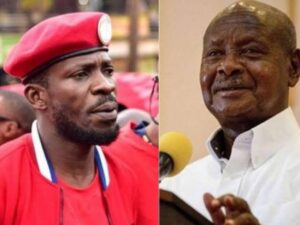
President Yoweri Museveni has stirred political debates once again by claiming that Bobi Wine’s National Unity Platform (NUP) rigged a total of 2.7 million votes in the Buganda region during Uganda’s 2021 general elections. According to Museveni, this alleged manipulation of votes not only affected the outcome in the region but also exposed weaknesses in how the ruling National Resistance Movement (NRM) safeguarded its supporters’ ballots.
He emphasized that elections are not only about casting votes but also ensuring that every vote is properly protected and counted, something he says did not happen fully during the last elections.
Speaking at a political rally, Museveni said that while NRM worked hard to mobilize voters and conduct a smooth election campaign, the opposition capitalized on lapses in oversight to manipulate results in their favor. He argued that the 2.7 million votes represent a significant number in the Buganda region, making the alleged rigging a serious blow to democratic integrity. For Museveni, the message was clear: both the ruling party and the voters have responsibilities beyond the ballot box to safeguard the democratic process.
The President suggested that the opposition’s operations in Buganda were carefully planned and highly coordinated, using methods that made it difficult for the NRM to track or counter them. While he did not go into specific tactics, his claim implied that the opposition had exploited weaknesses in polling station monitoring, voter verification, and vote counting, raising questions about the integrity of the election process in one of Uganda’s most politically active regions.
Museveni admitted that Uganda’s electoral system has improved over the years, with reforms aimed at ensuring transparency and fairness. However, he stressed that these improvements are only as effective as the vigilance of political parties, electoral officials, and voters. Without active participation and oversight, he warned, even the best systems can be vulnerable to manipulation, which he says was evident in Buganda during the 2021 elections.
He went on to assert that the alleged rigging had broader implications beyond the immediate loss of votes. According to Museveni, when elections are perceived as compromised, it undermines public trust in government institutions and weakens confidence in democracy itself. He argued that all stakeholders—including political parties, election officials, and citizens—must take responsibility for ensuring that votes are fully protected from the moment they are cast until they are officially counted.
The President also pointed to the importance of political education and awareness among voters. He suggested that part of the problem in Buganda was that voters did not sufficiently understand the value of safeguarding their ballots or monitoring election activities. By strengthening civic education, Museveni argued, Uganda can reduce the opportunities for manipulation and ensure that voters’ choices are truly reflected in election outcomes.
Addressing the NRM officials and supporters in attendance, Museveni stressed that accountability and vigilance are critical in preventing similar incidents in future elections. He said that the party must learn from the 2021 experience and develop stronger internal mechanisms to monitor voting processes, track results, and respond quickly to any irregularities. For him, the lessons from Buganda are not just political—they are essential for sustaining the credibility of Uganda’s democratic institutions.

While he directed much of his criticism toward the opposition, Museveni did not shy away from acknowledging that the NRM also bore some responsibility for the alleged vote losses. He admitted that his party failed to safeguard certain votes after they were cast, and this gap allowed the opposition to allegedly manipulate outcomes. Such an admission is rare in Uganda’s political discourse, where leaders often prefer to blame opponents entirely, making Museveni’s comments particularly noteworthy.
The President further highlighted the high voter turnout in Buganda during the 2021 elections as both a success and a challenge. He noted that while the enthusiasm of voters is commendable, it must be matched with strict oversight to prevent fraud. According to Museveni, high participation without proper safeguards creates opportunities for manipulation, something he believes the opposition exploited to their advantage.
Observers say that Museveni’s claims are likely to spark renewed debate about electoral transparency and fairness in Uganda. Analysts warn that allegations of vote rigging, whether verified or not, can deepen political divisions and increase tension between the ruling party and the opposition. They emphasize that handling such accusations carefully is critical for maintaining peace and stability in the country.
Museveni also spoke about the role of technology in protecting votes. He suggested that digital tools, such as electronic vote tracking and verification systems, could help reduce opportunities for manipulation in future elections. By combining technological solutions with active oversight by political parties and voters, Museveni believes Uganda can strengthen the credibility of its elections and prevent disputes like those alleged in Buganda.
The President accused the opposition of taking advantage of loopholes in the electoral system and using sophisticated methods to sway results in their favor. He warned that unless the NRM and other parties develop stronger monitoring mechanisms, similar incidents could happen in other regions during future elections. Museveni stressed that this is not just a political issue but a matter of national importance.
He praised the dedication of NRM officials, party supporters, and election monitors who worked tirelessly during the 2021 elections. Despite their hard work, he said, lapses in vigilance created openings for alleged rigging. His remarks were intended to encourage greater unity and coordination among party members to prevent mistakes and secure votes more effectively next time.
Museveni also addressed concerns about the credibility of Uganda’s democratic process. By highlighting the alleged manipulation of millions of votes, he sought to underscore the importance of transparency, accountability, and proactive engagement by all political actors. His message to citizens was clear: democracy requires constant vigilance, not just during campaigns but at every stage of the electoral process.

Political analysts note that accusations of vote rigging are common in Uganda, often used to energize supporters and criticize opponents. However, Museveni’s public acknowledgment of NRM’s shortcomings adds a different dimension to the discussion, as it shows a recognition that election outcomes depend on the combined efforts of all stakeholders, not just the actions of one party.
The controversy over Buganda’s votes comes at a time when the country is preparing for upcoming elections. Analysts suggest that the lessons from 2021 will influence both campaign strategies and election monitoring efforts in the future. Parties are expected to increase vigilance, improve coordination, and adopt more robust systems to prevent any alleged manipulation of votes.
Museveni reiterated that the opposition will continue attempting to exploit gaps in electoral oversight if left unchecked. He called on all NRM supporters to remain alert and united, emphasizing that protecting votes is essential for preserving the party’s electoral strength and upholding the principles of democracy.
He urged citizens to remain engaged and vigilant, warning that passivity can lead to compromised results. For Museveni, elections are not a passive exercise but an active responsibility that requires participation, monitoring, and accountability at every stage, from casting votes to counting them.
In concluding his speech, the President reminded Ugandans that safeguarding democracy is a shared responsibility. He highlighted that while elections may be contested, the ultimate goal is to ensure that citizens’ voices are accurately represented, and that no party or group can manipulate the will of the people without consequence.
As Uganda reflects on the alleged rigging of 2.7 million votes in Buganda, political tensions are likely to remain high. How both the NRM and the opposition respond in the coming months will be critical in shaping public trust and the credibility of future elections. The Buganda controversy serves as a stark reminder of the need for vigilance, transparency, and accountability in every aspect of Uganda’s democratic process.
The President’s claims are expected to dominate political conversations for some time, influencing how parties prepare for elections and engage with citizens. Moving forward, the ability to secure votes, ensure transparency, and maintain trust will be central to Uganda’s ongoing democratic journey.