Related Articles


Uganda’s political debate continues to heat up following fresh criticism directed at opposition leader Bobi Wine by Nsibambi, the defeated Mawokota South parliamentary candidate.
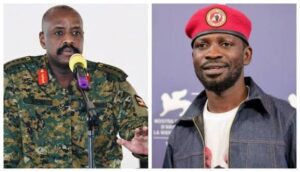
His remarks questioned why Bobi Wine is reportedly in hiding at a time when supporters are being urged to stand firm in demanding what they believe was a stolen victory. The comments have added another voice to the ongoing national conversation about leadership and responsibility.
Nsibambi argued that during the campaign period, Bobi Wine used strong mobilizing words that encouraged supporters to protect their vote and stand ready to demand justice if results were disputed. According to him, the current moment is exactly the situation those messages prepared people for, yet the leader at the center of that message is not visibly present.
The phrases he referenced — calling on supporters to search for the vote, guard the vote, and demand victory if it is taken away — became popular rallying calls during the campaign season. To many young voters, they symbolized alertness, courage, and determination to ensure fairness in the electoral process.
Nsibambi’s criticism is based on the belief that leadership involves physical presence during critical moments. In his view, if people are expected to take risks, their leader should be seen standing with them openly. This perspective resonates with those who believe leadership is demonstrated through direct visibility.
However, others argue that political situations can become dangerous, and leaders sometimes go into hiding for safety reasons. They say staying alive and free can allow a leader to continue organizing, speaking, and planning rather than being silenced or detained.
The disagreement highlights a common debate in political movements: whether symbolism and visibility matter more than strategic caution. Some supporters want to see bold, public action, while others believe survival and long-term strategy are more important.

Nsibambi’s comments were made during a radio program, a platform that reaches many ordinary citizens. Radio remains a powerful tool in Uganda, especially in rural areas, and statements made there can shape public opinion quickly.
By directly challenging Bobi Wine, Nsibambi placed himself within the broader opposition debate. It shows that criticism is not only coming from government figures but also from individuals within political circles who expect stronger visible leadership.
For supporters of Bobi Wine, such remarks may feel unfair, especially if they believe the security environment is too risky for him to appear publicly. They may see the criticism as ignoring the personal dangers involved.
Others, however, may agree with Nsibambi, saying that movements need leaders who are seen at the front line. They believe visibility inspires confidence and keeps supporters motivated during uncertain times.
The situation also raises questions about how political promises are interpreted. Campaign language is often passionate and symbolic, but after elections, those words can be tested in real-life conditions that are more complex.
Public expectations can be heavy for political figures. Supporters may see them as symbols of courage and hope, expecting them to lead in every moment, even when risks are high. Balancing those expectations with personal safety is not easy.
The comments also show how the opposition space itself can have differing views. Political movements are rarely completely united, and internal criticism can surface, especially during challenging periods.
For ordinary citizens watching these exchanges, the main concern is what comes next. Many people want clarity about leadership direction, safety, and the path forward.

Political analysts often note that moments after elections are sensitive. Emotions are high, and words spoken during this period can influence whether tensions calm down or increase.
The debate over hiding versus leading publicly is not new in political struggles around the world. History shows examples of leaders who chose visibility and others who worked from behind the scenes.
Communication plays a key role in such situations. Even if a leader is not physically present, consistent messaging can help supporters understand the strategy and feel connected.
Nsibambi’s remarks, whether supported or criticized, add to the pressure on Bobi Wine to clarify his position and approach. Public challenges often push leaders to respond or adjust their communication.
In the end, this exchange reflects a larger issue about expectations, safety, and responsibility in political leadership. Each side has its own reasoning, shaped by fear, hope, and experience.
As Uganda continues to navigate a tense political period, many citizens hope that disagreements — even within political camps — will be expressed peacefully, with a focus on dialogue rather than actions that could increase instability.