
https://datawrapper.dwcdn.net/2EDfn/1/ []
Breaking News

Just In!! Security Bans NUP Supporters From Irregular Use Of The National Flag During Their Campaign Rallies Or They Face Arrest

Security authorities in Mubende Municipality have issued a strong warning to supporters of political parties, especially those linked to the National Unity Platform (NUP), over the improper use of Uganda’s national flag during campaign activities. The move has attracted public attention because the national flag is a powerful symbol of unity and national pride.
The warning follows a joint security operation launched to remove national flags that were raised in ways authorities say are illegal and disrespectful. According to police, several flags had been displayed without following the required legal procedures and guidelines.

The operation was confirmed by the Wamala Regional Police Spokesperson, SSP Lameck Kigozi, who said security agencies were concerned about the growing misuse of the country’s national symbols. He explained that the aim was not to target any group unfairly, but to protect the dignity of the flag.

SSP Kigozi stated that the national flag represents the values, history, and sovereignty of Uganda. Because of this, it should be treated with the highest level of respect at all times, regardless of political differences or campaign excitement.

During the operation, authorities observed that some individuals had raised the national flag in places considered inappropriate. These included pork joints, bars, toilets, brothels, and even on electric and telephone poles.

Security officials described such locations as degrading to the national symbol. They argued that placing the flag in these areas lowers its value and goes against the laws and traditions that guide how state symbols should be handled.

The police emphasized that the national flag is protected by law. This means no individual or political group is allowed to use it freely without proper authorization from the relevant authorities.

According to the police statement, anyone who continues to display the national flag without clearance risks arrest and prosecution. Security agencies made it clear that the law will be applied firmly to discourage further misuse.

The warning specifically mentioned supporters of political parties because campaign seasons often come with high emotions. During such times, people may use national symbols to send political messages, sometimes without understanding the legal limits.

Authorities stressed that the national flag does not belong to any political party. Instead, it belongs to all Ugandans and must remain neutral, unifying citizens rather than dividing them along political lines.

Residents across the wider Wamala Region have been advised to immediately lower any national flags that were raised irregularly. This directive applies to both individuals and businesses that may have displayed the flag wrongly.

Security officials said the operation is preventive rather than punitive. They hope that public awareness and cooperation will reduce the need for arrests and court cases related to misuse of state symbols.

The police also reminded the public that there are clear guidelines on how and where the national flag can be displayed. These guidelines explain proper height, cleanliness, location, and purpose of display.

In recent times, political campaigns have become more creative, with supporters using songs, colors, and symbols to express loyalty. However, authorities insist that creativity should not cross into disrespect of national values.

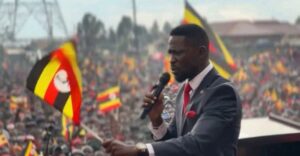
The image of political leaders, including Bobi Wine, holding or displaying the national flag during campaign trails has often sparked debate. Some see it as patriotism, while others believe it risks politicizing a national symbol.

Security agencies say their role is to maintain order and protect national symbols, not to block political expression. They argue that political messages can still be shared using party flags and approved campaign materials.

The warning has generated mixed reactions among the public. Some citizens support the move, saying the national flag should always be honored. Others feel the enforcement may be too strict during a heated political season.

Despite differing opinions, authorities maintain that respect for national symbols must come first. They believe that protecting the flag helps protect national identity and unity.

Security officials have called on political leaders to guide their supporters responsibly. They say leaders should educate followers on the importance of following the law when using symbols associated with the nation.

As campaigns continue across the country, the message from security is clear: the national flag is a sacred symbol that must be used correctly. Anyone who ignores the guidelines risks facing the full force of the law, as authorities work to preserve the dignity of Uganda’s national colours.

About West Nile

Check Also

Full List!! Here Are The 10 Cabinet Ministers Who Were Badly Defeated In Uganda’s 2026 Parliamentary Elections Uganda’s 2026 general elections have sent shockwaves across the country after ten serving cabinet ministers were badly defeated in parliamentary races. The results marked one of the most dramatic political moments in recent history and clearly showed a shift in voter mood. Across many regions, Ugandans used their votes to express frustration with long-serving leaders. The defeats reflected growing anger over economic hardship, unemployment, poor service delivery, and unfulfilled campaign promises. One of the most surprising losses was that of Beatrice Anywar, the Minister of Water and Environment. She lost the Kitgum Municipality seat to opposition candidate Dennis Onekalit Amere, ending her long political journey in Parliament. Anywar was once considered a strong political force, having served both in opposition and later in government. Her defeat shocked many supporters and showed how quickly political fortunes can change. In Ndorwa West County, David Bahati, the State Minister for Trade, Industry and Cooperatives, was also voted out. Bahati had lost the NRM primaries and chose to contest as an independent candidate. Despite his influence in the Kigezi region, voters rejected him at the ballot. His defeat marked the end of a long period of dominance and showed growing voter confidence in challenging powerful figures. One of the most talked-about races happened in Lira City, where two sitting cabinet ministers competed for the same seat. Betty Amongi, the Minister of Gender, Labour and Social Development, lost the Lira City Woman MP seat. She was defeated by Dr. Jane Ruth Aceng, the Minister of Health. This contest attracted national attention and highlighted internal competition within the ruling political class. Amongi’s defeat was widely seen as a strong message from voters who were unhappy with her political choices and leadership style. The loss also showed that holding a cabinet position does not guarantee victory. Another major defeat was that of Hamson Obua, the Government Chief Whip. He lost the Ajuri County seat despite his senior role in Parliament and close ties to the ruling party. Political analysts say Obua’s loss reflected growing dissatisfaction in northern Uganda, especially among young people facing unemployment and limited opportunities. Several other ministers were also swept out of Parliament. Moriku Kaducu, the State Minister for Primary Education, lost the Moyo District Woman MP race after a tough contest. John Mulimba, the State Minister for Foreign Affairs in charge of Regional Affairs, also failed to secure re-election. His loss added to the growing list of senior officials rejected by voters. In Chua County, Okello Oryem, the State Minister for Foreign Affairs responsible for International Affairs, was voted out. His defeat was another blow to the government’s top leadership. Frederick Ngobi Gume, the State Minister for Cooperatives, lost his Bulamogi North West seat in Kaliro District. Voters there chose change over continuity. Florence Nambozo Wamala, the State Minister for Karamoja Affairs, was defeated in the Sironko Woman MP race. Her loss showed that even regional ministers were not spared by voters. The final minister on the list was Peter Lokeris, the Minister for Karamoja Affairs, who lost the Chekwii East County seat. His defeat ended a long political career in Parliament. Across the country, voting patterns showed a strong desire for political renewal. Many voters openly supported new faces, especially in areas where leaders had stayed in power for many years. Opposition parties and independent candidates made strong gains, particularly in urban areas. At the same time, traditional ruling party strongholds showed clear signs of weakening. Political commentators described the election as a referendum on government performance. Many voters were unhappy with rising living costs, poor services, and lack of accountability. The loss of ten cabinet ministers has placed pressure on President Yoweri Museveni to rethink his Cabinet. While the law allows him to appoint ministers from outside Parliament, the defeats carry strong political meaning. NRM insiders admit that keeping defeated ministers in Cabinet could cause tension, especially as newly elected MPs push for leadership roles. As Uganda prepares for the 12th Parliament, one thing is clear. The House will be younger, more competitive, and less predictable than before. The 2026 elections delivered a powerful message from the people: no position is guaranteed, and even the most powerful ministers can be voted out.

Leave a Reply

Your email address will not be published. Required fields are marked *