Related Articles



Uganda is just days away from the highly anticipated presidential elections scheduled for January 15, 2026. As the country prepares to vote, a new national opinion poll has added fresh energy to the political debate.
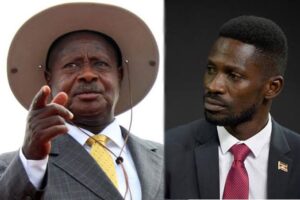
The poll suggests that President Yoweri Kaguta Museveni is heading into election week with a strong advantage over his main challenger, Robert Kyagulanyi Ssentamu, popularly known as Bobi Wine.
The opinion poll was conducted by the Development Watch Centre (DWC), a research organization that focuses on governance and public policy.
According to the findings released on January 10, 2026, Museveni enjoys national support of 60.94 percent, while Bobi Wine stands at 35.26 percent. This wide gap has sparked discussion across the country, especially among voters still weighing their final decision.
The survey was carried out between November 19 and December 16, 2025, a critical period during the height of campaign activities. Researchers interviewed 3,758 respondents out of a targeted 4,000, achieving a high response rate of 93.95 percent. The respondents were drawn from 42 districts across 12 sub-regions, giving the poll a broad national outlook.
One of the most striking findings of the poll is Museveni’s dominance across most regions of Uganda. Out of the 12 sub-regions covered, Museveni leads in 11, showing strong and consistent support countrywide. Bobi Wine only leads in the Kampala sub-region, highlighting the urban appeal of his campaign, particularly in the capital city.
In regions such as Bunyoro, Karamoja, Ankole, and Lango, Museveni’s lead is especially strong. In Bunyoro, he commands 70 percent support compared to Bobi Wine’s 28.15 percent. Karamoja follows closely, with Museveni at 68.90 percent and Bobi Wine at 28.98 percent, showing a clear preference for the incumbent.
Ankole, Museveni’s home region, also shows firm support for him at 67.39 percent, while Bobi Wine polls at 25 percent. In Lango, Museveni scores 67.18 percent against Bobi Wine’s 31.27 percent. These figures suggest that Museveni continues to enjoy strong backing in rural and traditional stronghold areas.

Bobi Wine’s strongest showing comes from Kampala, where he leads with 55.16 percent compared to Museveni’s 42.26 percent. This result reflects Bobi Wine’s popularity among urban voters, youth, and first-time voters who are drawn to his message of change and reform.
In other regions such as Buganda, Busoga, Teso, and Kigezi, Museveni still maintains a comfortable lead. For example, in Buganda, Museveni polls at 60 percent while Bobi Wine records 38.13 percent. In Busoga, Museveni leads with 57.19 percent against Bobi Wine’s 33.54 percent.
The poll also sheds light on how age influences voting preferences. Among young voters aged 18 to 35, Bobi Wine leads with 53 percent support, while Museveni follows with 43.93 percent. This confirms the common belief that Bobi Wine enjoys strong support among the youth.
However, Museveni’s support increases steadily with age. Among voters aged 46 to 56, Museveni’s support rises to 61 percent, and it peaks at 72 percent among voters aged 57 and above. This trend shows that older voters remain loyal to the long-serving president.
Gender patterns also play an important role in the poll results. Museveni leads among female voters, with 62.27 percent of women supporting him, compared to 34.09 percent for Bobi Wine. Male voter preferences closely follow the national average, though men showed a slightly higher intention to turn out and vote.
Beyond candidate popularity, the poll explored the key issues influencing voters’ choices. Service delivery emerged as the most important concern, cited by 37.06 percent of respondents. Many voters are focused on health services, education, roads, and access to basic government support.
Youth unemployment ranked second at 32.8 percent, highlighting the growing concern about jobs and economic opportunities for young people. Corruption followed closely at 25.9 percent, showing that accountability and transparency remain major issues in Uganda’s politics.
Interestingly, issues such as security and the rule of law were ranked lower by respondents. This suggests that many voters feel these areas are either stable or less urgent compared to daily economic and social challenges.

The poll also assessed voter readiness ahead of election day. The results indicate high enthusiasm to participate in the elections, with more than 80 percent of women and nearly 90 percent of men saying they intend to vote. This points to a potentially high voter turnout on January 15.
Methodologically, the poll relied entirely on face-to-face interviews, allowing researchers to engage directly with respondents.
Rural respondents made up about 61 percent of the sample, while urban respondents accounted for 39 percent, reflecting Uganda’s population distribution.
Although the poll did not cover the West Nile and Bugisu sub-regions, researchers stated that including them would not have changed the ranking of the leading candidates. They noted that while some candidates might have gained slightly in their home regions, Museveni’s national lead would remain intact.
According to Dr. Allawi Ssemanda, a research fellow at DWC, the poll reflects voter attitudes at the time of data collection. He explained that if the political environment remains unchanged, the figures suggest Museveni is likely to win outright and avoid a second-round run-off.
As Uganda enters the final days of campaigning, the poll offers a snapshot of the political mood across the country. While elections can still produce surprises, the numbers suggest that Museveni goes into election week as the clear front-runner, with Bobi Wine relying heavily on youth and urban support.
Ultimately, the final decision rests with Ugandan voters. On January 15, citizens will head to the polls to choose their next president, turning opinion poll predictions into a real and decisive outcome for the nation’s future.