Related Articles


In a bold and significant shift, President Yoweri Museveni has ordered the police and Uganda People’s Defence Forces (UPDF) to immediately discontinue the use of canes in handling civilians, especially in crowd control and during arrests.
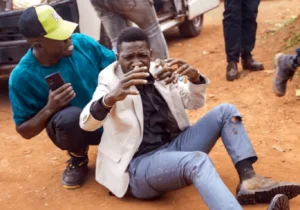
This comes after years of public outcry over the brutal methods used by security forces in maintaining order. The president, in his end-of-year address, unequivocally rejected the practice of flogging or beating civilians, emphasizing that it should no longer be part of Uganda’s security protocol.
The directive has sparked debates across the country. For decades, it has been common for security personnel to wield sticks, canes, or even batons to subdue unruly crowds or arrest suspects. This controversial practice often led to severe injuries and, at times, even fatalities. Critics argue that such violence only fueled resentment and mistrust between civilians and law enforcement.
In his speech, President Museveni highlighted the harm caused by this violent approach, underlining that the beating of civilians was not only a violation of human rights but also counterproductive. “We cannot continue like this,” he asserted. “The use of canes and sticks must stop immediately.”
Instead of using physical force, the president proposed that the armed forces rely on non-violent means such as loudspeakers to communicate with the public and tear gas for crowd control. According to Museveni, this approach is less likely to cause harm to civilians, and it will ensure that law enforcement does not escalate violence unnecessarily.
The decision is part of broader efforts to modernize and professionalize Uganda’s security forces. Over the years, police and military forces in many countries have been criticized for heavy-handed tactics that often infringe on citizens’ rights. While some forces around the world continue to use batons for crowd control, Museveni’s message was clear: Uganda would no longer follow this path.
Tear gas, while still controversial, has become the go-to method for controlling unruly crowds in many parts of the world. It is seen as a way to disperse crowds without resorting to physical violence. While some human rights organizations have raised concerns about its use, especially in large numbers, the president believes it is a safer and more humane alternative to beating protesters.
In the past, the police and military have been accused of using excessive force during political protests, especially in the lead-up to elections or when dealing with opposition supporters. Such incidents often lead to international condemnation and strained relations with local communities. By adopting this new directive, Museveni is signaling a desire to improve the image of Uganda’s security forces, both domestically and internationally.

The president’s rejection of caning is not a stance against enforcing the law but a shift in how the law is enforced. He emphasized that law enforcement must be effective but also humane. He noted that there are other ways to handle public disorder without resorting to violence. The use of loudspeakers, for example, would allow officers to give clear instructions to crowds, thereby reducing the need for force. By urging people to disperse peacefully, police could maintain order without causing harm.
Tear gas, while painful and uncomfortable, is a less lethal option compared to physical beatings. The president pointed out that using tear gas could force people to move away from certain areas without causing permanent damage to their health. He further explained that this tactic would help avoid public backlash and promote more peaceful methods of crowd control.
This shift in approach comes as Uganda prepares for general elections, which are often marked by heightened political tensions and public protests. Museveni’s directive may be seen as an attempt to prevent the type of violence that marred previous elections, where opposition supporters were frequently targeted by security forces.
The public’s reaction to Museveni’s speech has been mixed. Some applaud the president’s decision, viewing it as a step toward respecting human rights and modernizing Uganda’s security tactics. They believe that reducing the use of force will foster better relations between law enforcement and the general public.
On the other hand, critics argue that the move may be too little, too late. They say that while the cessation of caning is a positive change, it does not address the root causes of police brutality in the country. Human rights groups, in particular, have called for more comprehensive reforms, including accountability for officers who engage in misconduct and better training for security forces.
Opposition politicians have welcomed the president’s decision but remain skeptical about its long-term impact. They argue that the directive does not guarantee an end to police violence and that more must be done to ensure that security personnel are held accountable for their actions. For them, this is just one small step in a much larger battle for justice and transparency within the police and military.
Some political analysts suggest that Museveni’s directive may be an attempt to calm tensions ahead of the elections. With political unrest being a constant threat, particularly among opposition groups, the president may be trying to avoid the violent confrontations that have marred past elections.

His call for restraint and non-violent crowd control tactics could be seen as a way to protect his government’s image while avoiding a repeat of the violence that has often plagued previous electoral periods.
Furthermore, the president’s call for using loudspeakers as a communication tool is an acknowledgment of the changing nature of crowd control in the digital age. In a world where information spreads rapidly through social media, loudspeakers and public announcements can be used to diffuse tensions and prevent misunderstandings between civilians and security personnel.
The public’s response to tear gas has always been controversial, especially given its potential health risks. Some argue that its use should be closely regulated, with clear guidelines on when and how it should be deployed. However, the president’s preference for this method over physical violence reflects a more measured approach to maintaining order, one that prioritizes avoiding lasting harm.
Critics of the new directive also question the effectiveness of tear gas in situations where large, highly organized protests are taking place. Some wonder if the use of tear gas would be enough to disperse crowds or if it could lead to even greater chaos, especially if protesters choose to fight back or clash with security forces.
Despite these concerns, the president’s message is clear: security forces must adapt to the times. The days of beating civilians with sticks and canes are over. Whether or not this change will lead to lasting improvements in the relationship between the police and the public remains to be seen.
Museveni’s call for an end to caning and the use of tear gas as an alternative reflects a shift in the government’s approach to law enforcement. While the long-term effects of this directive remain uncertain, it marks a significant departure from past practices and a possible step toward a more modern, less violent security force.
Whether this will lead to genuine reform or be seen as a temporary measure remains to be seen, but it undoubtedly signals a turning point in Uganda’s approach to crowd control and law enforcement.