Related Articles

Uganda’s political landscape has once again been shaken after another major development ahead of the 2026 general elections. The opposition has suffered what many are calling a big blow after one of its powerful candidates crossed to the ruling National Resistance Movement (NRM) and openly declared support for President Yoweri Kaguta Museveni.

This move has sparked debate, anger, and confusion, especially among opposition supporters who viewed the candidate as a strong voice against the current government.
The candidate at the center of this storm is Daniel Eigu, the Forum for Democratic Change (FDC) parliamentary flag bearer for Soroti County. For years, Eigu had been known as a fierce critic of the NRM government and President Museveni. His speeches, actions, and political stand placed him firmly in the opposition camp, making his sudden change of heart even more shocking to both friends and foes.
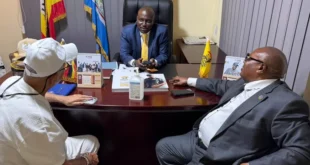
Reports indicate that Eigu was quietly taken to meet President Museveni in what many describe as a secretive move. Shortly after this meeting, news broke that he had decided to withdraw from the 2026 parliamentary race and abandon the opposition altogether. His public appearance pledging support for Museveni and NRM candidates stunned many Ugandans, particularly those in Soroti who had already rallied behind him.
The development quickly spread across the country, with many opposition supporters expressing disappointment and betrayal. For them, Eigu’s move symbolized a recurring pattern where opposition figures defect to the ruling party, often at critical moments. Social media platforms were flooded with reactions, ranging from anger and sarcasm to sadness and frustration.
According to information coming from within the FDC, Daniel Eigu allegedly received some money before making his decision to quit the race and support the ruling party.
While these claims have not been independently proven, they have fueled further tension within the opposition. Many party members believe inducements are being used to weaken opposition strength ahead of the 2026 elections.
Despite Eigu’s public declaration, the FDC leadership has come out strongly to challenge his actions. The party insists that under the law, his candidature remains valid and cannot be withdrawn in the manner he attempted. FDC officials argue that once a candidate has been duly nominated, individual decisions cannot easily override party and legal processes.
Party members in Soroti County have also rejected Eigu’s decision, saying it does not represent their wishes. They maintain that they voted for him as their flag bearer because of his opposition stance and commitment to change. To them, his sudden shift to NRM is not only confusing but also disrespectful to the people who trusted him.
The FDC’s firm response signals a broader struggle within the opposition to maintain discipline and unity. As the 2026 elections draw closer, opposition parties are facing increasing pressure, internal divisions, and defections. Each loss of a candidate is seen not just as a personal decision, but as a strategic setback.
For the ruling NRM, however, Eigu’s move is being celebrated as another win. Supporters of President Museveni view the defection as proof that the opposition lacks direction and consistency. They argue that more leaders are realizing that working with the government is better than constantly opposing it.
President Museveni’s continued ability to attract opposition figures has become a major talking point in national politics. Some see it as political strength and experience, while others view it as a sign of deep-rooted problems within opposition parties. Either way, such meetings and defections continue to shape the political narrative.
In Soroti County, the situation has left voters uncertain about what lies ahead. Many residents are now wondering who will truly represent their interests in Parliament. With conflicting statements from Eigu and the FDC, confusion remains over who will appear on the ballot and under which party.
Political analysts say this incident reflects a wider problem in Uganda’s multiparty politics. They point out that ideology is often weak, and personal interests sometimes take priority over party principles. This makes it easier for politicians to change sides without considering long-term consequences.

The opposition’s repeated losses of candidates have raised concerns about its preparedness for the 2026 elections. Supporters fear that if such trends continue, the opposition may struggle to present a united and credible challenge to the ruling party. Unity, trust, and consistency are now more important than ever.
Within the FDC, calls are growing for stronger internal rules and accountability. Some members believe the party must review how candidates are selected and monitored to prevent sudden defections. Others argue that the law should be strengthened to discourage last-minute political betrayals.
Daniel Eigu’s case is likely to test both political parties and legal institutions. If the FDC insists his candidature remains valid, it may lead to legal battles or internal party actions. How this issue is handled could set an important precedent for future elections.
As Ugandans watch these events unfold, many are questioning the true meaning of political loyalty. Voters want leaders who stand by their promises and principles, not those who change direction overnight. Trust, once broken, is difficult to rebuild.
For now, the political temperature continues to rise. Every defection, statement, and counterstatement adds to the tension ahead of 2026. Both the ruling party and the opposition are keenly aware that public perception matters more than ever.
In the end, Daniel Eigu’s move is more than just a personal political decision. It reflects the challenges facing Uganda’s opposition and the realities of power in the country’s politics. Whether this will significantly affect the 2026 elections remains to be seen.
What is clear, however, is that the road to 2026 will be full of surprises, drama, and tough battles. As parties regroup and strategize, Ugandans will be watching closely, hoping that their leaders put the country’s interests above personal gain.