Related Articles


In a highly charged and dramatic rally in Makindye, National Unity Platform (NUP) presidential candidate Robert Kyagulanyi, popularly known as Bobi Wine, delivered a response that left thousands of his supporters both energized and laughing.
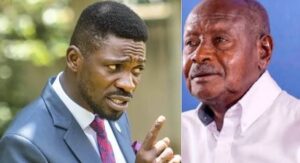
The speech came in the wake of President Yoweri Museveni’s warning that every armed soldier in Uganda would be loaded with 120 bullets to ensure peace during the elections, a statement that many critics interpreted as a thinly veiled attempt at intimidation. Instead of being cowed, Bobi Wine seized the moment to reassure the people and turn Museveni’s threat into an object of ridicule, showing that the opposition remains undeterred in the face of military intimidation.
Museveni’s statement had drawn widespread attention across the country. Speaking to the nation, he emphasized that the army would be prepared to respond to any attempts to incite riots through protest votes. The President’s message appeared calculated to instill fear in both opposition leaders and ordinary citizens, but rather than shying away, Kyagulanyi confronted it head-on, blending humor with logic in a way that energized his base and sent a clear signal that intimidation would not succeed.
Addressing the massive crowd, Bobi Wine began by laughing at the very idea that soldiers armed with hundreds of bullets could suppress a population determined to protect its rights. “I have already passed through the mathematics,” he told the audience, eliciting laughter and applause. “120 bullets per soldier can only kill 10 million Ugandans, and there is no way a soldier can kill his relatives just because of one man. Museveni should know we are not scared.” His words not only mocked the President’s logic but also underscored the deep connection between citizens and soldiers, many of whom share familial and community ties.
The rally itself was a spectacle of energy and enthusiasm. Thousands of Ugandans, waving flags, chanting slogans, and carrying placards, gathered to hear their candidate speak. The atmosphere was electric, with supporters clearly feeling the significance of Kyagulanyi’s message. For many, it was more than just a political speech—it was a symbol of hope, resilience, and courage in the face of a government known for its heavy-handed tactics.
Bobi Wine took time to explain why Museveni’s threat was flawed, pointing out the sheer impossibility of soldiers overpowering a motivated citizenry. He used mathematics as a tool to make his argument tangible, breaking down the numbers for the crowd. By doing so, he reframed the narrative, turning a message meant to intimidate into one that demonstrated the futility of relying solely on force. It was a clever tactic that not only reassured his supporters but also challenged the logic of military intimidation in a compelling, memorable way.
He emphasized that the soldiers themselves are human beings with families and communities they care about. “No soldier will fire indiscriminately at people he knows, at people who are his relatives, friends, and neighbors,” Kyagulanyi said. “This is why the threat is not just cruel—it is completely unrealistic.” By highlighting these human connections, he appealed to both morality and reason, creating a moral and emotional argument against the misuse of force during elections.
Kyagulanyi’s speech came at a time of heightened political tension in Uganda, as preparations for the 2026 general elections are underway. The opposition has faced numerous challenges, from arrests of its leaders and supporters to the suppression of political rallies and media coverage. Against this backdrop, his response was a bold assertion of resistance, showing that the opposition remains active, strategic, and undeterred by government intimidation tactics.

The President’s warning had also drawn criticism from international observers who have expressed concern over the militarization of Uganda’s elections. By threatening to arm soldiers with hundreds of bullets, Museveni appeared to blur the line between maintaining order and suppressing political dissent. Kyagulanyi’s counter-remarks thus resonated not only with his supporters but also with critics of the government who see the need for peaceful, democratic elections without fear or coercion.
Bobi Wine further urged citizens to focus on unity, peaceful participation, and the power of the vote. “Our strength lies in our numbers, in our collective courage, and in our determination to shape the future of this country,” he said. He reminded the people that the real power in Uganda rests not with bullets or armies but with the citizens themselves, emphasizing the importance of civic engagement and democratic participation.
The NUP candidate also used the rally to reassure the public that fear would not dictate political outcomes. By combining humor, logic, and moral reasoning, he created a narrative in which the people of Uganda could feel empowered rather than threatened. His ability to speak candidly and connect emotionally with the crowd highlighted why he remains a significant political figure in the country.
Observers at the rally noted that Kyagulanyi’s approach differed from traditional opposition responses. Instead of issuing a direct confrontation or calling for violent resistance, he chose to highlight the absurdity of the President’s threat, showing intelligence, wit, and resilience. This strategic communication reinforced the message that change is possible through unity, courage, and informed action rather than through fear or intimidation.
The Makindye rally also served as a platform for the youth, who form a significant portion of Uganda’s population and electorate. Many young people see Bobi Wine as a representative of their aspirations and frustrations. His ability to laugh at threats, to provide clear reasoning, and to emphasize the moral high ground resonated strongly with this demographic, reinforcing his image as a candidate of the people and a symbol of hope for the next generation.
Bobi Wine’s message extended beyond just numbers and mathematics. He spoke about resilience, community, and the idea that Ugandans are deeply connected and cannot be divided by fear.

“We are brothers and sisters, neighbors and friends,” he said. “No bullet can sever those bonds or stop us from standing up for what is right. We will remain steadfast, united, and determined.” These words highlighted the social and emotional strength of Ugandans as a key factor in the political landscape.
Political analysts argue that humor and wit are often underappreciated tools in political resistance. Kyagulanyi’s ability to use mathematics to mock a threat, while simultaneously delivering a moral message, allowed him to communicate complex ideas in an accessible and memorable way. This approach made the speech not only a rallying point for supporters but also a subject of national conversation.
He also directly addressed the ruling government, reminding them that citizens cannot be easily manipulated or frightened. “You cannot confuse Ugandans into submission,” he said. “We are watching, we are counting, and we are ready. Fear has no place in our movement, and no army can take away our courage or our determination.” These remarks were a direct challenge to Museveni, emphasizing that political legitimacy comes from the people, not from threats or coercion.
The Makindye rally exemplified the growing political energy and engagement of ordinary Ugandans. Across the country, many citizens are following events closely, aware that their participation and resilience will shape the outcome of the upcoming elections. Bobi Wine’s speech reinforced the idea that political change is possible when citizens remain informed, united, and proactive.
In addition to the political message, Kyagulanyi’s speech had a clear cultural and emotional appeal. By referencing family ties, community connections, and moral responsibility, he grounded his arguments in everyday Ugandan experiences, making them relatable and powerful. This emotional connection helped solidify his position as a candidate of the people rather than just a political figure.
The President’s previous statements about arming soldiers with bullets had been widely criticized as excessive and inflammatory. By addressing this issue directly, Bobi Wine reframed the national conversation, turning fear into humor and intimidation into a platform for political mobilization. This reframing allowed citizens to see the absurdity of threats while empowering them to remain calm, engaged, and ready to participate in democratic processes.
Finally, Bobi Wine closed his Makindye rally with a message of hope, resilience, and unity. He reminded the crowd that no matter the threats, the determination of the people is stronger than any bullet, army, or government intimidation. “We will not be scared, we will not be divided, and we will continue to fight for the Uganda we deserve,” he said. His words left supporters inspired, motivated, and ready to face the upcoming elections with courage and conviction, reinforcing his role as a prominent and defiant voice in Ugandan politics.