Related Articles

The National Unity Platform (NUP) has suspended Kyambogo University Guild President, Andama Emmanuel, for six weeks following revelations that he attended a secret meeting organized by the State House Investors Protection Unit. The meeting, which was closed to the public and held under strict confidentiality, drew the attention of both political circles and student communities across the country.
The NUP Institutions Wing confirmed the suspension in a statement released earlier today. The party cited that Andama’s participation in the meeting violated core party values. The statement emphasized that members are expected to uphold the principles of democratic freedom, dissent, and accountability.
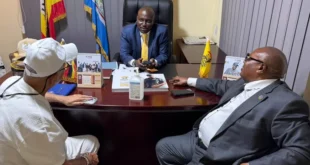
Photographs and a social media post from the unit’s official X account circulated widely, showing Andama among a group of selected student leaders in the State House engagement. The images quickly became a focal point for debate and criticism among students and political observers alike.
According to NUP officials, Andama’s attendance was a direct breach of party loyalty. The party expressed deep concern over the implications of a student leader participating in a meeting organized by a government body, which it described as a regime that suppresses dissent.
Party sources suggest that Andama’s actions raise questions about his allegiance. Some insiders even hinted that he could be acting as a spy for the government, though this remains unconfirmed. The mere suggestion has added fuel to the political storm surrounding the suspension.
The decision to suspend Andama for six weeks aims to reinforce the party’s commitment to its values and send a strong message to other members. NUP leaders have stressed that loyalty to the party’s principles should remain a priority for all elected student leaders.
Andama was elected on the NUP ticket and had been seen as a promising voice for students’ rights and democratic engagement on campus. His unexpected participation in the State House event, therefore, comes as a shock to many of his supporters.
The State House Investors Protection Unit is a body under the Office of the President. Its role involves engaging with selected leaders and promoting investor protection initiatives. The nature of the meeting with student leaders, however, remains undisclosed.
Observers note that such closed-door meetings between student leaders and government officials are highly sensitive, especially when they involve leaders aligned with opposition parties. The secrecy of the engagement has sparked widespread speculation.
Some students have expressed disappointment at Andama’s decision to attend the meeting. They argue that student leaders have a responsibility to maintain independence from political interference, especially from state bodies linked to the ruling government.
Others, however, defend Andama, suggesting that attending the meeting could have been an opportunity for students to voice their concerns directly to the authorities. They argue that engagement does not necessarily imply betrayal.
Political analysts say that the incident highlights the tense relationship between opposition parties and state institutions in Uganda. NUP’s decision to suspend Andama underscores the party’s strict approach to internal discipline.
The suspension has sparked debates on social media, with opinions divided between condemnation and understanding. Many young people have used the hashtag related to the incident to discuss the role of student leaders and the boundaries of political engagement.
Some critics have accused the State House of trying to co-opt student leaders from opposition parties. They suggest that such meetings could be used to influence young leaders and weaken opposition influence on campuses.
Meanwhile, NUP’s Institutions Wing has reassured the public that the suspension is a temporary measure. They emphasized that the decision is corrective rather than punitive, aiming to remind party members about the importance of loyalty and transparency.
Despite the suspension, Andama still retains his position as the Guild President. The six-week period is meant to serve as a warning, allowing him time to reflect on his actions and realign with the party’s principles.
Students at Kyambogo University have reacted with mixed emotions. Some feel that the party’s action was necessary to uphold integrity, while others believe it may create divisions among student leaders and hinder collaboration with external bodies.
Political commentators say this incident could set a precedent for how student leaders engage with the government in the future. The balance between independence, accountability, and constructive dialogue remains a delicate issue.
For NUP, the suspension of a high-profile student leader reinforces the party’s strict stance on internal discipline. It also serves as a public reminder that party loyalty comes before individual political gains.
As the debate continues, many are watching closely to see how Andama will respond to the suspension. Whether he apologizes, explains his actions, or challenges the decision could significantly influence his political future.
The Kyambogo University Guild President’s suspension is more than just an internal party matter. It reflects broader political tensions, the role of student leadership in national politics, and the challenges opposition parties face in maintaining unity and discipline among their members.