Related Articles

In a shocking turn of events that has left the nation in grief, Edward Mukwaya, a well-known supporter of the opposition National Unity Platform (NUP), was brutally beaten to death by armed soldiers in Nsangi, a small town just outside Kampala.
Mukwaya’s death has sparked outrage, with many questioning the increasing use of excessive force by security agencies against civilians, particularly those who oppose the current regime. The incident occurred in the heart of Nsangi, a place that has become symbolic of the political divide in Uganda.
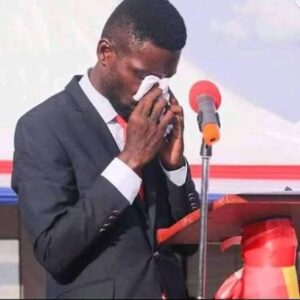
Eyewitnesses who were present at the scene of the violence described a chilling sight. According to their accounts, Mukwaya, an innocent bystander, was targeted for no apparent reason while Bobi Wine, the NUP’s presidential candidate, was passing through the town. The soldiers, who were heavily armed, reportedly began attacking Mukwaya without provocation, beating him mercilessly in front of horrified onlookers. Despite the presence of several people, the soldiers continued their assault until Mukwaya was lifeless on the ground.
The incident has raised serious concerns about the safety of opposition supporters in Uganda, with many accusing the ruling government of using its military force to intimidate and silence dissent. Mukwaya’s family and friends are devastated by the senseless killing, and his death has become another painful reminder of the brutal political climate in the country. The motive behind the attack remains unclear, but many believe that Mukwaya’s connection to Bobi Wine and his public support for the NUP may have played a role in his tragic fate.
This tragedy has once again highlighted the ongoing tensions between the Ugandan government and opposition groups, especially as the country heads into another election cycle. The use of force against civilians has been a common theme in recent years, with numerous reports of security personnel using violence to suppress opposition activities. Mukwaya’s death is a stark reminder of the human cost of political division in Uganda.
As the news of Mukwaya’s death spreads, it has sparked widespread protests and calls for justice from both local and international communities. The NUP, along with human rights organizations, has condemned the act as an unjustifiable attack on a peaceful citizen. In the wake of the tragedy, calls for accountability and reforms within the Ugandan military and police forces have grown louder. The Ugandan government has yet to release an official statement regarding the incident, further fueling suspicions that the authorities are trying to cover up the killing.
In Nsangi, the mood is somber. Locals are grappling with the shock of losing a fellow citizen in such a senseless manner. The town, which has seen increasing political activism in recent years, has now become a focal point for discussions about the state of democracy and human rights in Uganda. The community is demanding answers, and they are not willing to let Mukwaya’s death go unnoticed.
Edward Mukwaya’s death is not just the loss of an individual; it is a loss felt deeply by the entire nation. In a country where political tensions often turn violent, the tragic event has brought the growing divide between the government and opposition supporters into sharp focus. Mukwaya, like many Ugandans, was simply exercising his right to support a political figure he believed in. Yet, in the eyes of the soldiers, his allegiance to Bobi Wine marked him for violence.

The death of an innocent man is always a cause for sorrow, but it is the circumstances surrounding Mukwaya’s killing that make it even more disturbing. The blatant disregard for human life by those entrusted with maintaining law and order has left many questioning the very foundation of Uganda’s security forces. It is hard to ignore the fact that Mukwaya’s life was ended by the very people who should have been protecting him.
This incident is not isolated. Over the past few years, there have been numerous reports of opposition supporters being harassed, beaten, and even killed by security forces under the guise of maintaining peace. These incidents have sparked outrage both within Uganda and internationally, leading to widespread condemnation from human rights groups and foreign governments. Mukwaya’s death is a tragic addition to a growing list of casualties in Uganda’s ongoing struggle for political freedom.
As the public demands justice, there are fears that the government may attempt to sweep the matter under the rug, as they have done with previous cases of political violence. However, the anger and grief sparked by Mukwaya’s death are not easily silenced. Activists, politicians, and ordinary citizens alike are speaking out against the brutality that has become all too common in Uganda. The question on everyone’s mind is whether the government will take action to ensure that those responsible for Mukwaya’s death are held accountable.
The killing of Edward Mukwaya has also had a profound impact on Uganda’s upcoming elections. With Bobi Wine’s NUP gaining significant traction in recent years, the government’s heavy-handed tactics are seen as an attempt to stifle the opposition’s momentum. Many fear that the death of Mukwaya could be a harbinger of more violence as the election season approaches. The tragic event serves as a stark reminder of the risks faced by opposition supporters, who are often caught in the crossfire of political conflict.
In the wake of Edward Mukwaya’s death, there has been a renewed call for accountability within Uganda’s security forces. Human rights organizations have long criticized the military and police for their use of excessive force against civilians, and Mukwaya’s death has only intensified these demands. For many Ugandans, the question remains: will anyone be held responsible for the killing?
The government’s response to the incident will be closely watched by both local and international observers. There are growing fears that the authorities will attempt to downplay the event, as they have done with previous instances of violence against opposition supporters. The lack of transparency in handling such incidents has eroded trust in the government, and many believe that the military is above the law.
The call for justice is not just about holding the soldiers accountable for Mukwaya’s death; it is about ensuring that the lives of all Ugandans are protected, regardless of their political affiliations. Mukwaya’s family, friends, and supporters are demanding a full investigation into his death, as well as justice for the crime. They are also calling for broader reforms within Uganda’s security forces to prevent similar tragedies from occurring in the future.
As the nation grapples with the loss of one of its own, the need for meaningful reform has never been more urgent. Uganda’s security forces must be held to the highest standards of accountability, and there must be consequences for those who abuse their power. The death of Edward Mukwaya is a tragic reminder of the importance of upholding human rights, especially in times of political turmoil.

In conclusion, the death of Edward Mukwaya is not just a personal tragedy—it is a wake-up call for the people of Uganda and the international community. The brutality that led to his death cannot be ignored, and those responsible must face justice. It is time for Uganda to take a hard look at the state of its security forces and work toward a future where such violence is no longer tolerated. Only then can the country begin to heal and move forward from this dark chapter in its history.
The killing of Edward Mukwaya has ignited a firestorm of anger and protest across Uganda, especially among those who have long felt the oppressive weight of the regime. For many, Mukwaya’s death is not just an isolated incident, but rather a symptom of a broader trend of political violence that has plagued the nation for years.
As the population grows increasingly disillusioned with the government’s methods of control, the public is demanding systemic changes. Many are calling for a complete overhaul of the security sector, urging for more accountability, transparency, and respect for human rights in all levels of law enforcement.
The circumstances surrounding Mukwaya’s death have also put a spotlight on the growing divide between the government and the people. In recent years, Bobi Wine’s rise to prominence has presented a challenge to the ruling regime, with his NUP party gaining increasing support, particularly among Uganda’s youth. The brutal treatment of opposition supporters, such as Mukwaya, highlights the lengths to which the government is willing to go to maintain its grip on power. The tragic killing is being seen by many as an attempt to instill fear in opposition supporters and to send a message that dissent will not be tolerated.
International human rights organizations have also voiced their concern over Mukwaya’s death, calling for an independent investigation into the events that led to his death. The United Nations, along with several western governments, has condemned the use of military force against civilians and demanded that those responsible for Mukwaya’s killing be brought to justice. The global community is watching closely to see if Uganda’s government will take meaningful steps to address the growing concerns about the safety and rights of its citizens. For many Ugandans, this is an opportunity to stand together and demand justice not only for Mukwaya but for all those who have suffered due to political violence.
The road to justice for Edward Mukwaya may be long and fraught with challenges, but his death has sparked a renewed sense of unity and purpose among Uganda’s opposition groups. Many are now calling for increased political activism and peaceful demonstrations in order to raise awareness and demand action.
While the government may try to suppress these efforts, it is becoming clear that the desire for change is only growing stronger. Mukwaya’s tragic death has given rise to a movement that refuses to let his sacrifice be in vain, and the voices calling for justice will not be silenced easily.