Related Articles

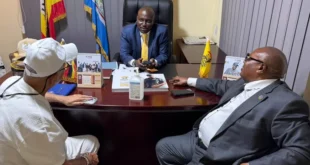
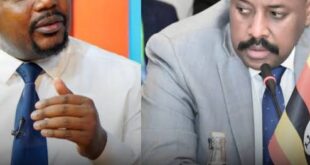
In a dramatic turn of events, National Resistance Movement (NRM) officials have issued a stern warning to supporters of the National Unity Platform (NUP) and its leader, Robert Kyagulanyi, regarding the unauthorized use of the Ugandan flag. The directive demands that all NUP supporters who display the flag without permission be arrested and detained at Luzira Prison.
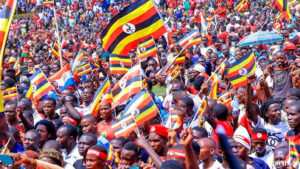
The move comes just as the country braces for the upcoming elections, where political tensions are rising to unprecedented levels. Security agencies have been put on high alert as Uganda enters a period of heightened political activities and, some fear, civil unrest.
The Ugandan flag, which is a symbol of national unity and pride, has increasingly become a tool for political expression, particularly in opposition circles. It is a practice that many NUP supporters have adopted to show solidarity with their cause and to assert their political identity. However, this act of showing patriotism and allegiance has now been deemed illegal by the ruling government, which insists that permission must be sought before the flag is hoisted on any building or public space.
The National Resistance Movement (NRM), led by President Yoweri Kaguta Museveni, has stated that those who are found displaying the flag without official authorization will face serious consequences. In their request to President Museveni, NRM officials have demanded that security organs be given clear orders to arrest and detain any individuals involved in such acts. The authorities argue that the flag should be treated with the utmost respect and that its use should not be exploited for political gain.
At the heart of this issue is the perception that the flag has been hijacked by political actors, particularly by NUP supporters, who are seen as disrespecting national symbols in pursuit of their own political agenda. The government’s stance is that any such use of the flag, especially by opposition groups, undermines the true essence of the national emblem, which represents unity and patriotism above all else.
As elections approach, this issue is becoming increasingly contentious. Political observers believe that the NRM government is trying to suppress opposition groups by criminalizing seemingly harmless acts of protest. Displaying the flag has become a symbolic gesture of defiance for many NUP supporters who feel marginalized by the ruling party. They argue that using the flag in this way is a form of peaceful protest and should not be punished.
The directive to arrest NUP supporters has been met with strong reactions from opposition leaders, who are accusing the government of stifling freedom of expression. Many argue that criminalizing the display of the Ugandan flag is an authoritarian move aimed at suppressing dissent and limiting the political space for opposition groups. They claim that this is a direct attack on their right to peacefully express their political views and exercise their constitutional freedoms.
For the average Ugandan, this development is a worrying sign of the increasing political repression that has been characteristic of Museveni’s government in recent years. The crackdown on flag displays comes at a time when the political climate in Uganda is already tense, with both NRM and NUP supporters preparing for the upcoming elections. With each passing day, the risks of political violence and state repression seem to grow.

Many NUP supporters have already voiced their outrage, claiming that the move is a deliberate attempt to intimidate them ahead of the elections. They argue that their display of the Ugandan flag is not an act of rebellion, but rather a demonstration of loyalty to their country and their cause. The flag, they argue, belongs to all Ugandans, not just those in power, and should be free to fly in any context, as long as it is not desecrated.
At the same time, some political analysts have pointed out that the government’s decision to target NUP supporters specifically, rather than addressing the broader issue of flag misuse, is a clear indication of the political stakes in the upcoming election. It appears that the NRM is trying to stifle any form of opposition that may gain traction during this critical time. The flag, it seems, has become a symbol of defiance and rebellion, and the government is determined to maintain control.
For Ugandans who support the NRM, the idea that the flag is being used for political purposes is seen as unacceptable. To them, the flag represents the sacrifices made by the country’s forefathers and is not something to be wielded as a political tool. They argue that the flag should remain above the political fray and be a symbol that unites all Ugandans, regardless of their political affiliations.
The growing tension surrounding the Ugandan flag is also being reflected in the streets. In some areas, individuals have been seen boldly hoisting the flag in protest against what they perceive as political repression. Others have argued that the government’s actions are a form of political censorship, aimed at silencing voices that dare to challenge the status quo.
As the situation develops, it is clear that the display of the Ugandan flag has become more than just an act of national pride—it has become a battleground for political expression. Whether or not NUP supporters will continue to raise the flag in defiance of government orders remains to be seen, but one thing is certain: the controversy surrounding the flag is likely to intensify as Uganda moves closer to the polls.
In the midst of this conflict, many Ugandans are left wondering whether the government is genuinely concerned about the integrity of national symbols, or whether this is simply a calculated attempt to clamp down on political opposition. The issue of flag displays has become a flashpoint in the larger battle for political power, and it is unclear where the line will be drawn between peaceful protest and unlawful behavior.
As the country watches these developments unfold, it is becoming increasingly clear that the use of the Ugandan flag will play a pivotal role in the run-up to the elections. For NUP supporters, the flag is more than just a symbol of their country—it is a symbol of their fight for political change. For the NRM, it is a symbol that must remain under tight control. Whether this clash of symbols will escalate into something more remains to be seen.

In the meantime, Ugandans across the country are left grappling with the question: Is the flag truly a symbol of national unity, or has it become yet another weapon in the country’s bitter political struggle? Only time will tell whether this issue will continue to divide the nation or bring it closer together in the face of growing political unrest.
As tensions rise and the election approaches, one thing is certain—the controversy surrounding the Ugandan flag is not going away anytime soon.
The government’s crackdown on flag displays comes at a time when political discourse in Uganda is increasingly polarized. With the country gearing up for another high-stakes election, the tension between the ruling NRM party and opposition groups like NUP is palpable. For many Ugandans, the flag has become more than just a national symbol—it’s a battleground for political identity. In a country where the space for free expression is shrinking, this latest move by the government is seen by many as an attempt to further suppress dissent. NUP supporters, in particular, feel targeted, believing that their ability to participate freely in the political process is being undermined by such directives.
The impact of this flag controversy goes beyond just political symbolism. It has raised questions about the broader climate of freedom in Uganda, particularly concerning the right to peaceful protest and assembly. For years, critics of the government have highlighted the growing crackdown on dissent, whether through violent police action or legal measures aimed at stifling opposition voices. In this context, the flag issue appears to be just one more tool in the government’s arsenal to maintain its grip on power. For many Ugandans, this has led to feelings of helplessness and frustration, as they watch the democratic space shrink further.
Many international observers have been quick to comment on the issue, with human rights groups expressing concern over the increasing political repression in Uganda. They argue that the Ugandan government’s actions are a clear violation of the right to free expression, which is enshrined in the country’s constitution.
With elections looming, there is a growing fear that the situation could escalate into more serious violations of human rights. The world is watching closely, and there is mounting pressure on the government to ensure that the upcoming election is free, fair, and peaceful.
Despite the looming threat of arrest, NUP supporters remain defiant. The controversy over the flag has only fueled their resolve to continue their political struggle. Many of them believe that this crackdown is just another attempt to silence the opposition, and they refuse to let it deter them from their cause.
As the election nears, the battle over the Ugandan flag could be seen as a metaphor for the larger political fight in the country: one for freedom, democracy, and the right to express dissent without fear of retribution.