Related Articles

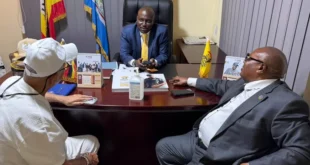

General Muhoozi Kainerugaba, Uganda’s Senior Presidential Advisor on Security, has publicly addressed Chris Baryomunsi, making it clear that his political future is in jeopardy unless he seeks reconciliation.

In firm words, Gen Muhoozi stated, “Regardless of what you say, you will not be a minister this time unless you come and make peace with me.”
The declaration has sent shockwaves through political circles, underscoring the importance of loyalty, trust, and alignment with Uganda’s leadership.
Gen Muhoozi’s remarks were made during a public engagement, drawing attention to the ongoing tensions within the ruling party.
According to Gen Muhoozi, Baryomunsi’s actions and statements in recent months have been viewed as a breach of trust. This, he argued, makes it impossible for him to occupy any ministerial role unless reconciliation occurs. The strong language signals the gravity of internal political discipline in Uganda.
Observers note that the comments reflect a broader pattern in Ugandan politics, where high-ranking officials are expected to demonstrate unwavering allegiance to the leadership. Divergence from party lines can carry severe consequences, regardless of prior service or political experience.
Baryomunsi, who has held significant ministerial portfolios including ICT and National Guidance, has been a prominent figure in government for many years.

His contributions have shaped national policy in multiple sectors, making the current situation highly unusual and significant.
The underlying issue, according to political analysts, stems from perceived disloyalty or actions by Baryomunsi that contradicted the expectations of the President’s inner circle.
While the specifics have not been fully disclosed, the message from Gen Muhoozi leaves little room for ambiguity.
Gen Muhoozi emphasized that ministerial positions require more than competence; they demand trust, loyalty, and alignment with national priorities. Any perceived deviation from these standards, he argued, disqualifies individuals from holding office.
Political commentators suggest that the public nature of the statement serves a dual purpose: addressing Baryomunsi directly while sending a warning to other officials about the consequences of disloyalty. It reinforces the importance of maintaining unity within the government.
The declaration has drawn attention to the growing influence of Gen Muhoozi within Uganda’s political landscape. By directly addressing a senior minister, he demonstrates the central role he plays in matters of political oversight and alignment.
Some political observers have expressed concern over the tone of the statement, arguing that labeling a senior official in such terms could heighten divisions within the ruling party. Others contend that it is a necessary step to enforce discipline and cohesion.
Baryomunsi’s supporters have criticized Gen Muhoozi’s remarks, suggesting that disagreements or differences of opinion should not automatically be construed as betrayal. They argue that robust debate is essential for effective governance and policymaking.
Despite these criticisms, Gen Muhoozi remained resolute, insisting that reconciliation and restoration of trust are prerequisites for any future ministerial role. The statement effectively places the ball in Baryomunsi’s court, making it clear that political restoration is possible but conditional.
The broader implications for cabinet politics are significant. Officials are now likely to pay closer attention to their alignment with the President and inner leadership to avoid similar public rebukes. The incident underscores the high stakes of political loyalty in Uganda.
Analysts also point out that this scenario highlights the personal influence of Gen Muhoozi in shaping ministerial appointments. His endorsement or disapproval carries considerable weight in determining political trajectories.

For Baryomunsi, the statement serves as both a warning and an opportunity. While it publicly underscores his current limitations, it also provides a path for reconciliation and potential future reintegration into government roles.
The reaction on social media has been varied, with some expressing support for Gen Muhoozi’s strict approach to loyalty, while others question whether personal dynamics should play such a central role in political appointments. The discussion illustrates the polarization within public opinion on governance and leadership accountability.
This declaration also shines a light on the broader principles guiding Uganda’s political appointments. Trust, loyalty, and alignment with national priorities are increasingly emphasized over seniority or past performance.
Baryomunsi’s political career is now at a crossroads. How he responds to Gen Muhoozi’s call for reconciliation will determine not only his ministerial prospects but also his broader influence within the party and government.
The episode underscores a fundamental reality of Uganda’s political system: positions of power come with responsibilities that include personal and political loyalty. Deviations from these expectations can have immediate and lasting consequences.
Ultimately, Gen Muhoozi’s statement sets a precedent for how disputes and perceived disloyalty are addressed in Uganda. It communicates that restoration is possible but contingent on recognition of mistakes and proactive efforts to rebuild trust.
As political observers continue to analyze the situation, one thing is clear: the message is unequivocal. For Chris Baryomunsi, and for others in similar positions, the path forward requires humility, reconciliation, and alignment with the leadership to remain relevant in Uganda’s political landscape.