Related Articles


Uganda’s political atmosphere has once again been stirred after Gen. Muhoozi Kainerugaba made a dramatic public statement declaring, “I’m looking for you Bobi Wine, sincerely MK.”
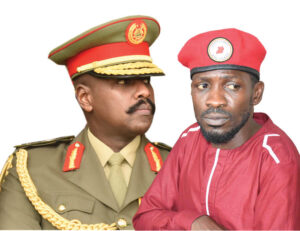
The words, short but loaded, quickly caught attention across social media and political circles, triggering debate, concern, and strong reactions from different sides of the political divide.
Gen. Muhoozi, the Chief of Defence Forces, is no stranger to bold and controversial public messaging. His statements often travel fast online, and this latest remark was no exception. Many people immediately began asking what he meant by “looking for” the opposition leader.
Robert Kyagulanyi, widely known as Bobi Wine, is one of Uganda’s most prominent opposition figures. As leader of the National Unity Platform (NUP), he has been at the center of political tension for years, frequently clashing with the state over issues of governance, elections, and human rights.
Because of that history, any direct reference to him by a senior military figure carries serious weight. Some supporters of the opposition interpreted Muhoozi’s message as threatening, given the past confrontations between security forces and opposition activists.
Others, however, argued that the statement could be rhetorical or political talk rather than a literal pursuit. In Uganda’s political language, dramatic expressions are sometimes used to signal rivalry, strength, or defiance rather than physical intent.
Still, the wording raised eyebrows because of the sensitive role Muhoozi holds. As head of the army, his statements are often viewed through a national security lens.

When such a figure speaks about “looking for” a political opponent, it naturally sparks anxiety among citizens and observers.
Political communication experts say that leaders in uniform are expected to use careful language, especially in politically charged contexts. Even casual remarks can be interpreted as signals of state action, whether or not that is the intention.
The statement also comes at a time when Uganda’s political climate remains tense. Relations between government institutions and opposition groups have long been marked by suspicion and confrontation, making any strong statement even more explosive.
Supporters of Bobi Wine expressed worry that such rhetoric could increase pressure or fear among opposition supporters. They argue that political competition should remain within the bounds of dialogue, elections, and lawful processes.
On the other hand, Muhoozi’s backers often describe his style as bold and unapologetic. They say he speaks his mind and does not shy away from directly addressing political opponents. To them, this is seen as confidence rather than hostility.
However, the debate is not only about personalities. It also touches on the broader question of civil–military relations in politics. When military leaders are active voices in political conversations, lines between political debate and security authority can appear blurred.
For many citizens, such moments create uncertainty. People want to know whether statements like these are symbolic, political messaging, or something more serious. The lack of immediate clarification often fuels speculation.
Social media amplified the situation further. Within minutes, the phrase was being shared widely, discussed on talk shows, and analyzed by commentators. This shows how digital platforms now shape political narratives in real time.
Critics say that repeated dramatic statements can normalize aggressive political language. Over time, this can reduce trust and make compromise harder, because each side feels under attack rather than engaged in healthy competition.
Uganda’s political history shows that words matter deeply. Statements by powerful figures have, in the past, influenced public mood, security actions, and international perception. This is why such remarks rarely pass unnoticed.

There is also an international angle. Uganda works with many foreign partners who closely watch its political stability. Strong or ambiguous language from senior officials can raise questions about the country’s political environment.
At the same time, the statement reinforces the image of Muhoozi as an outspoken and unconventional figure. His communication style continues to challenge traditional expectations of how military leaders present themselves publicly.
For Bobi Wine and his supporters, the remark may serve as both a concern and a rallying point. Opposition politics often draw energy from moments where they feel targeted or challenged by state figures.
In the end, the impact of the statement depends on what follows. If it remains just a line in the fast-moving world of political talk, it may fade.
But if tensions rise or actions match the rhetoric, it could become a more serious episode.
What is clear is that Uganda’s politics remains highly emotional and personality-driven. Statements from key figures, especially those in powerful offices, continue to shape not just debate but the overall political mood of the nation.