Related Articles



Uganda’s political scene has once again been shaken by strong comments coming from General Muhoozi Kainerugaba, a senior military officer and one of the most talked-about political figures in the country.
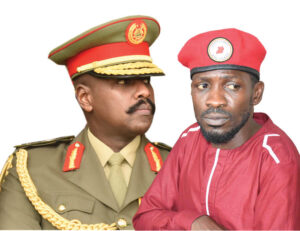
His latest remark targeting opposition leader Robert Kyagulanyi, popularly known as Bobi Wine, has quickly caught public attention and stirred fresh debate across social and political spaces.
In his statement, Gen. Muhoozi described Bobi Wine as “permanently confused,” words that many people see as more than just a casual insult. The comment has added fuel to an already tense political atmosphere where every statement from major figures is closely watched, analyzed, and debated by the public.
This is not the first time Gen. Muhoozi has publicly criticized Bobi Wine. Over the years, the two have represented very different political paths in Uganda. Muhoozi is often seen as closely linked to the establishment, while Bobi Wine has built his name as a leading voice of opposition and change.
Because of this, any comment from one directed at the other easily turns into national news. Supporters on both sides are always ready to defend their leader, and critics are just as quick to attack. The result is a constant political back-and-forth that keeps the country’s political space highly charged.
Many Ugandans who heard Muhoozi’s remark reacted strongly online. Some agreed with him, saying Bobi Wine’s political strategies and statements are sometimes unclear or unrealistic. Others strongly disagreed, arguing that such comments are meant to weaken an opponent through personal attacks instead of issue-based debate.
Bobi Wine, a former musician turned politician, has for years positioned himself as a voice for ordinary Ugandans, especially the youth. His message has often focused on unemployment, human rights, corruption, and the need for political transition. Because of this, he has gained both strong support and strong opposition.

Gen. Muhoozi, on the other hand, is known for his bold and sometimes controversial political statements, often shared in a direct and confident tone. His style has made him a central figure in political discussions, even when he is not holding an elected political office.
Observers say such public exchanges show how Uganda’s politics is becoming more personality-driven. Instead of debates only focusing on policies and national plans, leaders often attack each other directly, turning political competition into personal rivalry.
This type of politics attracts a lot of public attention, especially among young people who follow leaders closely on social media. Every statement becomes content, every insult becomes a headline, and every response is waited for like the next episode of a drama series.
However, some political analysts warn that this style of politics can distract the country from serious issues. Uganda, like many nations, faces economic challenges, youth unemployment, service delivery problems, and governance concerns that need detailed discussion and practical solutions.
When leaders trade sharp words, the focus sometimes shifts away from these key issues. Instead of asking how jobs will be created or how health services can be improved, the public ends up debating who insulted who and what they meant by it.
Still, supporters of Muhoozi argue that strong language is part of political competition. They believe leaders should be free to speak their minds and challenge their opponents openly. To them, calling out what they see as weaknesses in the opposition is fair political play.

Supporters of Bobi Wine see the situation differently. They believe such remarks are meant to reduce him in the eyes of the public and avoid engaging with the issues he raises. In their view, attacking his character is easier than answering his political questions.
The comment also highlights how deeply divided political opinions are in Uganda today. For almost every political statement, there are two strong sides, each fully convinced they are right and the other side is wrong.
As of now, Bobi Wine has not made an official response to Muhoozi’s latest remark. Many of his supporters, however, have already spoken on his behalf, defending him and criticizing the general’s words as disrespectful and unnecessary.
Silence from political leaders after an attack can sometimes be a strategy. Some choose not to respond in order to avoid giving more attention to the statement. Others wait for the right moment to reply in a more powerful way.
What is clear is that the rivalry between these two figures continues to shape political conversations in Uganda. Whether through direct statements, social media posts, or public speeches, their exchanges influence how supporters think and talk about national politics.
In the end, such moments remind Ugandans that politics is not only about power but also about language, image, and public perception. Words can build leaders, but they can also deepen divisions when used as weapons.
As the country moves forward, many citizens hope to see more focus on solutions rather than insults. But for now, Muhoozi’s “confused” remark has once again proven that in Ugandan politics, one sentence can set off a nationwide storm.