Related Articles

In an unprecedented statement that has sparked global debate, Ugandan President Yoweri Museveni claimed that Uganda could potentially defeat the United States if the two nations were to engage in land warfare. The remarks, made during a recent public address, quickly captured the attention of the international community, with both praise and criticism pouring in from various quarters. While many see this statement as a bold show of national pride, others view it as an unrealistic claim with far-reaching political implications.
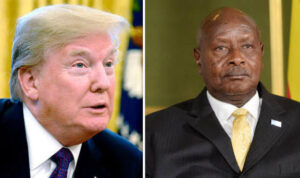
The comment came as President Museveni discussed the importance of national defense and self-reliance. He spoke passionately about Uganda’s ability to defend itself from foreign influence, suggesting that the country had the courage, discipline, and will to stand against even the mighty U.S.
“Let me tell you, we could stand against even the United States if need be,” Museveni boldly declared, according to local media reports. This statement was not made in the context of an actual threat but rather as part of a larger conversation about strengthening Uganda’s defense forces and fostering national pride.
Despite his assertion, the timing of Museveni’s remarks could be seen as a response to rising tensions between Uganda and foreign powers, particularly the United States. There have been increasing concerns about the influence of external forces in Uganda’s internal matters, and Museveni’s words could be interpreted as a challenge to those powers. This is not the first time the Ugandan leader has made such strong comments about national sovereignty and the country’s independence in the face of foreign pressure.
Political analysts have quickly weighed in on the statement, offering various interpretations. Dr. James Okello, a Ugandan political analyst, suggested that Museveni’s words should be seen more as symbolic than a serious military challenge to the U.S. “Museveni often uses strong rhetoric to reinforce his image as a strong leader. This is likely aimed at his domestic audience and neighboring countries, rather than making a literal challenge to the U.S.,” Dr. Okello remarked. This view is supported by many who believe that Museveni’s statement is part of his long-standing political strategy of projecting strength and independence on the international stage.
In the context of East African politics, Museveni’s remarks may also serve to underscore Uganda’s role as a regional power. The country’s military is regarded as one of the strongest in the region, and Museveni’s statement is likely an attempt to project that strength both within Africa and beyond. Many believe that the president’s remarks are not so much about threatening the U.S. but rather about asserting Uganda’s ability to stand up for itself against external pressures.
The geopolitical situation in East Africa has become increasingly complex, with various international powers seeking to extend their influence in the region. Military partnerships and strategic alliances have been on the rise, and Museveni’s comments could be interpreted as an attempt to remind both neighboring countries and the world at large that Uganda is a sovereign nation capable of defending its interests. His words seem to send a clear message: Uganda will not tolerate foreign interference.
Despite the rhetoric, many experts agree that challenging a superpower like the U.S. in land-based combat would be virtually impossible. The U.S. military, with its technological advancements, superior air power, and extensive logistical capabilities, would undoubtedly have the upper hand in any direct confrontation. Uganda’s military, while formidable in East Africa, lacks the technological and financial resources to match the military might of the United States.

On social media, the president’s statement has sparked widespread debate. Some have taken a lighthearted approach, creating humorous memes that mock the boldness of Museveni’s claim, while others have engaged in more serious discussions about Africa’s military capabilities and the future of the continent’s defense forces. The statement has brought attention to the growing military capacity of some African nations, even as they continue to face external pressures and challenges.
However, some analysts argue that Museveni’s statement could be seen as an effort to bolster his domestic standing ahead of future elections. The president has long been known for his use of bold and sometimes controversial rhetoric to maintain his popularity among Ugandans. By positioning himself as a leader who can stand up to foreign powers, Museveni may be trying to shore up his support among nationalists and those who feel that Uganda’s sovereignty is under threat.
While Uganda’s military has proven effective in regional conflicts, particularly in places like Somalia, the idea that it could stand up to the U.S. in a direct land-based conflict is far-fetched. The U.S. military’s technological superiority, coupled with its vast resources and extensive global network, makes it one of the most powerful forces on the planet. Uganda, by contrast, would struggle to mount any serious challenge to such a formidable military machine.
Yet, the comment remains significant, not for its literal implications, but for what it says about the political climate in Uganda. Museveni’s remarks reflect his ongoing emphasis on national sovereignty and his desire to maintain control over Uganda’s political and economic future. By invoking the possibility of a military standoff with the U.S., he is underscoring Uganda’s self-reliance and its readiness to defend its interests, no matter how far-fetched that may seem in reality.
Museveni’s statements could also be viewed as part of a broader trend of African leaders asserting their independence on the world stage. In recent years, several African leaders have pushed back against foreign influence, seeking to establish stronger ties within the continent and reduce dependence on external powers. This is part of a larger movement to promote African unity and self-sufficiency, which has gained momentum in recent decades.
The Ugandan president’s comments come at a time when Africa’s geopolitical landscape is changing rapidly. With the rise of China and Russia as major players in Africa, and increasing Western involvement in the region, the political dynamics are shifting. Museveni’s remarks could be interpreted as a warning to the U.S. and other Western powers that Uganda is not a passive player in this evolving global order.
While Museveni’s statement is unlikely to be taken as a literal threat, it does serve as a reminder of Uganda’s growing role in Africa’s political and military affairs. The country’s strategic location, its influence in East Africa, and its ability to project power in regional conflicts make it a significant player on the continent. In this context, the president’s words are a reflection of Uganda’s determination to assert its sovereignty and defend its interests in a rapidly changing world.
At the same time, the rhetoric surrounding Museveni’s statement highlights the tensions that exist between African nations and foreign powers. As Africa becomes an increasingly important geopolitical battleground, it is likely that we will see more leaders take a stronger stand on issues of national sovereignty and self-determination. Museveni’s remarks may be the first of many such statements as African leaders seek to navigate the complex web of international relations in the 21st century.

In the final analysis, while Uganda’s chances of defeating the United States in a land-based war are highly improbable, the broader message of President Museveni’s statement cannot be ignored. It is a reminder that Africa, as a continent, is striving to carve out its own path in the global arena, asserting its independence and resilience in the face of external pressures. The strength of Uganda’s military, the rhetoric of its leader, and the broader political context all point to a future where Africa’s role in global affairs will continue to evolve.
President Museveni’s comments also highlight the growing role of African countries in shaping their own security policies. As many African nations grapple with internal challenges such as conflict, poverty, and political instability, the need for a strong defense sector has become more apparent. Museveni’s statement serves as a call for African countries to invest more in their military forces and develop a sense of self-reliance. It may inspire other leaders across the continent to think critically about the defense of their nations and to strengthen their own military capabilities in the face of global competition and intervention.
Furthermore, the statement could be interpreted as part of a broader regional strategy. Uganda, as one of the leading nations in East Africa, has long been involved in peacekeeping missions, particularly in Somalia, where its troops have been part of the African Union mission to stabilize the country. By asserting Uganda’s ability to stand against external forces, Museveni is likely trying to project a sense of leadership and responsibility in East Africa, positioning Uganda as a regional power capable of influencing the political and military landscape.
In the context of Uganda’s foreign policy, the remarks may also signal a pivot towards a more assertive approach to international relations. With increasing global competition for Africa’s resources and geopolitical significance, the continent’s leaders are finding new ways to engage with the world.
Museveni’s statement could be a signal to both regional and global powers that Uganda is prepared to defend its interests without relying on foreign support, a message that may resonate with countries seeking greater autonomy in the face of external influence.
Finally, it’s important to consider the potential implications of this rhetoric on Uganda’s international relationships. While Museveni’s remarks may be aimed primarily at a domestic audience, they could strain relations with certain Western nations, particularly the United States, if perceived as overly provocative.
However, it’s equally possible that Museveni’s comments are part of a larger diplomatic strategy to renegotiate Uganda’s position in the global hierarchy, seeking to strengthen its alliances with countries that share its stance on sovereignty and independence. Only time will tell how this bold statement will affect Uganda’s position on the international stage.