Related Articles



In a bold statement during his New Year’s address, President Yoweri Museveni accused his main political rival, Bobi Wine, of employing artificial intelligence (AI) to create fake images of massive crowds at his rallies. According to the president, these doctored images were being used to deceive Ugandans into believing that Bobi Wine had a larger and more loyal following than he truly did. Museveni claimed that these images were posted across various social media platforms to create an illusion of overwhelming support for Bobi Wine’s political agenda.
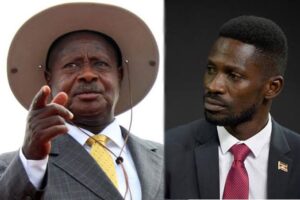
AI-generated images are becoming increasingly popular in the world of politics, and they raise important questions about ethics, trust, and the power of social media in shaping public opinion. President Museveni’s accusations are not the first time technology has been used to manipulate images and sway public perception. However, Museveni’s claim specifically targets the National Unity Platform (NUP) and its leader, Bobi Wine, accusing them of taking the art of deception to a new level by using advanced technology to fake the appearance of packed crowds.
Museveni’s accusations are a reflection of the intense political rivalry between him and Bobi Wine. In recent years, Bobi Wine has positioned himself as the main challenger to Museveni’s long-standing rule, particularly among the youth. As the competition for political influence heats up, both sides are increasingly turning to digital platforms to garner support, with social media playing a central role in shaping public perceptions. Museveni’s claim that Bobi Wine is using AI to boost his image is a clear sign of how technology is now playing a crucial role in the battlefield of Ugandan politics.
Social media has become a powerful tool in modern politics, allowing politicians to connect directly with the electorate, bypassing traditional media outlets. However, with the rise of AI and deepfake technology, the line between reality and fiction has become increasingly blurred. Critics argue that such technologies have the potential to mislead voters, creating false narratives that could sway elections. In this case, Museveni believes Bobi Wine is exploiting this technology to manipulate Ugandans into believing he has more support than he truly does.
While some might view Museveni’s accusations as a clever political maneuver aimed at discrediting his rival, others see it as a serious charge. In the world of politics, accusations like this are not taken lightly, as they can influence public perception in significant ways. If Bobi Wine is indeed using AI-generated images to deceive the public, it would be a breach of trust with his supporters, especially those who believe in his message of change. On the other hand, if the accusations are unfounded, it could reflect poorly on Museveni, making him appear desperate and out of touch with the younger, tech-savvy generation.
Bobi Wine and the NUP have yet to respond directly to Museveni’s claims. However, given the nature of Ugandan politics, where both sides often engage in heated exchanges, it is likely that Bobi Wine will address the accusations in the coming days. In the past, Bobi Wine has been vocal in criticizing Museveni’s government for alleged corruption, human rights abuses, and attempts to stifle political opposition. If Bobi Wine responds to the AI accusation, he may accuse Museveni of spreading falsehoods to deflect attention from his own government’s failings.
Africa, like much of the world, is becoming increasingly aware of the impact of technology on politics. The use of AI and social media in political campaigns is on the rise, with political parties across the continent experimenting with digital tools to influence voters. While the technology offers new opportunities for engagement, it also presents significant ethical challenges. The use of AI-generated images to sway public opinion, as alleged by Museveni, raises important questions about the role of digital media in democracy and the need for regulations to prevent manipulation.
In politics, perception is often more important than reality. A politician who can create the image of strength and popularity, even if that image is artificial, can influence voters’ decisions. Museveni’s accusation that Bobi Wine is using AI-generated images to boost his image is an attempt to challenge the perception of Bobi Wine as a popular and growing political force. If Bobi Wine’s rallies appear packed with supporters, it gives the impression that his message is resonating with the public, which can attract more voters. Therefore, the manipulation of this perception could have far-reaching consequences for Uganda’s political landscape.

Bobi Wine’s popularity has surged in recent years, particularly among Uganda’s younger generation. Many young Ugandans see him as a symbol of change and hope, as he advocates for better governance, human rights, and a fairer society. His supporters have been vocal in their criticism of Museveni’s government, which they accuse of corruption, mismanagement, and a lack of opportunity for the youth. Museveni’s claims that Bobi Wine is using AI to deceive the public could be seen as an attempt to undermine the support Bobi Wine has garnered, particularly among younger voters who are more active on social media.
In Uganda, social media has become an essential tool for political expression. Platforms like Facebook, Twitter, and Instagram are used to rally support, share messages, and engage with voters. However, social media is also a double-edged sword. It has been used by both sides to spread misinformation, manipulate public opinion, and attack political opponents. Museveni’s accusations against Bobi Wine highlight the growing role that digital media plays in shaping political narratives, and the potential for this technology to be used for both positive and negative purposes.
Trust is a fundamental element of political leadership. If the public begins to believe that politicians are using deceptive tactics to manipulate the truth, it can erode confidence in the political system. Museveni’s accusations, if proven true, could damage Bobi Wine’s credibility and tarnish his image as a leader who seeks transparency and honesty. On the other hand, if the allegations are unfounded, they could backfire on Museveni, making him appear out of touch with the realities of modern campaigning and digital media.
The use of AI in politics raises serious ethical concerns. If political parties begin using AI-generated content to manipulate voters, it could lead to a situation where the truth is obscured by fabricated images and stories. This kind of digital deception could have long-lasting consequences for democracy, as it undermines the public’s ability to make informed decisions. Museveni’s accusations against Bobi Wine could be a warning about the dangers of using AI for political manipulation, and the need for greater accountability in political campaigns.
AI is increasingly being used to shape political narratives, from generating fake images to creating deepfake videos that can mislead voters. In a fast-paced political environment, where attention spans are short and news travels quickly, AI-generated content can have a significant impact on how politicians are perceived. Museveni’s allegations against Bobi Wine highlight the growing concern about the role of AI in shaping political narratives and the need for greater oversight and regulation in the use of these technologies.
As the digital age continues to evolve, so too does the way political campaigns are run. AI, social media, and other digital tools are now integral to political strategies across the world. In Uganda, where political opposition is often met with resistance and suppression, the use of AI to enhance a politician’s image can be a powerful tool. However, as Museveni’s accusations show, this new form of political campaigning also brings new risks, as it opens the door to deception and manipulation.

Visuals have always played a crucial role in politics. From posters to television ads, images are used to convey messages, inspire emotions, and create connections with voters. In today’s digital age, AI-generated images have become a new frontier in political campaigning. Museveni’s claim that Bobi Wine is using fake images of crowded rallies is an example of how powerful visuals can be in shaping the political narrative, and how easily they can be manipulated to serve a particular agenda.
Museveni’s accusations against Bobi Wine have further deepened the divide in Uganda’s political landscape. The country has been polarized for years, with supporters of the ruling NRM party and the opposition NUP exchanging barbs over issues of governance, human rights, and the future of the nation. The allegations of AI manipulation are likely to fuel this division, with each side accusing the other of deceit and dishonesty.
In light of Museveni’s accusations, there is a growing need for greater accountability in political campaigns. Politicians should be held responsible for the accuracy and integrity of the content they share with the public. The use of AI to manipulate images and spread misinformation could undermine the democratic process, and it is crucial that steps are taken to ensure transparency and honesty in political campaigns.
Technology is rapidly changing the way politics is practiced, not just in Uganda but around the world. The rise of AI and social media in political campaigns offers new opportunities for engagement, but also challenges the ethical foundations of democratic processes. The increasing use of AI-generated content to sway public opinion calls for regulations and increased scrutiny to ensure that politics remains transparent and accountable.
The impact of AI on political campaigns in Uganda is part of a wider global trend where digital technologies are becoming essential tools in shaping political narratives. With the rise of AI-generated images and deepfake videos, the political landscape is undergoing a transformation, where the authenticity of information can be easily manipulated.
As political opponents like Museveni and Bobi Wine continue to use social media platforms for campaigning, it becomes more challenging for voters to distinguish between what is real and what is fabricated. The situation highlights the urgency for establishing robust digital literacy programs to help the public navigate these challenges and critically assess the content they encounter online.
Ultimately, the use of AI in politics could either empower the electorate or undermine the democratic process. While technology provides new opportunities for political engagement, it also raises important questions about fairness, transparency, and trust. As both Museveni’s and Bobi Wine’s camps utilize these tools to gain an edge, it is vital for Ugandan authorities to consider implementing regulations that address digital manipulation in political campaigns. This would ensure that voters are not deceived by false representations of reality and that political campaigns remain grounded in truth, fostering a healthier democratic process.