Related Articles
Ugandan singer Ykee Benda has found himself at the center of a massive controversy after defending the government’s harsh treatment of opposition figures in a social media exchange. The singer’s comments, which seemed to justify the alleged torture and mistreatment of opposition supporters, have ignited a storm of criticism online, drawing sharp rebukes from both Ugandans and international human rights organizations.
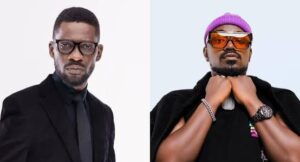
In a now-deleted post, Benda suggested that the arrest and torture of political opponents are almost an unavoidable outcome of challenging a leader like President Yoweri Museveni. The singer’s controversial statement came in response to a discussion on the increasing reports of violence and oppression directed at opposition figures, particularly those associated with the National Unity Platform (NUP), the political party led by Robert Kyagulanyi, better known as Bobi Wine.
Benda attempted to justify his views by invoking what he referred to as “logic,” claiming that Museveni, who fought a lengthy guerrilla war in the 1980s to gain power, had earned the right to protect his position by any means necessary. He pointed out that if men can kill over something as trivial as infidelity, then the stakes of controlling an entire country were far higher, even if it meant resorting to violence. His words shocked many, particularly his fans, who had always seen him as a voice of reason in the entertainment industry.
His argument, though seemingly grounded in personal opinion, touched on a deep and contentious issue in Uganda: the violent tactics allegedly used by the government to suppress dissent. Many saw his remarks as an endorsement of the harsh tactics that have come to define Uganda’s political landscape, especially when it comes to dealing with opposition members and activists. For a country that has experienced decades of political violence, this justification of brutality was a step too far for many.
Critics quickly condemned Benda’s words, accusing him of supporting state-sponsored violence. They pointed to the recent history of Uganda, where arrests, torture, and unlawful killings have been increasingly reported, particularly after the 2021 general elections. Amnesty International and other human rights groups have documented numerous instances of political violence and abuse, raising alarm over the deteriorating human rights situation in the country.
Among the high-profile cases that have attracted attention are those of Members of Parliament Muhammad Ssegirinya and Allan Ssewanyana. Both men were arrested under dubious circumstances and faced prolonged detention on charges widely believed to be politically motivated. Their treatment by the Ugandan authorities has drawn significant criticism, with human rights groups accusing the government of targeting opposition figures to maintain control.
The legal community has also expressed concern over the growing number of cases where lawyers and activists have been harassed or abused by the state. In one recent incident in early 2025, Eron Kiiza, a lawyer representing prominent opposition figure Kizza Besigye, was reportedly beaten by security forces when entering a military courtroom. Photos of Kiiza’s swollen joints and severe bruising were widely shared, painting a disturbing picture of the brutality he had suffered at the hands of the authorities.
But perhaps the most shocking part of Benda’s statement was his assertion that Museveni, after spending years in the bush during Uganda’s civil conflict, had earned the right to govern the country as he saw fit. This sentiment seemed to validate the use of state violence as an acceptable means of preserving power. Many saw this as a dangerous justification of dictatorship and oppression, a view that runs counter to democratic ideals.

The response from the public was swift and unforgiving. Fans and political analysts alike criticized Benda for his apparent support of the government’s repressive tactics. They argued that no leader, no matter how long they had been in power, should be allowed to engage in violent repression of the opposition. The idea of justifying torture and violence, no matter the context, was viewed as deeply troubling by many of his followers.
The controversy surrounding Benda’s comments has once again put the spotlight on Uganda’s increasingly authoritarian political climate. Human rights organizations continue to report widespread abuses by government forces, including the use of torture to extract confessions from political prisoners. Despite these allegations, the Ugandan government has repeatedly denied any wrongdoing, with military spokespersons dismissing the claims as “absolute rubbish” and “politically driven.”
One of the most prominent examples of such brutality is the case of Eddie Mutwe, a close aide to Bobi Wine. Mutwe was abducted by armed men in 2025 and was later shown in court with clear signs of torture. His case, along with others, has raised concerns about the government’s strategy to silence opposition through fear and intimidation. However, despite these alarming reports, the government continues to dismiss such allegations, often labeling them as politically motivated attacks against Museveni’s administration.
In the face of mounting criticism, Benda attempted to defend his position, arguing that those who challenge a leader who fought a long war for control over the country should expect to face harsh repercussions. His comments, however, have done little to quell the anger of those who see them as an endorsement of a brutal political system. The singer’s views, which were seen as dangerously supportive of government repression, have shaken the public’s trust in his neutrality and independence.
The issue of political violence in Uganda remains a contentious and divisive one. While some argue that Museveni’s grip on power is necessary to maintain stability in the country, others see the increasing use of violence as a sign of a government that is unwilling to relinquish control, even at the cost of human rights and democracy. As the 2026 elections draw nearer, Uganda’s political climate continues to be dominated by these ongoing debates about the role of violence in maintaining political power.
Many Ugandans now find themselves questioning the role of public figures like Benda, who hold significant influence over public opinion. The controversy surrounding his comments highlights the delicate balance that celebrities and influencers must maintain when it comes to political issues, especially in a country where political views can be met with brutal consequences. Benda’s comments have left many wondering whether he will continue to speak out on political matters or whether he will retreat from the spotlight in the face of mounting backlash.

For now, the firestorm surrounding Ykee Benda’s remarks seems to have only deepened divisions within Uganda’s entertainment and political spheres. Whether or not his career will suffer remains to be seen, but one thing is certain: his comments have added fuel to an already volatile conversation about political violence, human rights, and the future of democracy in Uganda. As the country moves closer to the 2026 elections, these issues are likely to remain at the forefront of public discourse.
Ykee Benda’s comments have not only ignited a fierce debate on social media but have also drawn attention to the growing concerns about the role of artists and influencers in Uganda’s political landscape. Celebrities in the country often wield significant influence, with their words reaching millions of fans and followers. This power, however, comes with great responsibility. The controversy surrounding Benda highlights the fine line that public figures walk when discussing sensitive political issues, particularly in a context where free speech can be met with harsh retaliation from the state. Benda’s defense of government violence raises questions about whether artists should use their platforms to support or challenge the status quo.
In response to the backlash, some of Benda’s fans expressed disappointment, feeling betrayed by the singer, whom they had previously admired for his advocacy of peace and unity. Many felt that his justification for violence contradicted the messages of love and tolerance that have traditionally been a part of his music. His comments prompted some Ugandans to re-evaluate the role of entertainment figures in shaping public opinion. Should celebrities be expected to stay neutral, or do they have a duty to speak out against injustice, especially when they have the power to influence society at large?
Benda’s remarks also highlight a broader issue within Uganda’s entertainment industry. Over the years, some artists have chosen to remain silent on political matters, fearing the repercussions of speaking out against the government. Others, however, have actively supported opposition leaders like Bobi Wine, using their platforms to campaign for change. The stark contrast between Benda’s stance and that of other prominent artists, who have been vocal in their opposition to government violence, has left many wondering where the boundaries of political expression lie within the entertainment industry.
The singer’s controversial post also brings to the forefront the broader issue of political intolerance in Uganda. Museveni’s government has long been accused of using force to suppress dissent, from the arrest of opposition leaders to the systematic silencing of critics through violence and intimidation. The events surrounding the 2021 elections, where opposition members were subjected to severe repression, have left deep scars on the Ugandan political landscape. Benda’s comments, albeit made out of what he claims was “logic,” serve to normalize a culture of violence that many fear is becoming more entrenched.
As the nation approaches the 2026 elections, Uganda finds itself at a crossroads. The political climate remains tense, with opposition leaders and their supporters facing ongoing harassment, while government officials continue to deny accusations of brutality.
The international community, along with local human rights organizations, continues to call for accountability and reforms to address the growing human rights violations in the country. Whether Uganda will see meaningful change in the coming years depends on how its citizens, including influential public figures like Ykee Benda, choose to engage in the ongoing struggle for democracy and justice.