Related Articles



A member of the Tooro Kingdom Royal Succession Committee has explained why the reported children of the late King Oyo Nyimba Kabamba Iguru Rukidi IV were not considered during the process that resulted in the selection of Prince Edward Rukidi Kijanangoma as the next possible successor. The explanation has come amid growing public interest and debate over the future leadership of the kingdom following the death of King Oyo.
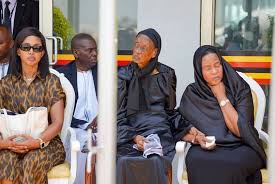
Fr Dr Charles Oyo, who is among the 21 members of the Royal Succession Committee, said the committee could not rely on public claims about children whose existence and status had not been formally established through the traditional processes of the Tooro Kingdom. He explained that succession within the Babiito clan follows established customs and procedures rather than information circulating in public or on social media.
According to Fr Oyo, members of the Babiito clan had heard people talking about a child or children reportedly left behind by King Oyo. However, he said the committee could not simply take such information as the basis for determining who should inherit the throne because the traditional recognition process had not been completed for the children being discussed.
“We have heard some people talk about the child or the children of King Oyo; but we as members of the clan don’t pick information from the way,” Fr Oyo said while speaking to NTV Uganda. His remarks were made in response to questions about whether the reported children had been presented before the succession committee.
Fr Oyo explained that in Tooro tradition, the birth of a child within the royal family is followed by important traditional procedures through which the child is introduced to elders. He said elders participate in rituals and ceremonies intended to formally recognise the child within the kingdom and establish the child’s place in the royal family.
He further explained that the traditional system does not only involve announcing the birth of a child but also includes ceremonies and other processes through which elders become aware of the child’s identity and background. According to him, these procedures are particularly important when questions concerning future leadership of the kingdom arise.

The priest said that a child who is expected to have a future role in leadership can also undergo a carefully structured upbringing intended to prepare them for the responsibilities associated with royal leadership. He said such preparation is meant to help the child understand the traditions, responsibilities and expectations connected to the institution of the Omukama.
“They take this child out of the palace, bring up the child with formal training, so that this child is able to understand and grow from one stage to another in order to reach a mature adult,” Fr Oyo explained. His comments suggest that the committee views succession as a process that involves more than simply establishing a biological connection to the reigning monarch.
The explanation has become significant because reports about King Oyo’s children have featured prominently in the succession debate. Questions have been raised about why a reported biological child of the late king was not considered before another member of the Babiito royal family was selected.
President Yoweri Museveni had earlier revealed that Queen Mother Best Kemigisa told him that King Oyo had left behind a young son. The President’s remarks increased public attention on the issue, particularly because the reported existence of the young boy could potentially raise questions about the order in which succession should be handled.
However, other reports circulating in recent days have alleged that King Oyo may have left behind two additional children, including a boy said to be about 10 years old. These reports have not been publicly confirmed by the Tooro Kingdom, meaning that their status remains a matter of public speculation rather than an established fact.
The Royal Succession Committee’s explanation therefore appears to focus on the distinction between reports about children and children who have gone through the recognised traditional procedures of the kingdom. Fr Oyo’s remarks indicate that the committee considered the information available through established Babiito structures when determining who could be considered in the succession process.
The succession debate intensified after King Oyo died following a period of medical treatment. His death brought an end to a reign that had begun when he was only a young child, and the kingdom was subsequently faced with the sensitive responsibility of determining who would take over the institution of the Omukama.
The Babiito clan, which plays a central role in the traditional succession process, initially settled on Prince George Desmond Kamurasi as its preferred candidate. However, Kamurasi reportedly declined the throne, leaving the clan with the task of considering another candidate who could take up the leadership of the kingdom.
Following his reported decision not to take the throne, the Babiito Royal Clan selected Prince Edward Rukidi Kijanangoma. Kijanangoma is a former Uganda Broadcasting Corporation presenter and a member of the Tooro royal family, being the son of the late Prince Christopher Paul Kijanangoma and grandson of Omukama Sir George David Rukidi Kamurasi III.
The selection of Kijanangoma has since attracted considerable attention, particularly because of questions surrounding King Oyo’s reported children and the interpretation of Tooro’s traditional succession arrangements. Supporters of the committee’s position maintain that the clan was required to follow the recognised procedures rather than rely on information that had not been formally presented and verified within the kingdom’s traditional structures.
The committee also reportedly considered existing traditional succession arrangements and provisions associated with the will of the late King Patrick David Matthew Olimi Kaboyo II when reaching its decision. These traditional and historical considerations were presented as part of the basis for determining who could be considered for the throne.

The controversy nevertheless remains sensitive because succession to the Tooro throne involves both royal customs and strong public interest. Any claim concerning a biological child of a deceased Omukama can naturally attract attention, but the committee’s position, as explained by Fr Oyo, is that biological claims alone cannot automatically determine succession without the traditional recognition and processes required by the kingdom.
The latest explanation has therefore added another dimension to the ongoing succession debate. Rather than simply saying that King Oyo’s reported children were ignored, the committee has explained that the children were not considered because their reported status had not, according to the committee, gone through the traditional recognition process necessary for them to be included in the succession discussion.
As Tooro continues to deal with the transition following King Oyo’s death, questions about his reported children, the role of the Babiito clan and the selection of Prince Edward Rukidi Kijanangoma are expected to remain part of the wider succession discussion.
For now, the committee maintains that its decision was based on recognised traditional procedures and the information formally available to those responsible for handling the succession process.