Related Articles
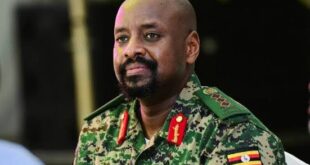
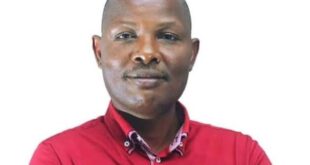
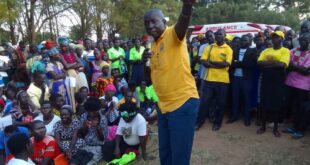
The political drama in Uganda’s Mawogola North constituency has taken an unexpected turn. A growing legal dispute surrounding the release of academic records for Aine Godfrey Kaguta, commonly known as Sodo, has captured national attention. Sodo, who is the brother of President Yoweri Kaguta Museveni, is running for Member of Parliament in one of the country’s most politically charged races. His candidacy has sparked a heated debate about transparency and eligibility, with rival candidates pushing for the release of his academic documents.
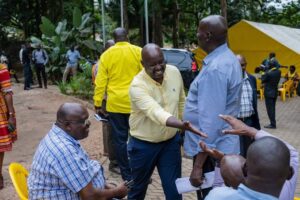
The Uganda National Examinations Board (UNEB) has stepped into the controversy, making it clear that it will not release the academic papers of Kaguta. In a letter dated November 4, 2025, UNEB’s Executive Director, Dan Odongo, explained that the Board does not retain copies of candidate certificates. Instead, academic certificates for Primary Leaving Examinations (PLE), Uganda Certificate of Education (UCE), and Uganda Advanced Certificate of Education (UACE) are issued to schools where the candidates sat their respective exams. UNEB does not keep these certificates, and as such, it cannot provide them to any external parties.
This clarification has raised several questions about the role of UNEB and its involvement in the nomination process for political candidates. According to Odongo, the Board only issues a letter of verification when formally requested. This letter serves to confirm a candidate’s examination results, but it does not serve as a certified copy of the original certificates. The clarification effectively distances UNEB from the ongoing legal battle and shifts responsibility for verifying academic eligibility onto the Electoral Commission of Uganda.
The Electoral Commission, which is constitutionally mandated to verify the academic documents of parliamentary candidates, has thus far remained silent on whether it will release Kaguta’s academic papers. The legal battle continues to unfold, with Jet Mwebaze, one of Kaguta’s challengers in the Mawogola North race, demanding transparency.
Mwebaze, who comes from a powerful political and military legacy, argues that it is crucial for voters to know whether Kaguta meets the academic requirements to run for office. Mwebaze’s father, Lt. Col. Jet Mwebaze, was a well-known National Resistance Army (NRA) officer and a celebrated war hero, and his legacy plays a significant role in the young candidate’s political campaign.
Mwebaze’s legal team, led by Elgon Advocates and Kampala Associated Advocates, has written several letters to the Electoral Commission. In their latest communication on January 6, 2026, they requested the release of certified copies of Kaguta’s academic records. Mwebaze’s lawyers argue that the integrity of the electoral process is at stake, and voters deserve to know whether all candidates, including Kaguta, have met the necessary academic standards.
The issue has become even more controversial due to Kaguta’s familial ties to President Museveni. His candidacy is seen by some as an extension of the First Family’s political influence in Uganda. This has heightened the stakes of the Mawogola North race, where the outcome is expected to have significant implications for the political landscape of the country.
While the legal team presses for transparency, the Electoral Commission has remained tight-lipped. The Commission has acknowledged receipt of the lawyers’ letters but has not made any public statements regarding whether it will release the documents. It is also unclear whether the Commission will conduct its own verification of Kaguta’s academic records or rely on the information already submitted during his nomination process.
The tension surrounding Kaguta’s academic records highlights broader concerns about the political process in Uganda, particularly in constituencies like Mawogola North, where power and influence run deep. The constituency has historically been a hotbed of political activity, and the current race is no exception. As the legal battle unfolds, it is clear that the contest is not just about one candidate’s qualifications but about the larger question of transparency and fairness in Uganda’s electoral system.

Kaguta’s supporters argue that the ongoing legal dispute is a smear campaign orchestrated by political rivals who seek to undermine his candidacy. They contend that the calls for transparency are politically motivated, designed to distract from the issues that matter most to voters in Mawogola North. Kaguta’s campaign has focused on promises of development and community empowerment, with particular emphasis on improving education, healthcare, and infrastructure in the constituency.
On the other hand, Mwebaze’s camp has maintained that transparency and accountability are paramount in any democratic election. They believe that voters in Mawogola North have the right to know whether all candidates meet the constitutional requirements to run for office. By demanding the release of Kaguta’s academic papers, they are calling for a level playing field and a fair contest, where all candidates are held to the same standards.
The controversy surrounding Kaguta’s academic records has also sparked a wider debate about the role of UNEB in Uganda’s political system. Some critics argue that the Board’s policy of not retaining certified copies of certificates is outdated and leaves room for ambiguity in the electoral process. They suggest that UNEB should take a more active role in ensuring that candidates meet the necessary qualifications and that voters can have confidence in the integrity of the electoral process.
At the same time, supporters of the current system argue that it is up to the Electoral Commission, not UNEB, to verify the eligibility of candidates. They point out that UNEB’s primary function is to administer national examinations and issue results, not to play a role in political contests. This division of responsibilities, according to them, ensures that UNEB can remain independent and focused on its core mandate.
The situation in Mawogola North is a reminder of the complex and often contentious nature of Uganda’s political system. As the country continues to grapple with issues of transparency, accountability, and electoral integrity, the outcome of this legal battle will likely have far-reaching consequences. Whether or not Kaguta’s academic documents are released, the episode has already drawn attention to the need for greater scrutiny and reform in Uganda’s electoral processes.
As the race enters its final stages, the tension between the candidates and their supporters is likely to intensify. Political analysts are closely watching the developments, noting that the Mawogola North race could set important precedents for future elections in Uganda. Regardless of who ultimately wins the seat, the legal and political wrangling over Kaguta’s academic records will likely leave a lasting impression on the electorate and the country as a whole.
The outcome of the legal battle is uncertain, but one thing is clear: the race for Mawogola North has become more than just a contest for a parliamentary seat. It has evolved into a high-stakes political battle that could shape the future of Uganda’s democracy.
As the legal fight over Kaguta’s academic documents continues, the political implications are becoming clearer. The case is increasingly seen as a microcosm of the wider challenges Uganda faces regarding political transparency and accountability.
With the country’s electoral process frequently under scrutiny, this controversy in Mawogola North is bringing to light how deeply personal and political rivalries can intersect. While the focus is on one candidate’s qualifications, the larger issue is whether the system is robust enough to ensure that only qualified individuals are allowed to run for public office.

In addition to the legal and political dimensions, there are questions about the public’s perception of fairness. For many in Mawogola North, where political allegiances run deep and family ties often play a major role, this dispute may raise doubts about the neutrality of the system.
Citizens who support Kaguta may view the legal battle as an attempt to discredit him based on his family connections, while others who support Mwebaze might see it as a necessary step to ensure that the political process remains transparent and free from undue influence.
The media has also played a significant role in shaping public opinion. As the legal battle gains momentum, local news outlets have been covering every twist and turn, highlighting the high stakes of the race.
The coverage often focuses on the tension between the candidates, as well as the broader political context in which the contest is unfolding. This media attention ensures that the issue is not just confined to legal circles but has become a national talking point, further fueling the debate about the integrity of Uganda’s elections.
The involvement of the Electoral Commission adds another layer of complexity. As the body responsible for overseeing the electoral process, the Commission’s actions—or lack thereof—will be scrutinized by both the public and legal observers.
How it handles this issue may set a significant precedent for future elections, particularly as the country moves forward in a political climate where accountability is becoming an increasingly urgent concern. If the Electoral Commission chooses not to release Kaguta’s academic records, it could send a message about the level of transparency voters can expect in the future.
In the end, the controversy surrounding Aine Godfrey Kaguta’s academic records may have far-reaching consequences, not just for the candidate himself but for Uganda’s electoral system.
The outcome of the legal battle will likely set a precedent for how academic qualifications are handled in future elections, especially for high-profile candidates with political connections. Whether the dispute ends in a legal victory for Mwebaze or a political win for Kaguta, it is clear that the question of transparency will continue to play a central role in Uganda’s evolving democracy.