Related Articles

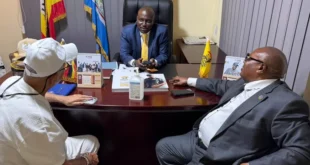

The political landscape of Uganda has recently been rocked by a fierce exchange between Mukono Municipality MP, Hon. Betty Nambooze, and Speaker of Parliament, Anita Among. The feud began when Among made controversial remarks regarding Nambooze’s treatment abroad, and it quickly escalated into a war of words, with Nambooze firing back at the Speaker in a defiant manner. The conflict highlights deeper tensions within Uganda’s political scene, especially as the country heads toward the crucial 2026 elections.
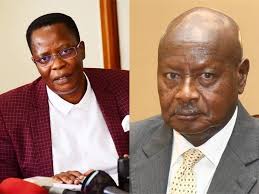
It all started when Speaker Among praised President Yoweri Museveni for approving nearly one billion Ugandan Shillings to facilitate Nambooze’s medical treatment in the United States. During Museveni’s campaign rally in Mukono District, Among thanked the President, claiming that he had personally allowed her to offer the funds to Nambooze for her treatment. In her speech, Among stated, “Your Excellency, out of your good heart, I want to thank you so much for giving me permission to give Honorable Nambooze money for treatment.”
Nambooze wasted no time in firing back at Among’s public remarks. She sharply criticized the Speaker, accusing her of misleading the public about the source of the funds. “Even a poor person in the village knows that if you get bitten by a neighbour’s dog, it’s the dog’s owner who treats you,” Nambooze stated.
According to her, she was “beaten” in Parliament by government security operatives, who were allegedly commanded by Frank Mwesigwa. These security forces broke her spine during a parliamentary session, forcing her to seek medical treatment.
Nambooze made it clear that the funds for her treatment were not from Museveni’s personal pockets. She emphasized that it was taxpayers’ money that paid for her medical bills, not the President’s generosity as suggested by Among. “They used taxpayers’ money to pay for my treatment,” Nambooze added, questioning the Speaker’s motives.
This exchange is not the first time the two politicians have clashed. Hon. Betty Nambooze has been a vocal critic of President Museveni and his government for years. Her outspoken opposition to the ruling National Resistance Movement (NRM) has earned her both admiration and criticism. Speaker Anita Among, on the other hand, has been a staunch ally of the President, having recently switched allegiance from the opposition Forum for Democratic Change (FDC) to the NRM.
The shift in Among’s political allegiance has been a point of contention for many. Nambooze did not miss the opportunity to remind the public of Among’s relatively short time in the NRM. “You have not even spent five years in the NRM,” Nambooze pointed out. This remark underscored Among’s relatively recent alignment with Museveni, and it cast doubt on her commitment to the NRM, given her previous affiliation with the opposition.
Nambooze’s comments suggested that Among was out of touch with the true people of Mukono, who had historically supported Museveni. “The people of Mukono who cheered him, who hid during the war, who campaigned for him in the 1990s—where did those people go?” Nambooze asked, questioning the Speaker’s legitimacy and connection to the people she now represents.

Anita Among’s public praise of President Museveni’s generosity has added fuel to the fire. She claimed that Museveni had “good heartedly” approved the funds for Nambooze’s treatment, despite the latter’s constant criticism of the President. “Nobody can ever have that heart, even after Honorable Nambooze abusing you day in, day out on radio and television,” Among remarked. This statement suggests that Among saw Museveni’s financial help as an act of kindness, regardless of the political animosity between him and Nambooze.
However, Nambooze and her supporters were quick to point out that the President’s supposed goodwill was merely political theatre aimed at gaining favor from the public. For them, the real issue was that public funds were used to finance Nambooze’s treatment, rather than a personal donation from the President.
One of the key points raised by Nambooze’s allies was the issue of medical insurance. Members of Parliament in Uganda are entitled to a medical insurance policy that covers their treatment costs, making the Speaker’s remarks politically charged and, according to critics, inappropriate. Nambooze’s critics argue that the Speaker was trying to score political points by framing the President’s involvement in the medical treatment as an act of magnanimity, when, in fact, it was taxpayers who funded the treatment.
In her response, Nambooze also questioned the integrity of the Speaker, accusing her of politicizing a personal medical issue. “You dare to say it was Museveni’s money!” she exclaimed. This fiery statement not only reinforced her anger toward Among’s comments but also highlighted the broader political context: Nambooze felt that her personal ordeal had been weaponized for political gain.
At the heart of the conflict between Nambooze and Among lies the issue of political accountability. Nambooze has long been an advocate for greater transparency and accountability in government, often criticizing the ruling party for what she perceives as corruption and mismanagement. For her, this battle was not just about personal vindication but also about ensuring that Ugandans hold their leaders accountable for their actions.
Speaker Among, on the other hand, has aligned herself firmly with Museveni and the NRM. In recent months, she has appeared at numerous rallies in support of the President, openly criticizing opposition politicians. Her conduct has raised concerns among critics, who accuse her of undermining the independence and dignity of Parliament. They argue that the Speaker has increasingly allowed Parliament to become an extension of the executive, rather than maintaining its role as an independent branch of government.
The exchange between Nambooze and Among is part of a larger narrative in Ugandan politics, where divisions between the ruling party and the opposition are growing ever more pronounced. As the 2026 elections draw closer, these tensions are likely to intensify, with both sides positioning themselves as the true champions of the people. For Nambooze, the battle is about fighting for the rights of Ugandans and exposing what she sees as corruption and abuse of power within the NRM.
Among’s political role has come under increasing scrutiny, with some questioning her ability to serve as a neutral Speaker in a highly polarized Parliament. Her critics argue that she has allowed herself to be too closely aligned with the executive branch, leaving little room for independent judgment or impartiality. This has undermined the credibility of Parliament and raised concerns about the future of Uganda’s democracy.

As tensions rise between these two powerful figures, the broader implications for Uganda’s political future are clear. The ongoing battle between Nambooze and Among reflects the deeper struggles within the country’s political system, where loyalty to the ruling party often trumps the need for independent thought and action. As the country moves closer to the 2026 elections, the rivalry between these two politicians could become a key focal point for voters looking to assess the political landscape.
Public opinion will play a crucial role in shaping the outcome of this political battle. As both Nambooze and Among continue to clash, their supporters and detractors will have a significant impact on how the public perceives their actions. For Nambooze, her steadfast criticism of the government could win her the support of those disillusioned with the NRM, while Among’s allegiance to the President may solidify her position as a key player in the ruling party.
The confrontation between Nambooze and Among is a microcosm of the larger struggles that Uganda faces as it heads toward the 2026 elections. With deep political divisions, accusations of corruption, and questions about the integrity of its leaders, the country is at a crossroads. As the political drama unfolds, one thing is certain: the battle between these two leaders is far from over, and it will continue to shape the political future of Uganda for years to come.
As the 2026 elections approach, the political battle between Nambooze and Among also serves as a reflection of the broader challenges facing Uganda’s political system. Many citizens are growing weary of the constant back-and-forth between political figures, and there is a growing call for a new kind of leadership—one that is more transparent, accountable, and focused on the needs of the people rather than political maneuvering.
For some Ugandans, the ongoing tensions between the Speaker and the MP highlight the urgent need for political reform and a shift away from the entrenched practices that have dominated the country’s politics for decades.
Furthermore, the drama surrounding Nambooze and Among’s public exchange raises questions about the role of the media in shaping public opinion and influencing political discourse. Both politicians have used the media as a platform to express their grievances and sway public sentiment.
With social media becoming an increasingly powerful tool for communication, how politicians engage with the public—and each other—will have lasting consequences on the direction Uganda takes in the coming years. The media’s portrayal of these figures will likely play a significant role in shaping voter perceptions and, ultimately, the outcome of the 2026 elections.