Related Articles



As Uganda’s 2026 elections draw closer, Bobi Wine and his National Unity Platform (NUP) party are facing mounting challenges, particularly in areas where they once had strong support. In a major blow to the opposition, more than 30 NUP foot soldiers, including key coordinators in the Kagadi District, have officially defected to the ruling National Resistance Movement (NRM). This development comes just days after a rally in the district, where President Museveni received the defectors with open arms, reinforcing his party’s grip on the region. The move has caused a sharp decline in Bobi Wine’s support in Kagadi, a constituency that had previously shown promising backing for NUP.
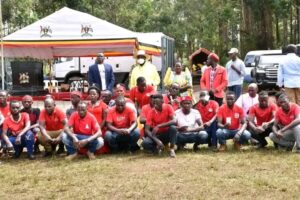
The defections are a significant blow for Bobi Wine, whose party had worked hard to gain traction in rural areas like Kagadi. With these key NUP supporters crossing over to NRM, the opposition’s chances of securing the district in the upcoming 2026 elections have diminished. Many local residents and political analysts have noted that the shift of these coordinators represents a breakdown of the grassroots support NUP had built in the region. Once considered an opposition stronghold, Kagadi now appears to be drifting toward the influence of the NRM, signaling a deeper issue for Bobi Wine and his team.
At the heart of these defections is a growing sense of frustration among some of NUP’s members. Many of those who left feel that their political futures were not being adequately supported within the party. For coordinators and other prominent local figures, the lure of stability and opportunities within the NRM has proven too strong to resist. President Museveni, always quick to seize on such opportunities, welcomed the defectors at his rally, pointing out that the NRM’s message cannot be hidden, just as a light cannot be concealed. His welcoming remarks are seen as an attempt to further consolidate his power in regions where opposition forces were once gaining ground.
These defections also highlight the difficulties that NUP faces in maintaining unity within its ranks. Political defections are not uncommon in Uganda, where shifting allegiances are often influenced by both ideological and material incentives. However, the volume of defections from NUP in Kagadi raises questions about the party’s internal cohesion and its ability to keep its supporters loyal. With Bobi Wine having already faced internal divisions and external challenges, this recent loss of support in Kagadi only adds to the pressure the opposition leader is under.
In response to the defections, some NUP leaders have expressed their disappointment, calling the move a betrayal of the party’s values and its mission for a better Uganda. However, others within the opposition camp are urging their supporters to stay focused and not to be disheartened by these setbacks. The loss of key figures in Kagadi, they argue, should serve as a reminder to the party to strengthen its ground-level engagement and ensure that their message resonates with ordinary Ugandans, especially in rural areas where NRM has traditionally been strong.
The impact of these defections is not only limited to Kagadi but has reverberated across the wider political landscape. For Bobi Wine, the loss of more than 30 key supporters in a crucial district signals that his party’s popularity may not be as solid as previously thought. While NUP has consistently rallied behind a platform of change and reform, it seems that the party’s ability to hold onto its base is being increasingly tested by the realities of Uganda’s political system. The NRM, with its vast resources and institutional power, continues to make significant inroads into opposition strongholds, undermining the efforts of political challengers.
In the aftermath of these defections, political analysts have begun to question whether NUP will be able to maintain its momentum or whether these losses will set a trend that could continue into the 2026 election cycle. While the opposition leader remains popular in many urban areas, the defections in rural constituencies like Kagadi point to a broader issue: NUP’s ability to challenge the entrenched political machinery of the NRM.
For NUP, the defection of key foot soldiers in Kagadi will likely require a strategic reevaluation. The party’s leadership will need to assess why local figures feel that aligning with the NRM offers them more political opportunities than remaining with NUP. Additionally, there may need to be a renewed focus on building deeper ties with grassroots supporters, especially in rural areas where NRM has a firm grip.
At the same time, Museveni’s NRM continues to benefit from the defections of key opposition figures. With every new member, especially those who bring significant local support, the NRM grows stronger and more entrenched. The ruling party’s ability to bring in opposition figures with grassroots influence is seen as one of the factors that will ensure its dominance in the upcoming election. This strategic maneuvering only deepens the challenge for Bobi Wine and his team, as they now face not only a highly organized ruling party but also a fragmented opposition base.
Despite these challenges, Bobi Wine remains resolute in his mission. He and his supporters continue to emphasize the importance of the upcoming elections as a means to bring about change and create a more democratic Uganda. In the face of defections and the growing influence of NRM, NUP’s leadership will need to adapt quickly, recalibrate their approach, and strengthen their grassroots outreach to ensure that they do not lose further ground.
As the 2026 elections draw closer, it is clear that the political landscape in Uganda is shifting rapidly. The defections in Kagadi are just one example of how political allegiances are fluid, and how the NRM continues to expand its influence even in opposition strongholds. For Bobi Wine, the loss of more than 30 supporters in Kagadi could be a pivotal moment. It is now more important than ever for NUP to address these challenges head-on and renew its efforts to regain the support it has lost.

The defections also highlight the ongoing battle for the hearts and minds of Ugandans. As the opposition and ruling party fight for control, the outcome of the 2026 election may very well be determined by which side can maintain its base of support while winning over new voters. For NUP, this will mean not only holding onto its loyal supporters but also ensuring that the party’s message resonates with those who may be tempted by the promises of stability offered by the NRM.
For the people of Kagadi and other constituencies where defections are happening, the 2026 elections will present a clear choice between the ruling party and the opposition. While NRM continues to attract figures from the opposition, it remains to be seen whether the Ugandan electorate is ready for the type of change that Bobi Wine advocates. The path to victory in 2026 will require NUP to maintain its relevance, address the defections, and present a compelling vision for Uganda’s future.
In conclusion, the defection of more than 30 NUP foot soldiers in Kagadi to NRM represents a significant blow for Bobi Wine as he prepares for the 2026 elections. The challenges facing NUP are clear, and it will take considerable effort from the opposition to retain its supporters and make inroads into the strongholds of the NRM. As the election season intensifies, both the NRM and NUP will need to adjust their strategies to ensure that they capture the support of Ugandans from all walks of life.
The defections in Kagadi are also a stark reminder of the complex dynamics within Uganda’s political landscape. While the NRM has maintained its dominance for decades, the political atmosphere surrounding Bobi Wine’s NUP has introduced new energy and excitement, especially among younger voters and those disillusioned by the long reign of Museveni. However, as NUP struggles to retain key figures like the coordinators and other foot soldiers, it becomes increasingly evident that the party will need to fortify its position with better leadership, clearer messaging, and stronger grassroots engagement to counter the ruling party’s strategy of attracting defectors.
As NUP grapples with these challenges, there are fears that the party’s leadership might become distracted by internal conflicts. The defections could trigger a period of soul-searching within the opposition, with members questioning the unity and direction of their movement. The increasing number of defections to the NRM may also result in a sense of insecurity among those remaining within NUP, which could further erode the confidence of the opposition base. For NUP to survive these challenges, it will need to reassert its commitment to transparency, democratic values, and economic reform — values that many Ugandans still hope to see in their leaders.
Bobi Wine’s leadership will be put to the test as he faces not only defections but also mounting pressure from within the party. The loss of support in Kagadi is a wake-up call for the opposition, signaling that it’s not just about having a powerful leader, but about creating a cohesive, organized party that can deliver on promises and maintain the loyalty of its base. The defections might also create a vacuum in leadership within NUP, which could further destabilize the party’s ability to function as a formidable opposition force in the lead-up to 2026.
In contrast, President Museveni’s NRM seems to be consolidating its power through these defections, making it harder for Bobi Wine and his team to chip away at the ruling party’s long-standing influence. For the NRM, these defections are more than just symbolic; they represent a practical strengthening of its electoral base, especially in key rural districts. Museveni’s ability to attract key figures from the opposition is an indication of the ruling party’s continued appeal, even among those who once championed change. By maintaining a strong presence and offering political and financial incentives, NRM is solidifying its role as Uganda’s dominant political force.
Looking ahead to the 2026 elections, the current defections could set a worrying precedent for the opposition. The question on many people’s minds is whether the NRM’s strategy of absorbing disillusioned opposition members will continue to chip away at the opposition’s ability to gain ground. It will be crucial for Bobi Wine and NUP to address these defections head-on by clearly articulating their vision for Uganda’s future, showing that their commitment to change remains steadfast, despite the challenges they face. This is not just about attracting new supporters, but about solidifying the loyalty of those who remain with the opposition.
Ultimately, the defections in Kagadi reveal that the battle for Uganda’s future is far from over. While NRM has maintained a powerful grip on the country’s political system, the opposition’s ability to rally its supporters and reinvigorate its message will determine whether Bobi Wine can present a legitimate challenge in the 2026 elections.
NUP’s path forward will require strategic reinvestment in grassroots mobilization, leadership cohesion, and a united front against the powerful NRM machine. The coming months will be critical in shaping the outcome of what promises to be one of Uganda’s most consequential elections in recent history.