Related Articles

General Muhoozi Kainerugaba has once again stirred public discussion after making remarks suggesting that even rebels can be forgiven, “even on their deathbeds.”
His statement, which many see as both emotional and political, has drawn attention across Uganda’s political space.
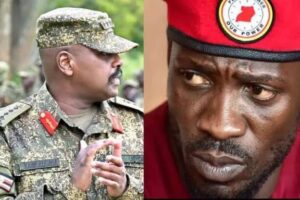
The comments have been widely linked to opposition leader Robert Kyagulanyi, popularly known as Bobi Wine, although Muhoozi spoke in broader terms about reconciliation and pardon.
Muhoozi, a senior military officer and influential public figure, has in recent years become known for bold and sometimes surprising public statements. His latest message appears to center on the idea that no Ugandan is beyond forgiveness.
He suggested that even those who have strongly opposed the state or taken rebellious positions should not be denied mercy at the final moment of life.
The statement has been interpreted in different ways. Some people see it as a sign of maturity and national healing. Others believe it carries a strong political tone, especially because Bobi Wine has been one of the most vocal critics of the current government.
Linking forgiveness to such a high-profile political figure naturally raises emotions among supporters on both sides.
Supporters of Muhoozi argue that his words show humanity. They say a nation grows stronger when leaders speak about forgiveness instead of revenge.

In a country that has experienced political tensions for decades, the idea of mercy can sound like a step toward peace.
However, critics question the timing and the message behind the words. They ask why such forgiveness is discussed in a dramatic way, mentioning “deathbeds,” instead of focusing on open dialogue and political reforms. To them, the statement feels less like reconciliation and more like political messaging.
Bobi Wine, on the other hand, is widely seen by his supporters as a civilian political activist rather than a rebel. This difference in language is important. Many of his followers feel that describing opposition politics in terms linked to rebellion can deepen divisions rather than reduce them.
Uganda’s political history has included periods where former fighters were granted amnesty and reintegrated into society. Because of this background, talk about forgiveness is not new. Still, when such words come from powerful individuals, they carry extra weight and meaning.
Some observers believe Muhoozi may be trying to present himself as a unifying figure. By talking about mercy, he could be appealing to people who are tired of political conflict. Forgiveness can be a powerful message in a country where many families have memories of past struggles.
Religious leaders have also spoken in the past about forgiveness as a national value. Uganda is a country where faith plays a big role in public life. Messages of mercy can therefore connect strongly with cultural and spiritual beliefs.
At the same time, political forgiveness is not simple. Many citizens believe justice, accountability, and fairness must come first. Without these, forgiveness alone can feel incomplete. This is why Muhoozi’s words have created both hope and doubt.
Young people, who form a large part of Uganda’s population, have reacted strongly online. Some praise the idea of peace and reconciliation. Others say real change requires equal political space, free speech, and respect for different views.
Political analysts say statements like these often serve many purposes. They can calm tensions, shape public image, or test how people respond to certain ideas. Muhoozi’s influence means his words are rarely seen as casual remarks.
The mention of Bobi Wine makes the matter even more sensitive. Bobi Wine represents a strong youth movement and calls for political change. Any message involving his name quickly becomes national news.

Some citizens worry that dramatic language can create fear or misunderstanding. They say discussions about political differences should be careful and respectful, focusing on dialogue rather than labels.
Others believe even controversial statements can open doors for conversation. They argue that talking about forgiveness can remind people that political opponents are still fellow citizens.
Uganda’s future depends greatly on how leaders and citizens handle disagreement. Peaceful discussion, respect for the law, and equal treatment are key parts of long-term stability. Forgiveness can play a role, but it works best alongside justice.
Muhoozi’s remarks show how powerful words can be in politics. A single sentence can create debate across the whole country. Whether people agree or disagree, many are now talking about reconciliation and national unity.
In the end, the discussion is bigger than one person. It touches on how Uganda deals with opposition, conflict, and healing. It asks whether political differences should end in punishment, competition, or eventual understanding.
For now, Muhoozi’s statement remains a topic of strong public interest. Some see hope in the message of mercy. Others remain cautious, wanting to see actions that support true political openness.
What is clear is that the conversation about forgiveness, leadership, and unity in Uganda is far from over. The nation continues to search for a balance between justice, peace, and the future it wants to build together.