Related Articles



As Uganda moves closer to the presidential elections scheduled for 15 January 2026, a new national opinion poll has placed President Yoweri Kaguta Museveni firmly in the lead. The survey suggests that the long-serving leader is the clear favorite to win the election outright, avoiding a possible second-round run-off. The findings have already sparked wide discussion across the country, especially among political supporters and observers.
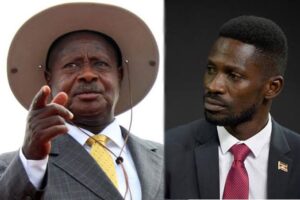
The poll was conducted by the Development Watch Centre and covered the period from 19 November to 16 December 2025. According to the results, Museveni, who is the flag bearer of the National Resistance Movement, enjoys the support of 60.94 percent of respondents nationwide. His main challenger, National Unity Platform leader Robert Kyagulanyi Ssentamu, popularly known as Bobi Wine, follows with 35.26 percent.
The survey involved face-to-face interviews with 3,758 respondents drawn from 42 districts across 12 sub-regions of Uganda. Researchers say this wide coverage gives the poll strong credibility and reflects the general political mood in the country as election day approaches. Rural respondents made up about 61 percent of those interviewed, while urban areas contributed just under 40 percent.
Results from the poll show that Museveni leads Bobi Wine in 11 out of the 12 sub-regions sampled. This indicates broad national support for the incumbent president, especially outside the capital city. The only area where Bobi Wine is leading is the Kampala sub-region, where he enjoys strong urban and youth backing.
In regions such as Bunyoro and Karamoja, Museveni’s support is particularly high. In Bunyoro, he polled 70 percent compared to Bobi Wine’s 28 percent. In Karamoja, Museveni stood at nearly 69 percent while Bobi Wine attracted just under 29 percent. These figures point to strong loyalty to the ruling party in these areas.
Ankole and Lango also emerged as strongholds for Museveni. In Ankole, the president received over 67 percent support against Bobi Wine’s 25 percent. In Lango, Museveni polled just above 67 percent, leaving Bobi Wine with slightly above 31 percent. The wide margins in these regions underline Museveni’s dominance in much of the country.
Buganda, Uganda’s most politically significant region, also showed a clear lead for Museveni. The poll indicates that he commands 60 percent support in Buganda, while Bobi Wine follows with about 38 percent. This is notable given Buganda’s large population and its influence on national politics.
Busoga and Teso also favored Museveni according to the survey. In Busoga, Museveni polled 57 percent against Bobi Wine’s 33 percent. In Teso, the president stood at over 64 percent, while Bobi Wine attracted around 32 percent. These results further strengthen Museveni’s national advantage.
In the Rwenzori and Kigezi sub-regions, Museveni also maintained a comfortable lead. He polled nearly 55 percent in Rwenzori compared to Bobi Wine’s 41 percent. In Kigezi, Museveni secured close to 60 percent support, while Bobi Wine stood at just above 32 percent.
Kampala, however, tells a different story. In the capital city, Bobi Wine leads with more than 55 percent support against Museveni’s 42 percent. This reflects Bobi Wine’s strong appeal among urban voters, young people, and those seeking political change.
Other presidential candidates lag far behind the two frontrunners. Alliance for National Transformation candidate Gen Mugisha Muntu placed third with just over 2 percent support nationally. Forum for Democratic Change candidate Nathan Nandala Mafabi followed with slightly above 1 percent, while the rest of the candidates registered negligible figures.
The poll also highlights a clear generational divide in voting preferences. Bobi Wine enjoys strong support among young voters aged between 18 and 35 years. In this age group, he leads with 53 percent, while Museveni follows with just under 44 percent.
Museveni’s support grows steadily with age. Among voters aged 46 to 56, he enjoys about 61 percent backing. His support peaks among voters aged 57 and above, where he commands an overwhelming 72 percent. This suggests that older voters are more comfortable with continuity and experience.
Gender patterns in the poll also favor Museveni. Female voters showed stronger support for the president, with over 62 percent backing him compared to 34 percent for Bobi Wine. Male voters showed slightly higher turnout intention, but their candidate preferences closely followed the national trend.
The survey also explored key issues influencing voter choice. Service delivery emerged as the top concern, cited by more than 37 percent of respondents. This suggests that access to health care, education, roads, and other public services remains a major factor in the election.
Youth unemployment was the second most important issue, mentioned by nearly 33 percent of respondents. Corruption followed closely at around 26 percent. Interestingly, issues such as security and the rule of law were ranked lower among the main determinants of voting choice.
Voter readiness appears high ahead of polling day. More than 80 percent of women and close to 90 percent of men said they intend to vote. This indicates strong public interest and engagement in the upcoming election despite political tensions.
Researchers noted that while the poll did not cover West Nile and Bugisu sub-regions, including them would not significantly change the ranking of the leading candidates. They acknowledged that Bugisu might slightly boost Mafabi’s numbers but not enough to affect the overall outcome.
Dr Allawi Ssemanda of the Development Watch Centre explained that the poll reflects political attitudes at the time of the research. He noted that if the current political environment remains unchanged, Museveni is likely to be declared the winner by an outright majority on 15 January.
As Uganda counts down to election day, the poll paints a picture of a race with a clear frontrunner. While the final decision lies with voters at the ballot box, the survey suggests that President Museveni enters the final stretch of the campaign with a strong and commanding national lead.